Keyword Cannibalization: Diagnose Overlap Before Merging Pages

Keyword cannibalization describes a potential problem when several pages serve the same search intent and dilute a clear landing-page strategy. Seeing two URLs for one query is not enough to diagnose it. A tutorial, a service page, and a comparison can legitimately appear for related searches. The useful question is whether overlap makes readers land on the wrong page or leaves several weak pages competing where one complete resource would serve them better. Start with evidence about intent and performance, not a duplicate keyword warning alone.
keyword cannibalization: a practical decision process
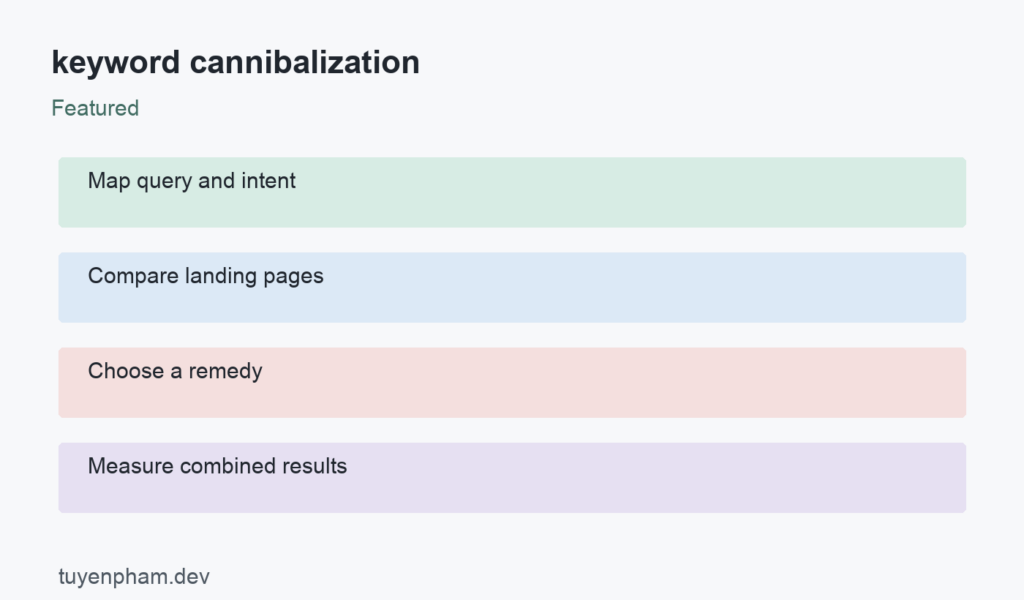
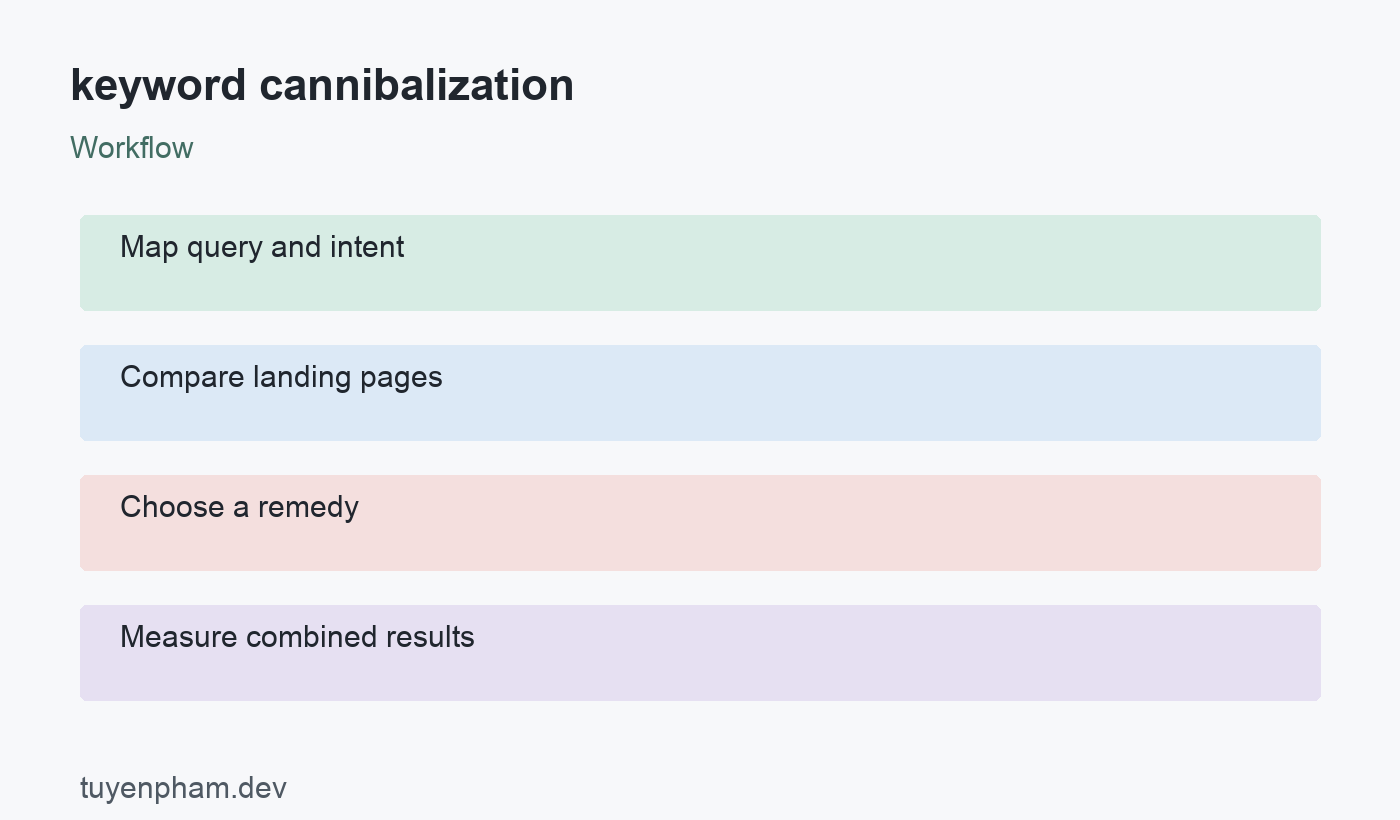
Follow this sequence: Map query and intent → Compare landing pages → Choose a remedy → Measure combined results. Use it to organize the work, then verify the editorial and technical choices described below. The example is hypothetical and illustrates the decision rather than claiming a measured ranking result.
Build a query-to-page evidence table
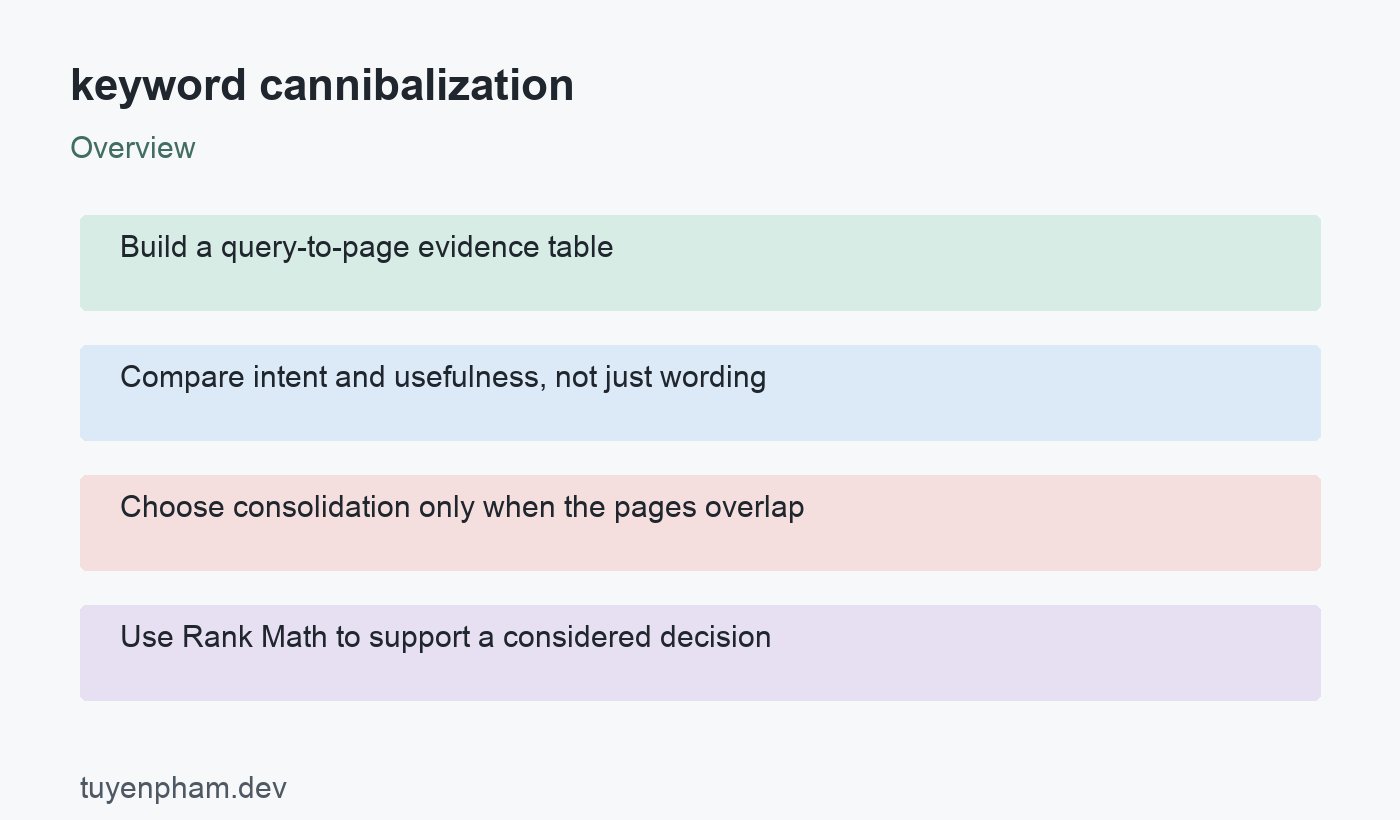
In Search Console, filter a relevant query or query group and inspect the pages receiving impressions and clicks. Compare the same date range, country, device, and search type. Look for repeated changes in the dominant landing page, an informational page attracting commercial queries, or several incomplete articles answering the same question. Some changes reflect normal search variation. Record the actual URLs and their purpose before deciding that a fluctuation is a problem. A site search can help discover overlap but is not a complete index audit.
Compare intent and usefulness, not just wording
Read each candidate page as a user with a specific task. Does one explain a concept while another offers a service? Do they contain different examples, formats, or purchase stages? Similar keywords can support distinct purposes. Conversely, different titles can hide nearly identical articles. Preserve useful differences and clarify them in the title, introduction, and internal anchor text. Do not delete a valuable page simply because a plugin reports that its focus keyword was used elsewhere. The warning is a review prompt, not a Google penalty.
Choose consolidation only when the pages overlap
If two articles answer the same intent, combine their strongest information into the best destination and permanently redirect the retired URL to that relevant replacement. Update internal links and sitemap entries. Preserve useful material rather than choosing solely by word count. If both pages need to stay accessible and are duplicate or very similar representations, a canonical may express the preferred version. It is a signal, not a promise of selection, and should not be used to hide a different page with a separate user purpose.
Use Rank Math to support a considered decision
Rank Math can flag reused focus keywords and provide redirect or canonical controls for a WordPress implementation. Use its cannibalization guide to locate relevant workflow options, then apply the remedy selected from your evidence table. Changing the stored focus keyword alone does not rewrite the content or establish a different search intent. Avoid bulk redirects based only on matching phrases. Test the retired URL, destination, canonical, and internal links so the technical configuration reinforces the editorial choice.
Evaluate the combined outcome
Compare clicks, impressions, conversions, and landing-page relevance across the affected URL group. A retired page losing traffic is expected after consolidation, so judging that page alone produces the wrong conclusion. Allow time for recrawling and inspect unexpected destination behavior. Annotate the change date and other releases that might affect results. If the topic is seasonal, compare an appropriate previous period. A better page structure improves clarity, but it does not guarantee a ranking increase or an immediate traffic recovery.
Worked example
Imagine two articles titled "SEO checklist for freelancers" and "Freelancer SEO steps" with almost identical advice. A review finds that the second article adds a useful pricing example while the first has a clearer explanation. Consolidate those strengths into one resource and redirect the redundant page. Keep a separate "SEO services for freelancers" page if it genuinely helps visitors evaluate a paid service. The decision comes from different user tasks, not from whether all three pages mention freelancer SEO.
Implementation checklist
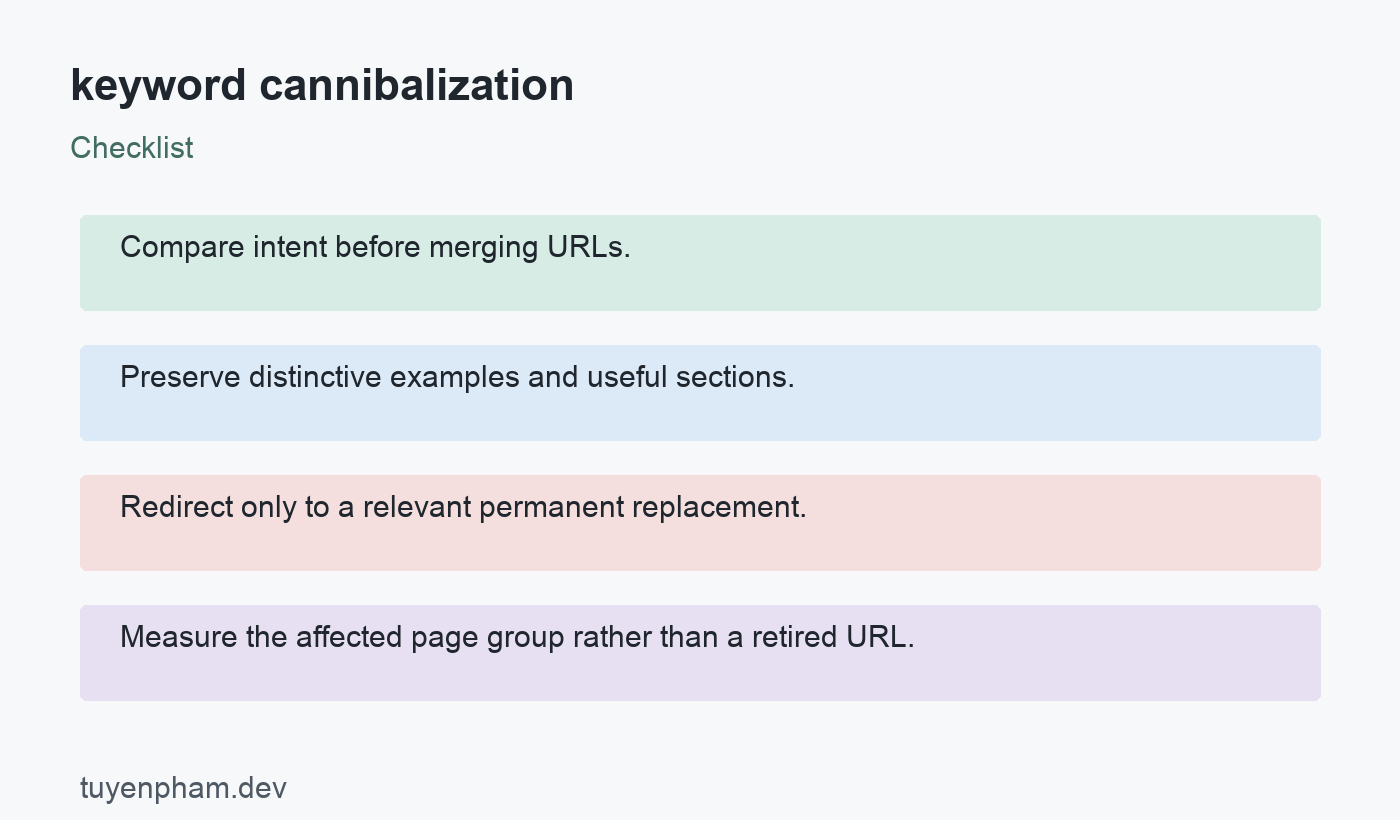
- Compare intent before merging URLs.
- Preserve distinctive examples and useful sections.
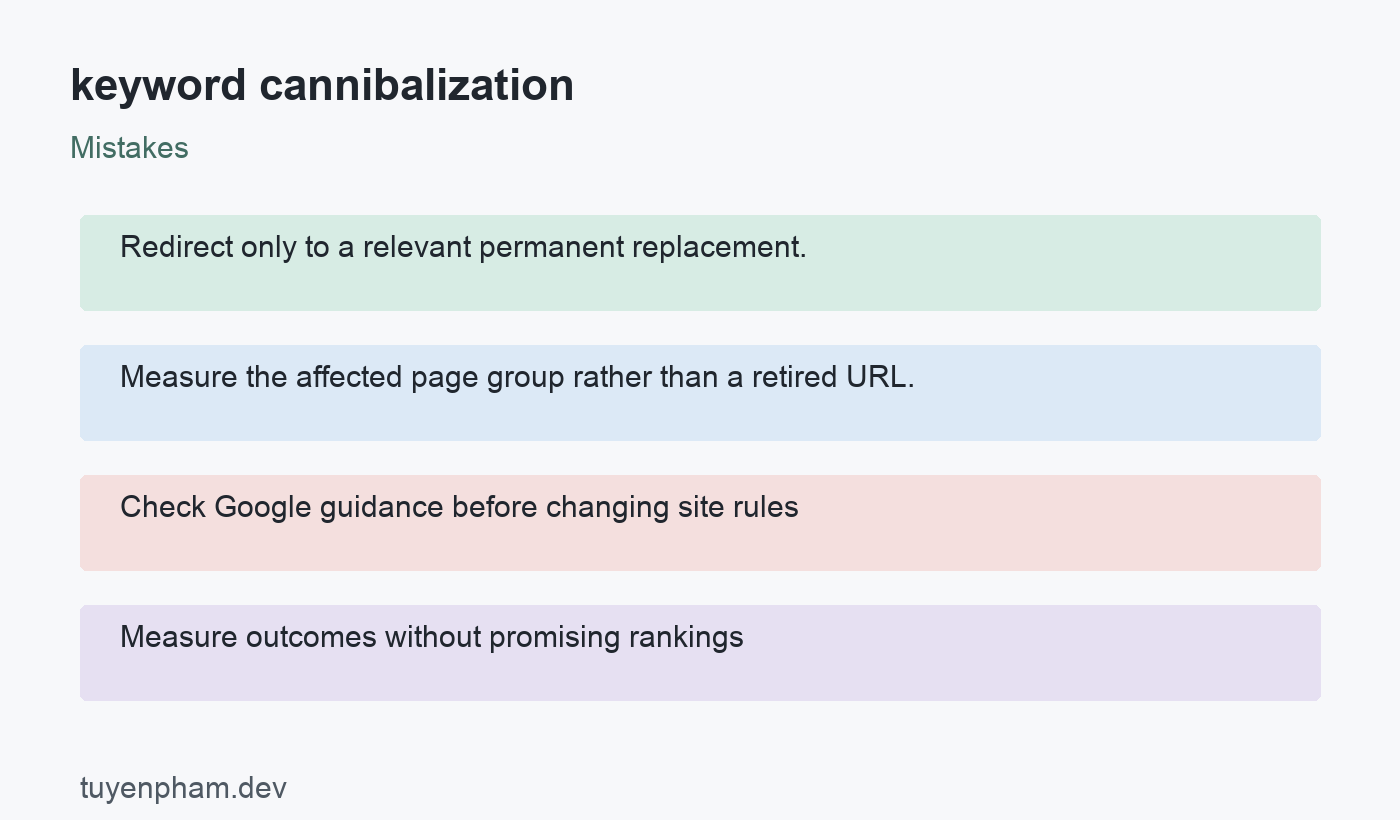
- Redirect only to a relevant permanent replacement.
- Measure the affected page group rather than a retired URL.
A focused task for your website
Choose one cluster of three to five existing pages and write a one-sentence purpose for each. Export query-to-page evidence for a consistent period. Mark each pair as distinct, duplicate, or overlapping but useful. Propose a merge only where you can explain the reader benefit. Keep a change log with the chosen destination and planned internal-link updates. After implementation, verify response codes and canonical signals before assessing search performance.
References and next steps
Consult Google Search Central documentation for the relevant search requirements and Rank Math guidance on this topic for practical workflows. Continue with Search Intent Seo and the SEO audit checklist for related implementation checks.
Discussion
Join the conversation