SEO Competitor Analysis: Learn from Search Results Without Copying Them

SEO competitor analysis examines the pages and publishers competing for the searches that matter to your audience. These may differ from the businesses you compete with commercially. A software vendor can compete in search with documentation, publishers, forums, and comparison sites. The analysis should explain what the results suggest about reader intent and useful content, not claim access to a competitor’s private strategy. Separate direct observations from tool estimates and hypotheses before deciding what your own site should change.
SEO competitor analysis: a practical workflow
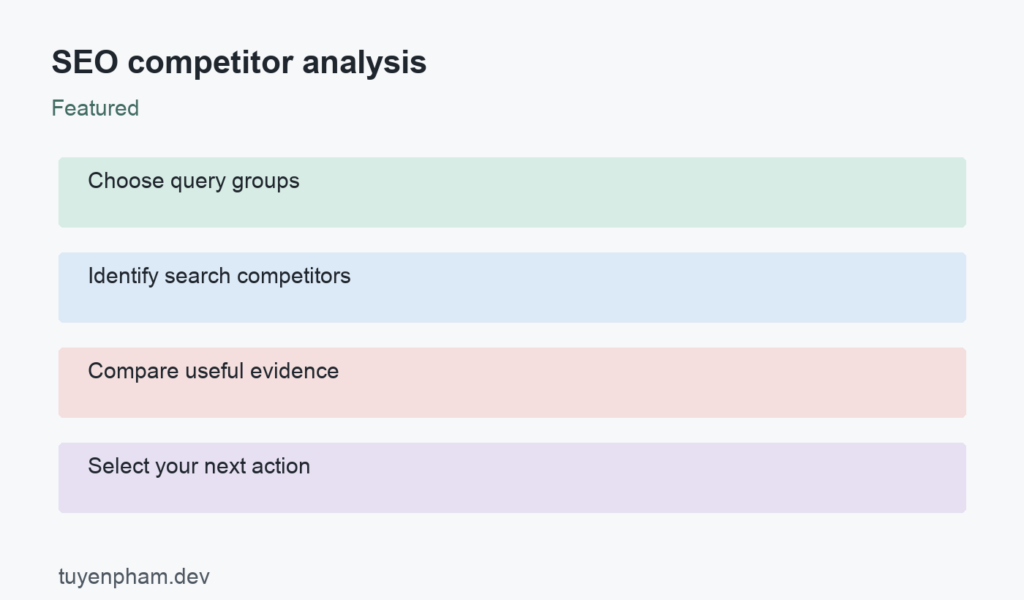
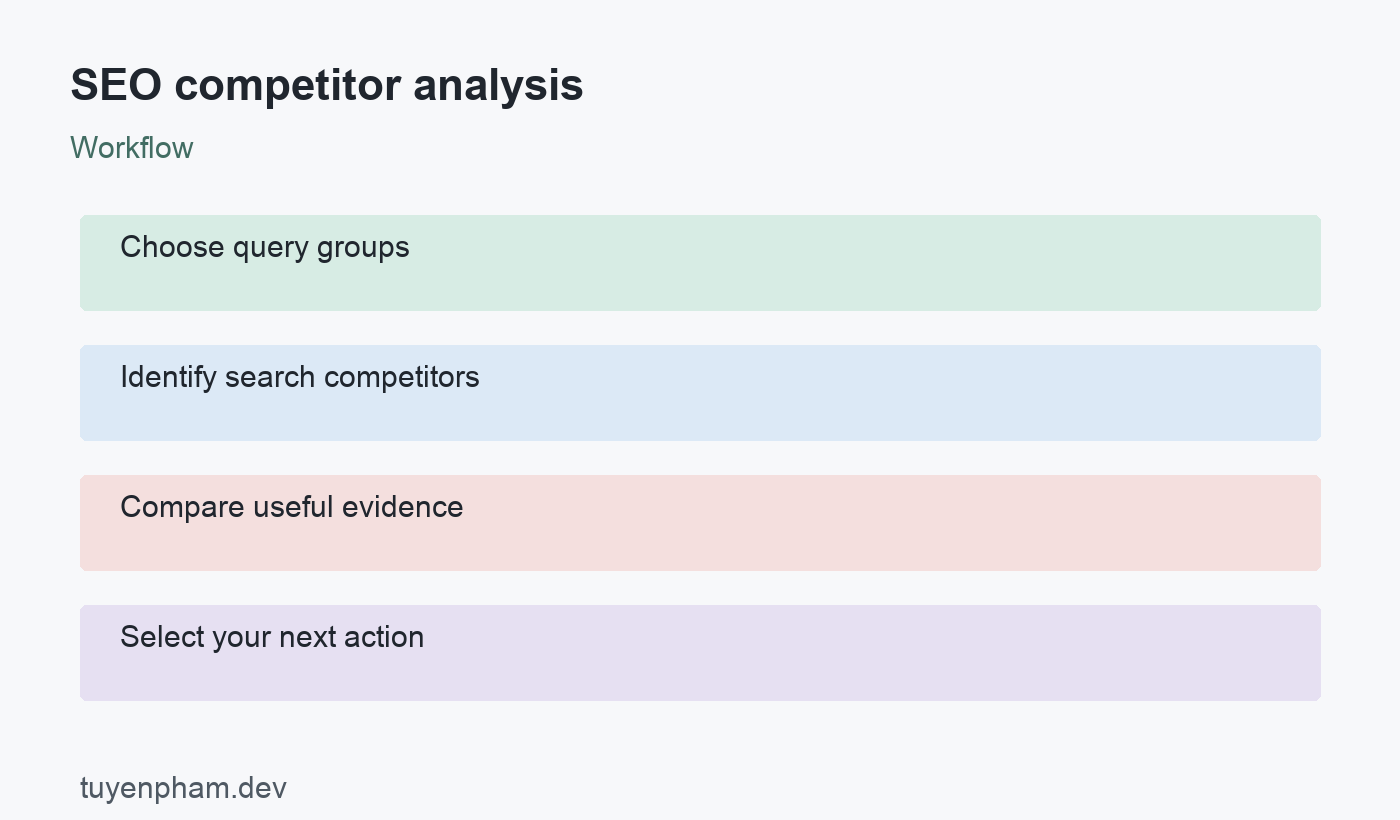
Use this sequence to organize the work: Choose query groups → Identify search competitors → Compare useful evidence → Select your next action. The sections below explain the evidence, decisions, and limitations at each stage. The worked example is hypothetical and illustrates a process rather than a measured result from this website.
Choose a meaningful search sample
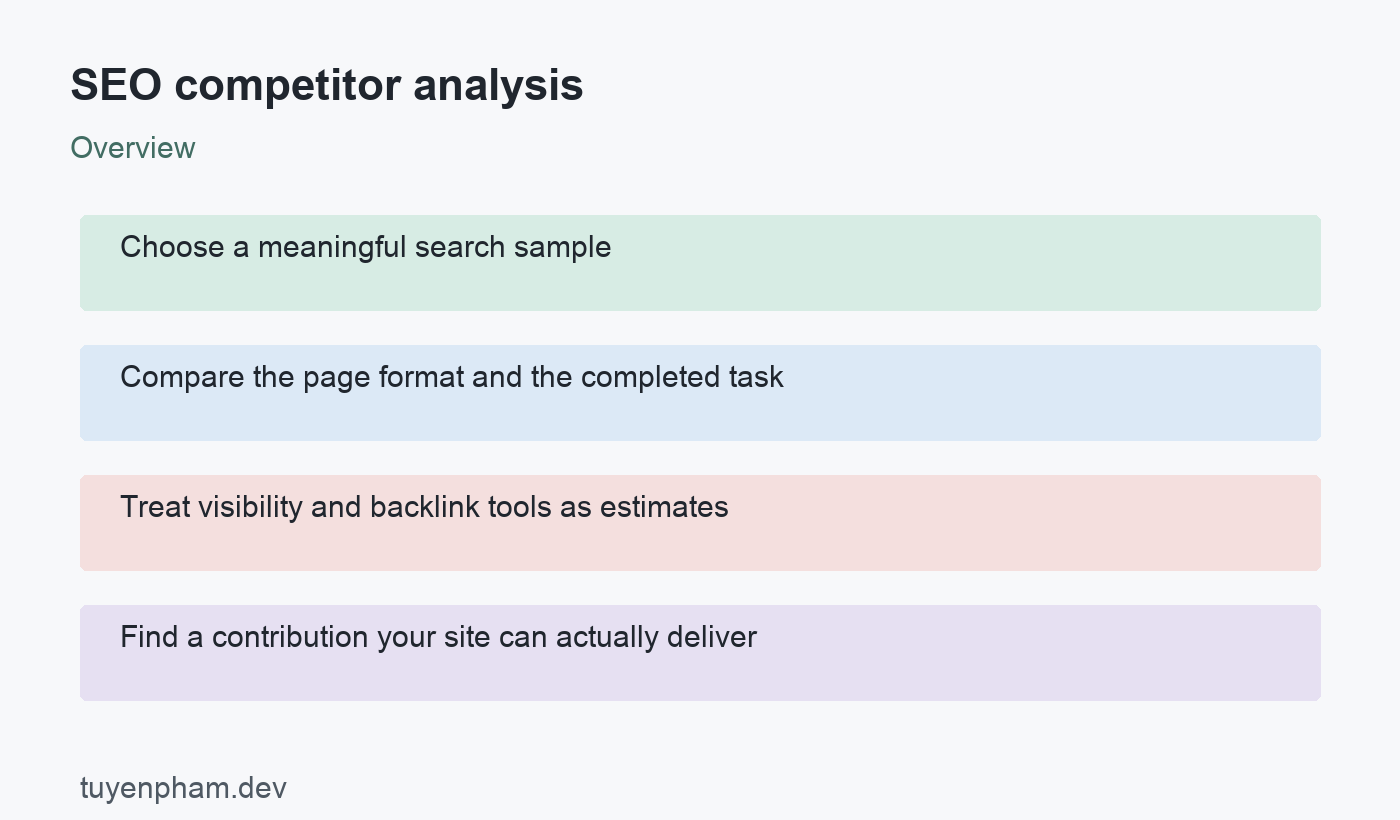
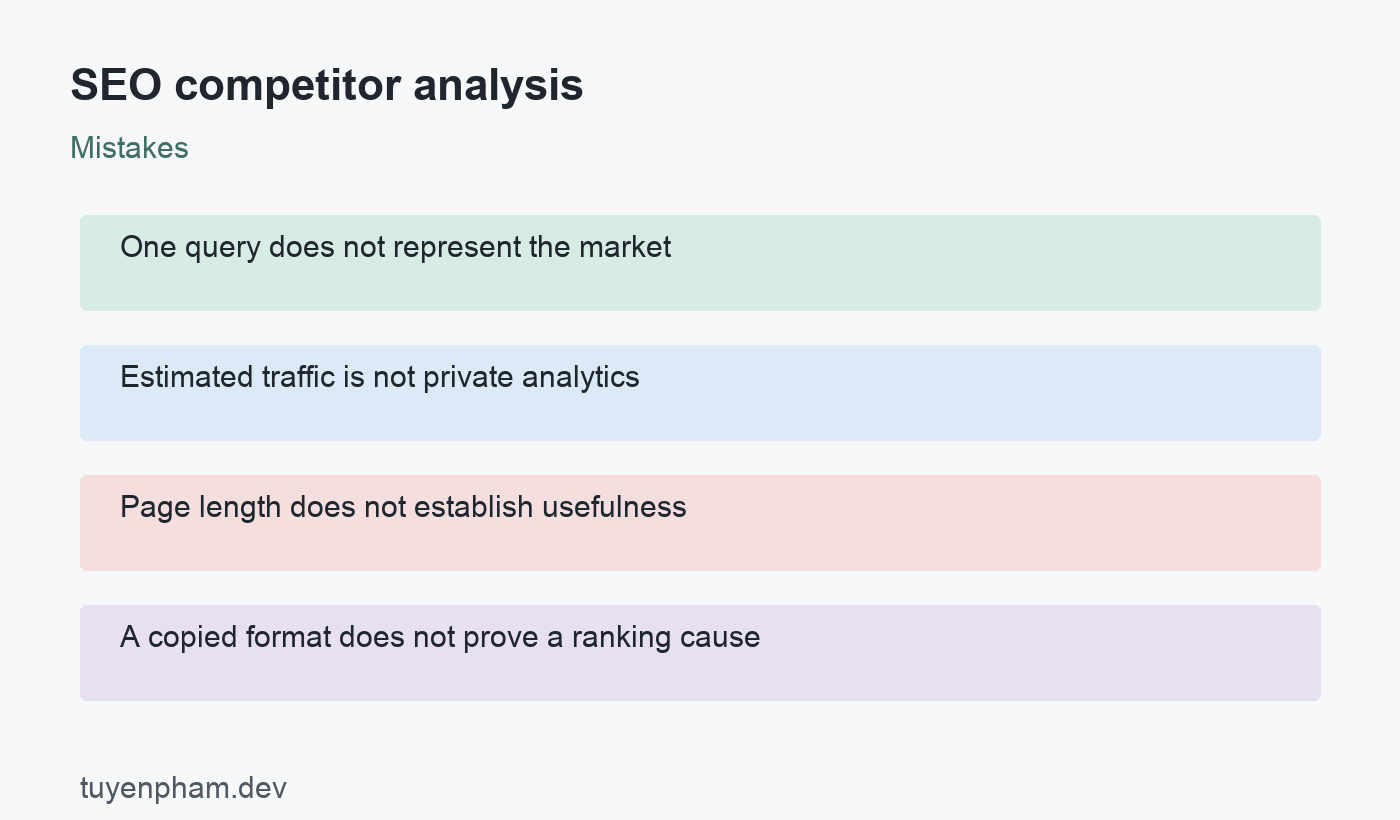
Group queries by audience task, geography, device context, and stage of decision. Include both informational and commercial questions when they matter to the business. Record the date and search context because results can change. One broad keyword is a poor substitute for a representative sample. Do not assume that the first result for a single phrase represents the entire market. Look for recurring domains and page types across the group, then select the resources worth reviewing in detail.
Compare the page format and the completed task
Inspect whether results offer tutorials, product pages, comparisons, videos, tools, or community discussions. This provides evidence about the kind of help searchers may expect. Read the actual resources and note clarity, examples, freshness, and unresolved questions. A longer article is not automatically better. Ask whether a reader can make the intended decision and verify important claims. If your service page competes with instructional guides, the mismatch may be intent rather than a shortage of headings or words.
Treat visibility and backlink tools as estimates
Third-party tools can help reveal query coverage, link patterns, and changes over time, but their traffic estimates are not a competitor’s analytics. Coverage varies by country, query database, and method. A high link count does not establish relevance or quality. Review a sample of linking pages and the resources being referenced. Rank Math outlines competitive analysis across keywords, content, and links; use those dimensions to organize evidence while avoiding precise revenue or traffic claims that the available data cannot support.
Find a contribution your site can actually deliver
Choose improvements based on your expertise, products, and reader needs. You may be able to provide a tested workflow, a transparent comparison, an interactive calculation, or a more focused explanation. Copying a competitor’s navigation or publishing every topic they cover can create irrelevant pages and maintenance debt. Avoid inferring that a visible design choice caused the ranking. Your action plan should state what you observed, what you think it means, and how you intend to check that interpretation.
Turn the analysis into a bounded backlog
Limit the first round to a few high-value changes with named owners and review criteria. Record the current state before implementation. Evaluate relevant queries, useful visits, and business outcomes after enough processing time, accounting for demand and other site changes. Revisit the search sample periodically rather than refreshing every metric without a decision to make. The goal is better positioning and more useful resources, not a permanent race to reproduce whatever another publisher released most recently.
Worked example
A developer agency sees that migration queries regularly return detailed checklists, while its landing page mainly lists services. It keeps the service page for visitors evaluating an agency and creates a tested migration checklist for instructional intent. The checklist links to the service when professional help is relevant. This does not require copying a competitor’s article. It responds to observed formats and a distinct user task while preserving the agency’s commercial offering.
Verification checklist
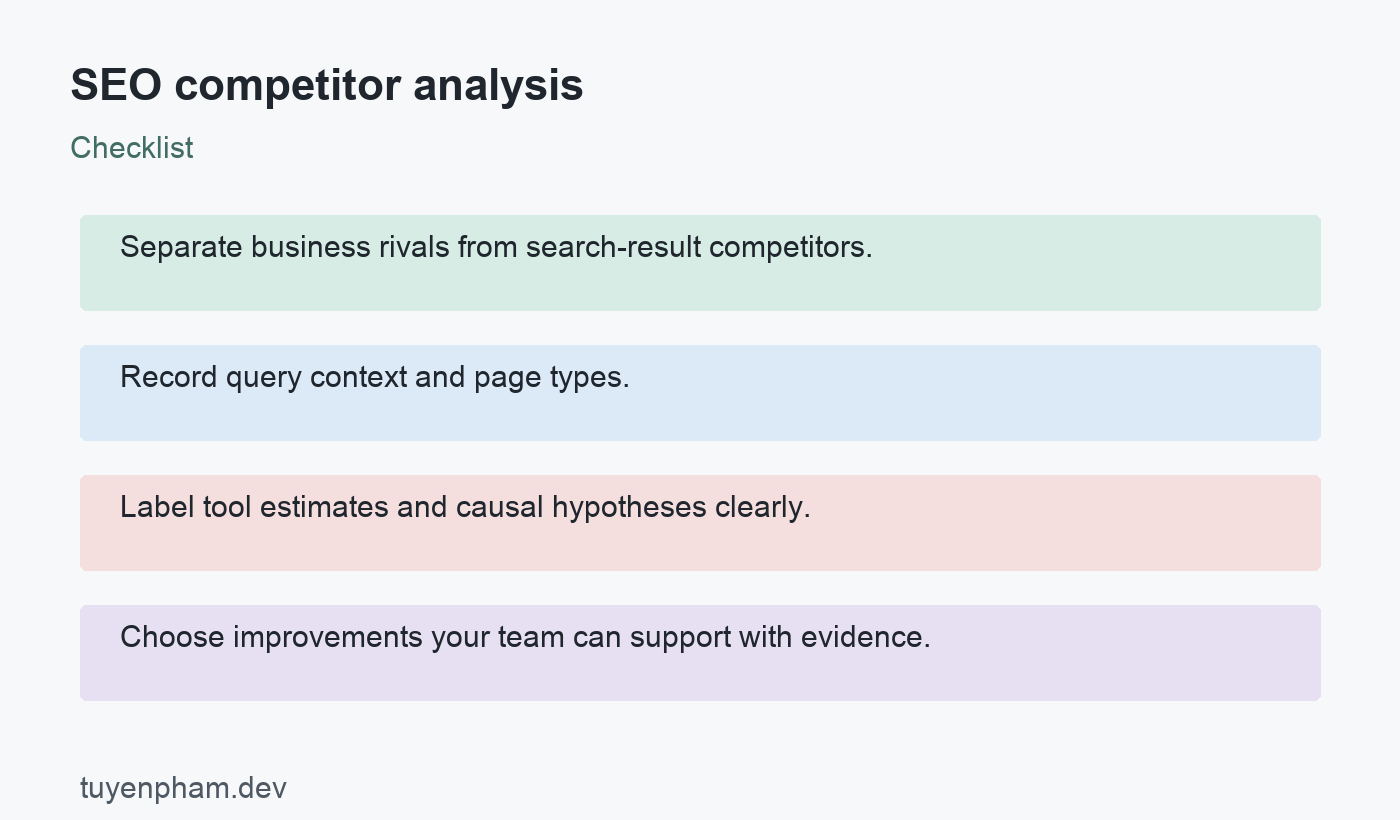
- Separate business rivals from search-result competitors.
- Record query context and page types.
- Label tool estimates and causal hypotheses clearly.
- Choose improvements your team can support with evidence.
A focused task for your website
Select ten queries for one audience problem. Record recurring domains, result formats, and the strongest answer on each page. Compare those observations with your own destination. Propose three changes and explain the reader benefit of each. Save the original state and review relevant performance later. If an improvement is useful but traffic evidence remains inconclusive, report that distinction instead of claiming the competitor review proved a ranking effect.
References and related reading
Review Google Search Central documentation for the relevant platform guidance, and Rank Math guidance for the related workflow for practical SEO checks. Continue with Search Intent Seo and the SEO audit checklist to connect this task with the rest of your site review.
Discussion
Join the conversation