SEO Content Brief: How to Plan Articles Before Writing

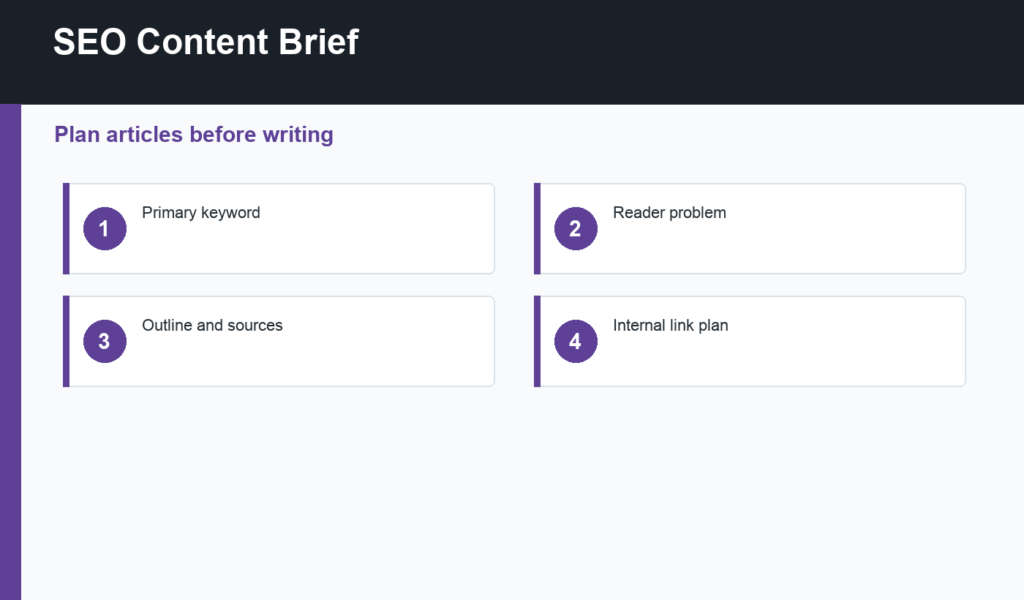
An SEO content brief turns keyword research into a clear writing plan. It defines the target keyword, search intent, audience problem, recommended outline, sources, internal links, media ideas, and quality expectations before a writer starts drafting.
Without a brief, SEO writing often becomes scattered. The writer may include the keyword, but miss the real intent, forget internal links, skip examples, or duplicate an existing page. A good brief keeps strategy and execution connected.
SEO content brief essentials
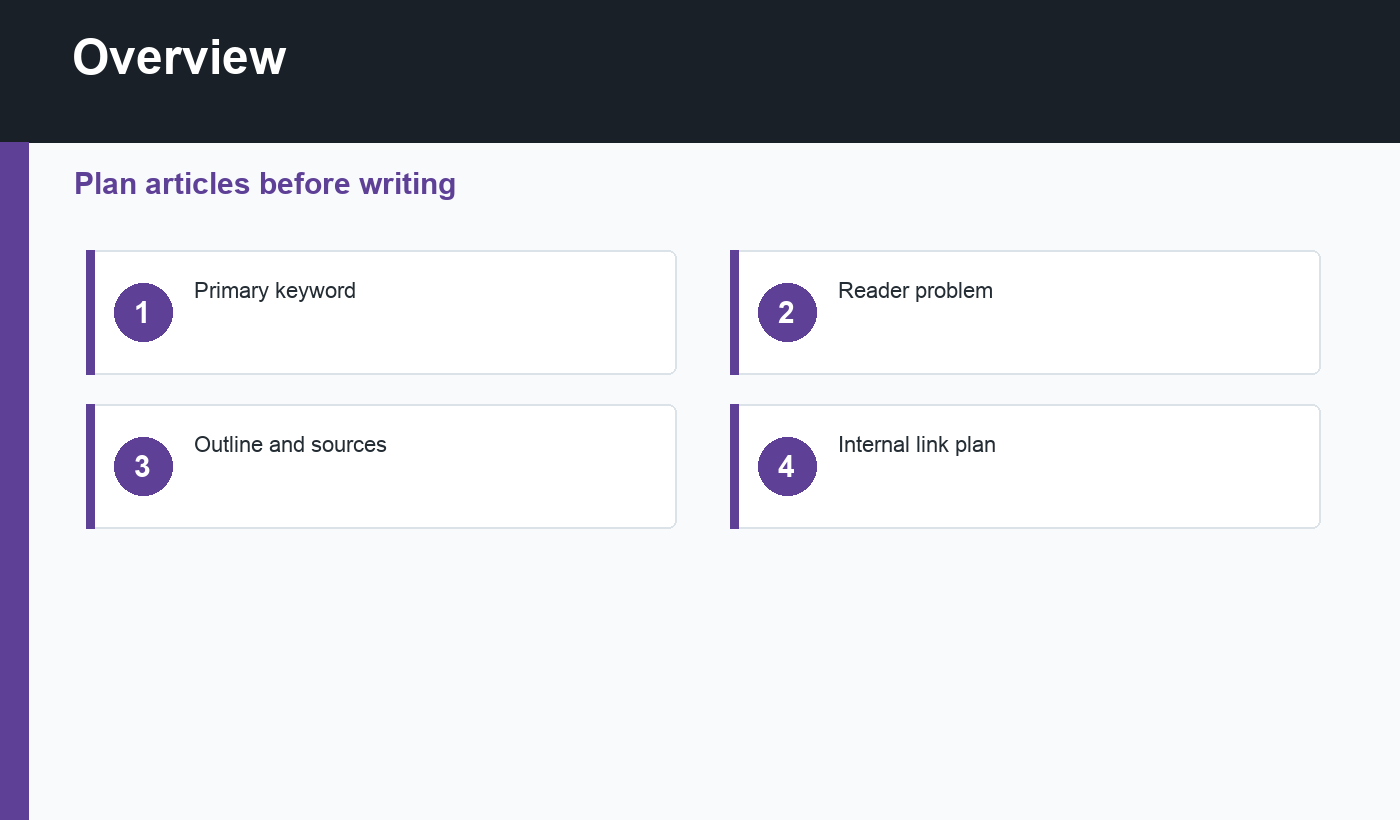
Start with one primary keyword and a small set of related terms. Add the search intent in plain language. Then describe the reader’s problem and what the page must help them do. This prevents the article from becoming a generic collection of tips.
The brief should also include the preferred content format. A tutorial needs steps. A comparison needs criteria and recommendations. A checklist needs concise action items. A beginner guide needs definitions, examples, and next steps.
Research before outlining
Review the current search results, but do not copy their structure. Look for common questions, missing examples, outdated advice, weak explanations, and opportunities to make the page more useful. Google’s helpful content guidance is a good quality reference.
For WordPress and plugin-related SEO topics, Rank Math documentation can be useful as a practical workflow source. For example, its content analysis tests show common on-page checks writers should consider before publishing.
Plan internal links and media
Internal links should be planned before the article is written. A brief can list pillar pages, supporting articles, conversion pages, and related guides that should be linked naturally. This is how content supports a topic cluster instead of becoming isolated.
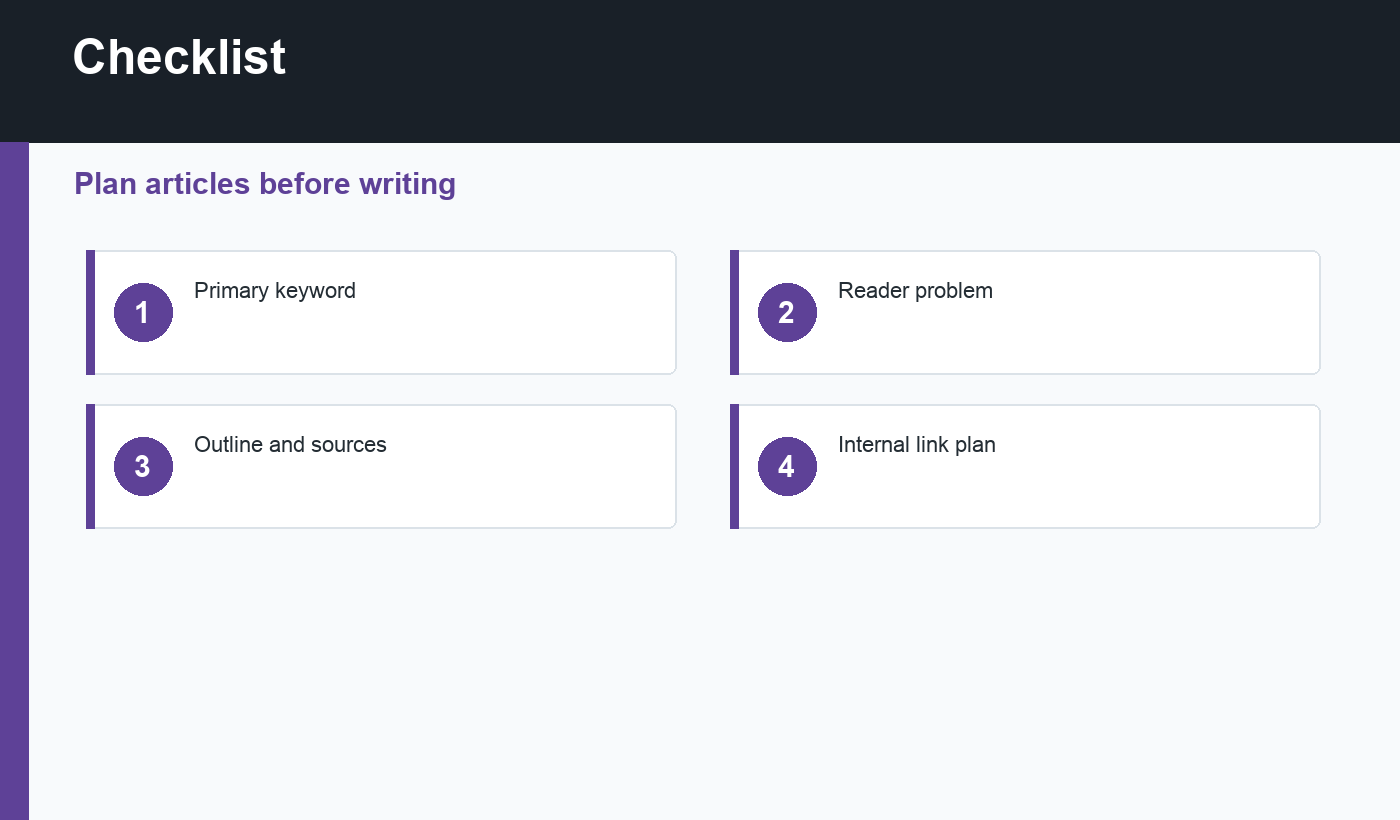
Media should also be intentional. Suggest screenshots, diagrams, comparison tables, or checklist graphics where they help the reader understand. If the page is a tutorial, media ideas should align with the steps.
SEO content brief template
- Working title and primary keyword.
- Search intent and reader stage.
- Reader problem and promised outcome.
- Recommended outline with H2 sections.
- Questions the article must answer.
- Sources to cite or learn from.
- Internal link opportunities.
- Image, chart, or screenshot ideas.
- Meta title and description direction.
- Quality notes and common mistakes to avoid.
Use the brief as a QA tool
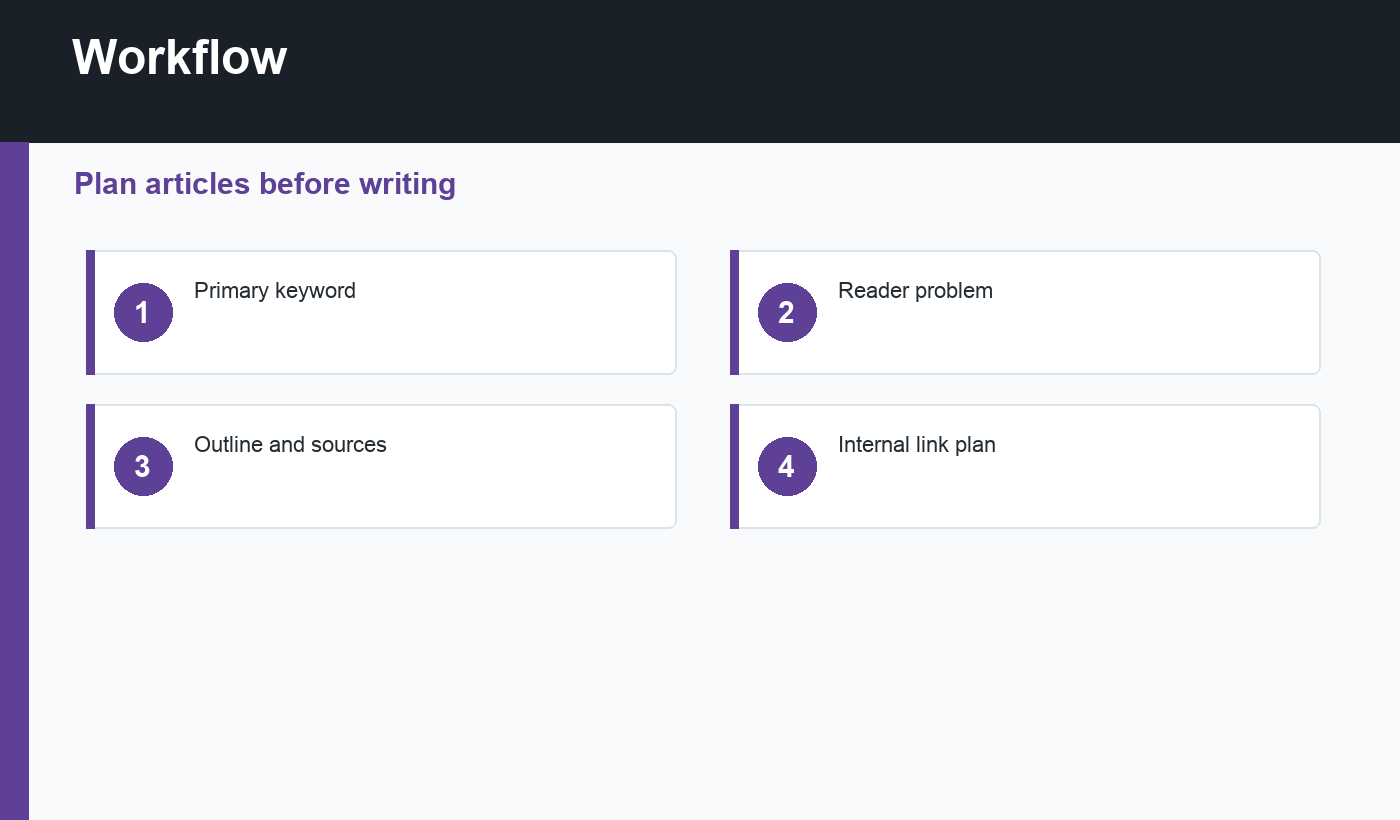
After drafting, compare the article to the brief. Did it answer the main intent? Did it include the required sections? Are links useful? Are examples specific? Does the opening paragraph confirm the topic quickly? This review catches problems before the page reaches SEO audit.
The brief should not make writing robotic. It should give the writer enough direction to create a focused, original page. Strong briefs leave room for better examples and clearer explanations.
Common brief mistakes
A weak brief lists keywords but forgets the reader. Another weak brief copies competitor headings without asking what can be improved. The best brief explains the intent, gaps, examples, and internal link plan so the writer can create something useful and original.
Keep briefs short enough to use. A one-page brief that shapes the article is better than a long document nobody reads before writing.
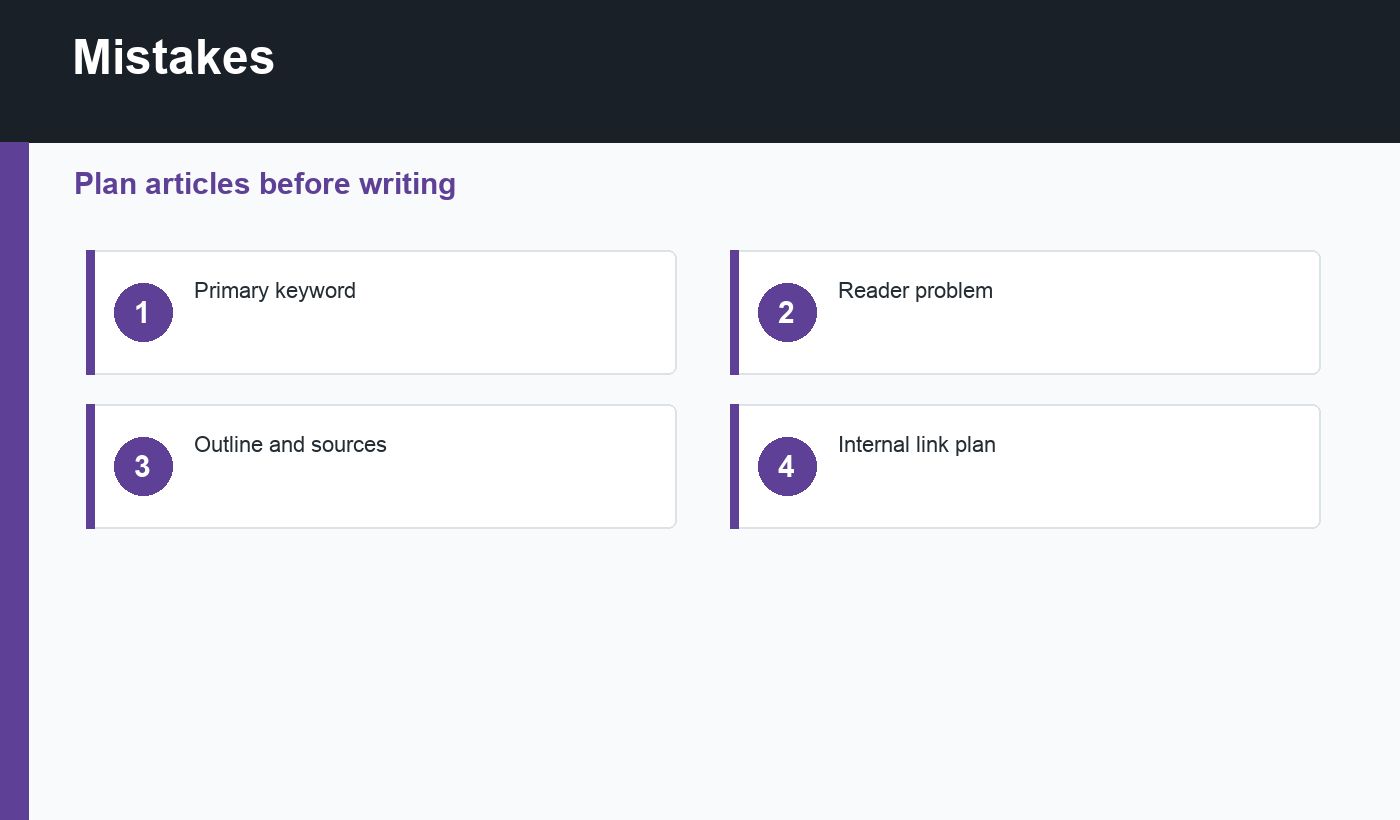
Update the brief after editing if the article direction changes. This keeps the final record useful for future refreshes, internal linking, and related topic planning.
For teams, briefs also reduce review friction. Editors can judge the draft against an agreed plan instead of debating the strategy after the article is already written.
A clear brief also helps freelancers, editors, and subject experts collaborate with fewer missed expectations.
Final recommendation
Create an SEO content brief for every important article. It saves editing time, improves intent match, and makes the final page easier to optimize with an on-page SEO checklist.
Discussion
Join the conversation