On-Page SEO Checklist: Optimize Every Page Before Publishing

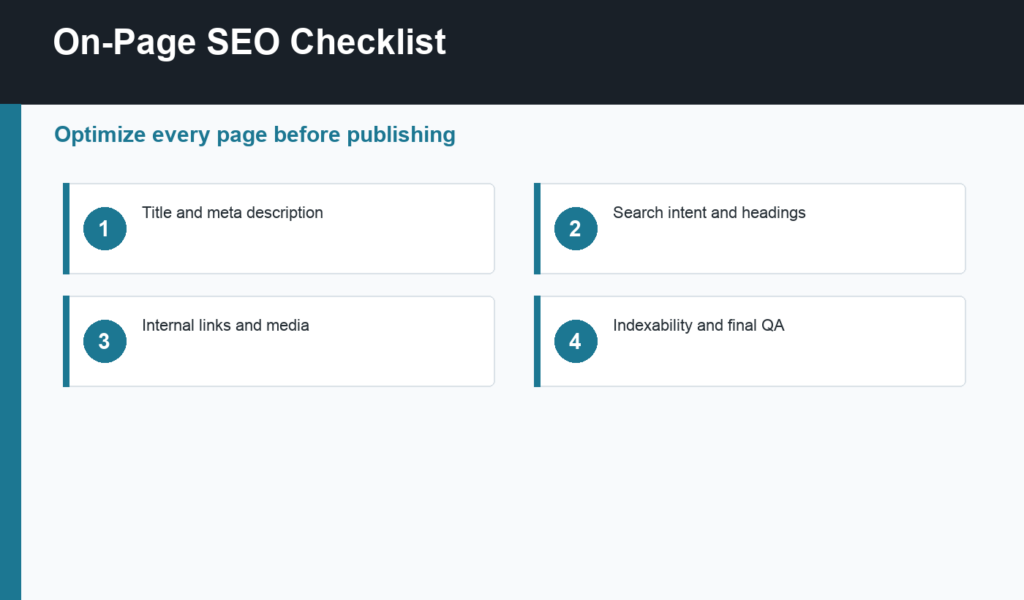
An on-page SEO checklist helps you review a page before it goes live. It covers the parts you control directly: search intent, title tag, meta description, headings, URL slug, content depth, internal links, images, schema, and indexability.
This checklist works for blog posts, service pages, tutorials, and landing pages. WordPress users can also compare it with the WordPress SEO checklist for plugin and editor-specific steps.
On-page SEO checklist: start with intent
Before editing titles or headings, identify what the searcher wants. Are they learning, comparing, buying, troubleshooting, or looking for a local provider? Your page format should match that intent. A checklist page, comparison page, tutorial, product category, and service page all solve different search problems.
Google’s helpful content guidance is a useful reminder: write for people first. On-page SEO should clarify value, not decorate weak content.
Optimize title, description, and URL
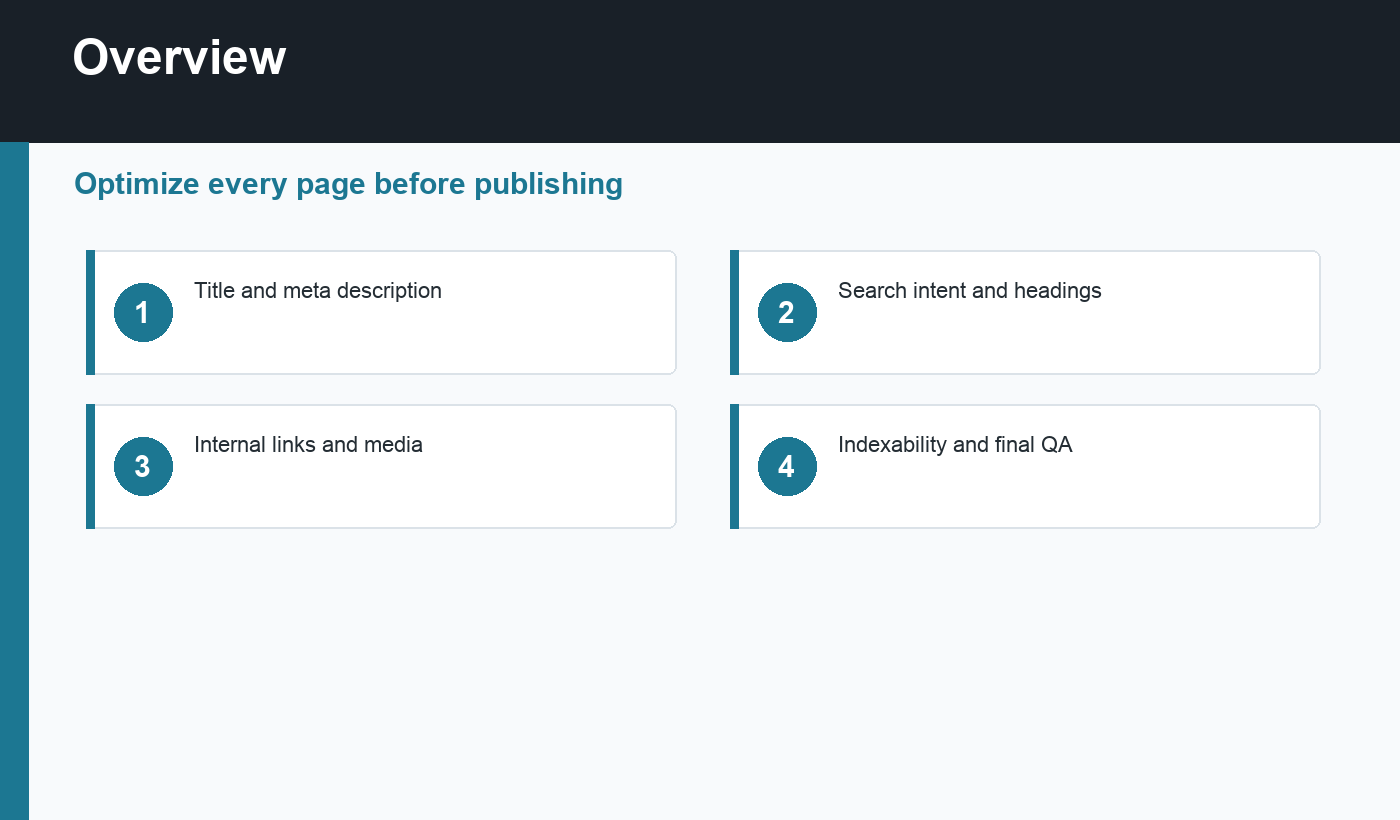
The title tag should include the primary keyword naturally and explain why the page is worth opening. The meta description should summarize the benefit accurately. The URL should be short, readable, and stable. Avoid changing URLs after publishing unless you are prepared to set redirects.
For WordPress, Rank Math or a similar SEO plugin can help manage these fields. If you need a refresher, see how to add meta titles and descriptions in WordPress.
Structure the content clearly
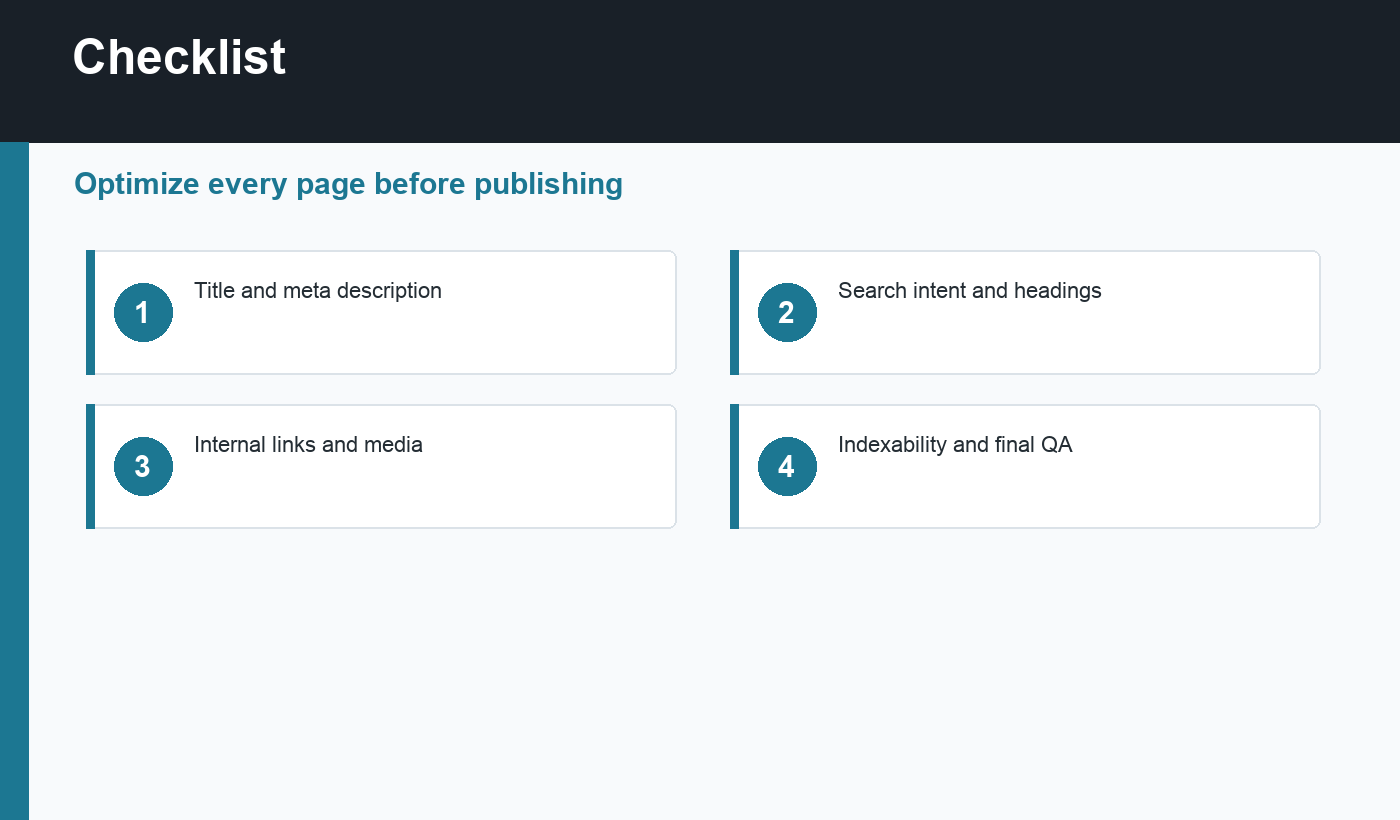
Use one clear H1, then organize sections with H2 and H3 headings. Keep paragraphs short. Add examples, steps, tables, or checklists when they make the page easier to use. A page should be scannable enough for a busy reader and complete enough for someone who needs the full answer.
Images should support the content. Use descriptive alt text, compress files, and place images near the sections they explain. This helps accessibility, speed, and image understanding.
Add links and final SEO checks
Add internal links to related pages using descriptive anchor text. Link outward to trustworthy sources when they help readers verify a claim or learn more. Then confirm the page is indexable, canonical points to the final URL, and the sitemap can include the post.
Rank Math’s content analysis tests can help catch common misses such as missing keyword placement, weak media use, or absent links. Treat the score as a preflight, then do a human quality pass.
Quick checklist
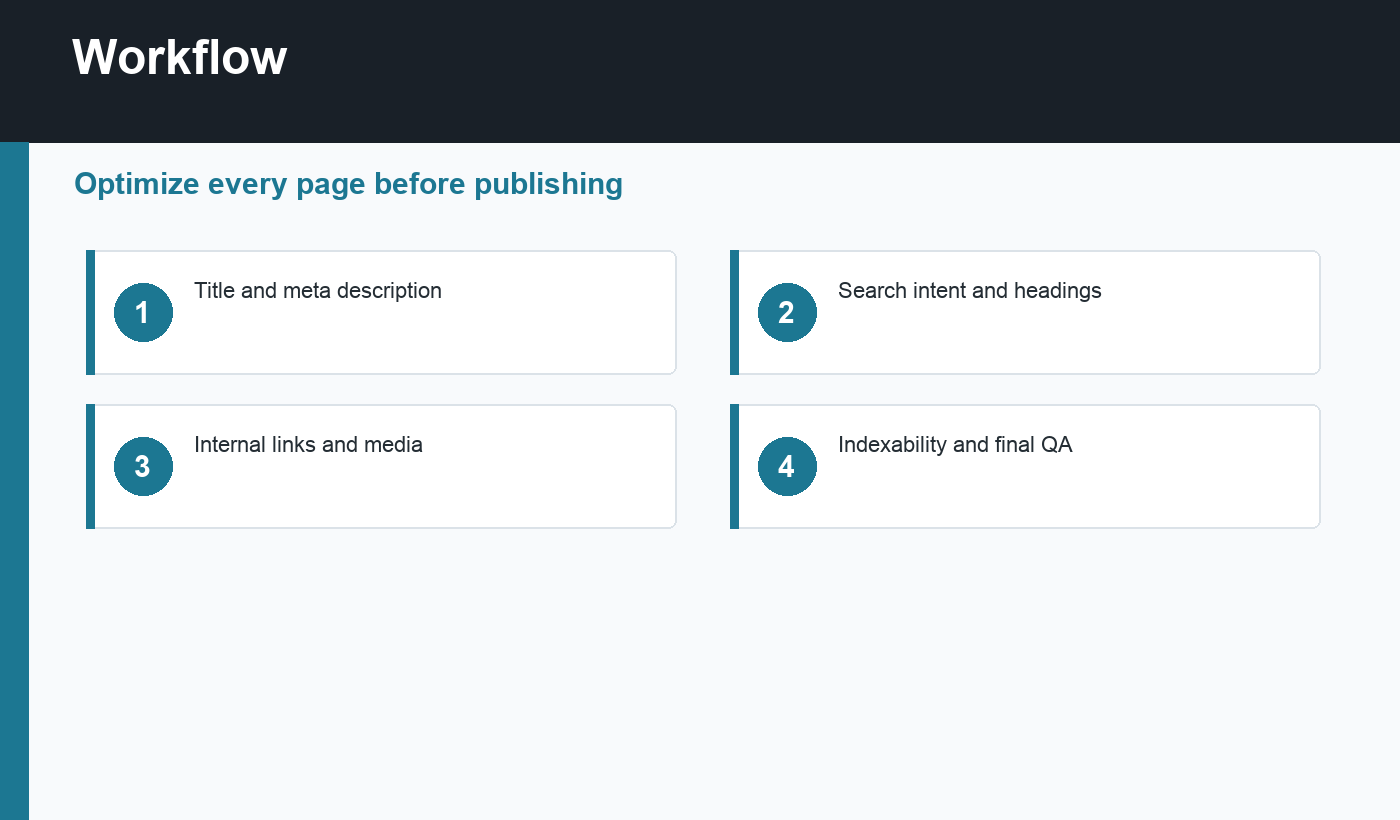
- Primary keyword and search intent are clear.
- Title, meta description, and slug are readable.
- Opening paragraph confirms the topic quickly.
- Headings match the questions users ask.
- Content includes examples or practical steps.
- Images have useful alt text.
- Internal and external links are helpful.
- Canonical, robots meta, and sitemap status are clean.
How to use this checklist
Use the checklist twice. First, use it before writing so the page has a clear target and structure. Second, use it after drafting so you can catch missing details before publication. This is especially useful when several people contribute to content, because everyone reviews the same standards.
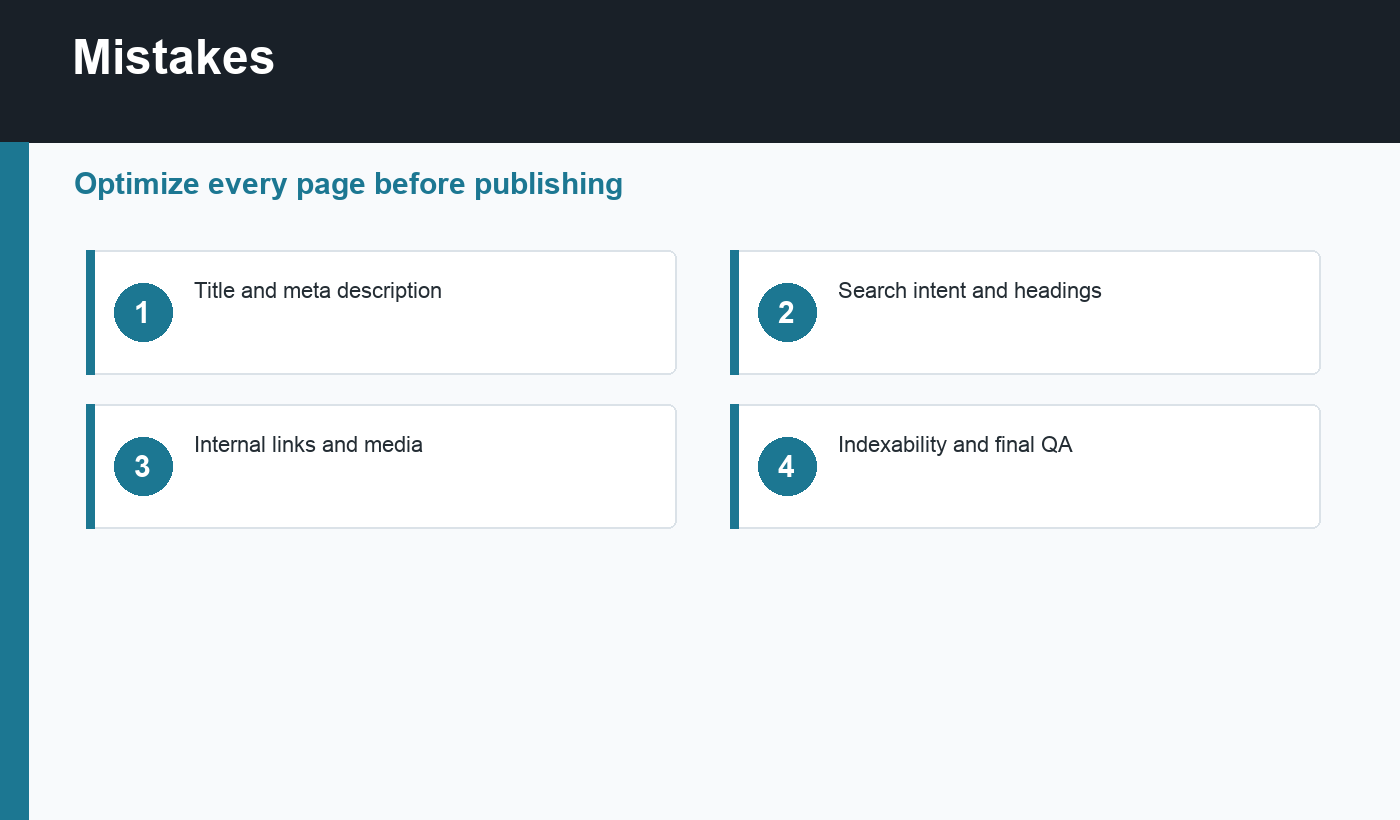
Do not treat the checklist as a keyword stuffing exercise. A page can pass basic fields and still disappoint readers. The final quality pass should ask whether the content is accurate, complete, easy to scan, and genuinely better than a thin answer.
For older pages, use the checklist during refreshes. Update examples, improve weak headings, add internal links to newer resources, and remove outdated advice. A refreshed page often needs clarity more than more keywords.
When time is limited, prioritize pages that already get impressions, links, or conversions. Improving a page with existing demand usually creates faster learning than polishing a page nobody finds yet.
Final recommendation
Use an on-page SEO checklist before every important publish. It keeps quality consistent and prevents small issues from weakening otherwise strong content.
Discussion
Join the conversation