Crawl Budget SEO: What Small Websites Actually Need to Know

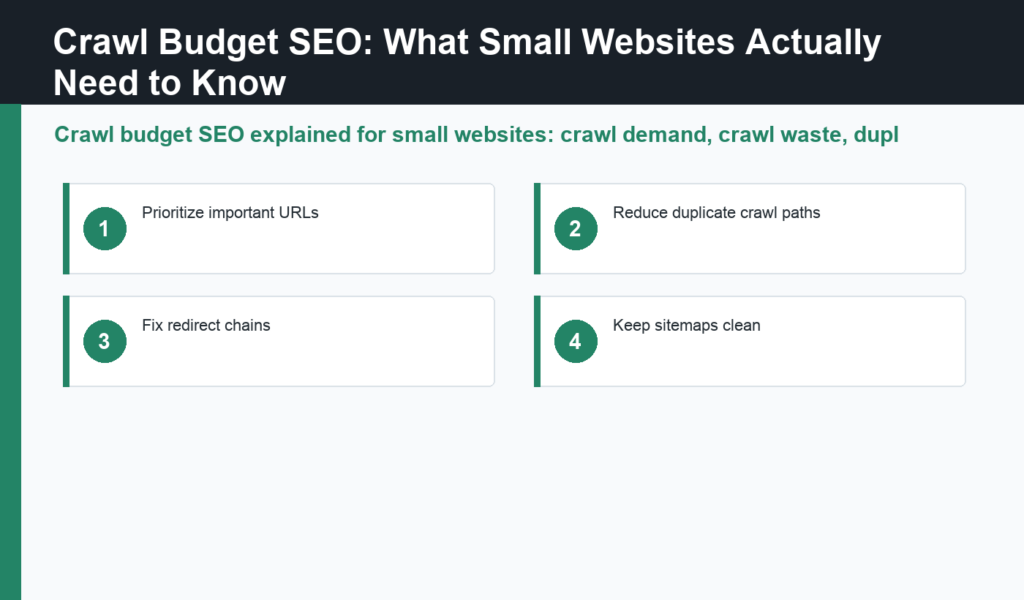
crawl budget SEO is a practical topic because small mistakes can quietly weaken otherwise good pages. The goal is not to follow a checklist blindly. The goal is to make the page easier for users to understand and easier for search engines to crawl, interpret, and trust.
This guide gives you a clear workflow for the topic, with examples you can use during publishing or monthly SEO maintenance. It also connects to related resources such as robots.txt SEO and technical SEO checklist.
crawl budget SEO: what it means
At its core, crawl budget SEO is about reducing ambiguity. Search engines work best when important URLs are discoverable, indexable, internally linked, and clearly focused on one user need. Users work best when the page title, introduction, headings, links, and next steps match what they expected from the search result.
For current implementation details, use Google crawl budget documentation as a primary reference. For WordPress-oriented pre-publish checks, Rank Math’s content analysis tests are also useful as a practical reminder of titles, descriptions, links, keyword placement, and media quality.
Why this matters for SEO
SEO problems often compound. A weak title lowers clicks. A stale sitemap slows discovery. A noindex tag removes a page from search. A poor canonical tag consolidates signals to the wrong URL. Duplicate pages split attention. Missing internal links make useful content harder to find. Fixing one issue helps, but the strongest results come from a clean system.
This is why crawl budget SEO should be treated as part of a repeatable workflow. New pages need a preflight check before publishing. Older pages need periodic review after content changes, plugin updates, redesigns, migrations, and traffic drops.
A simple workflow
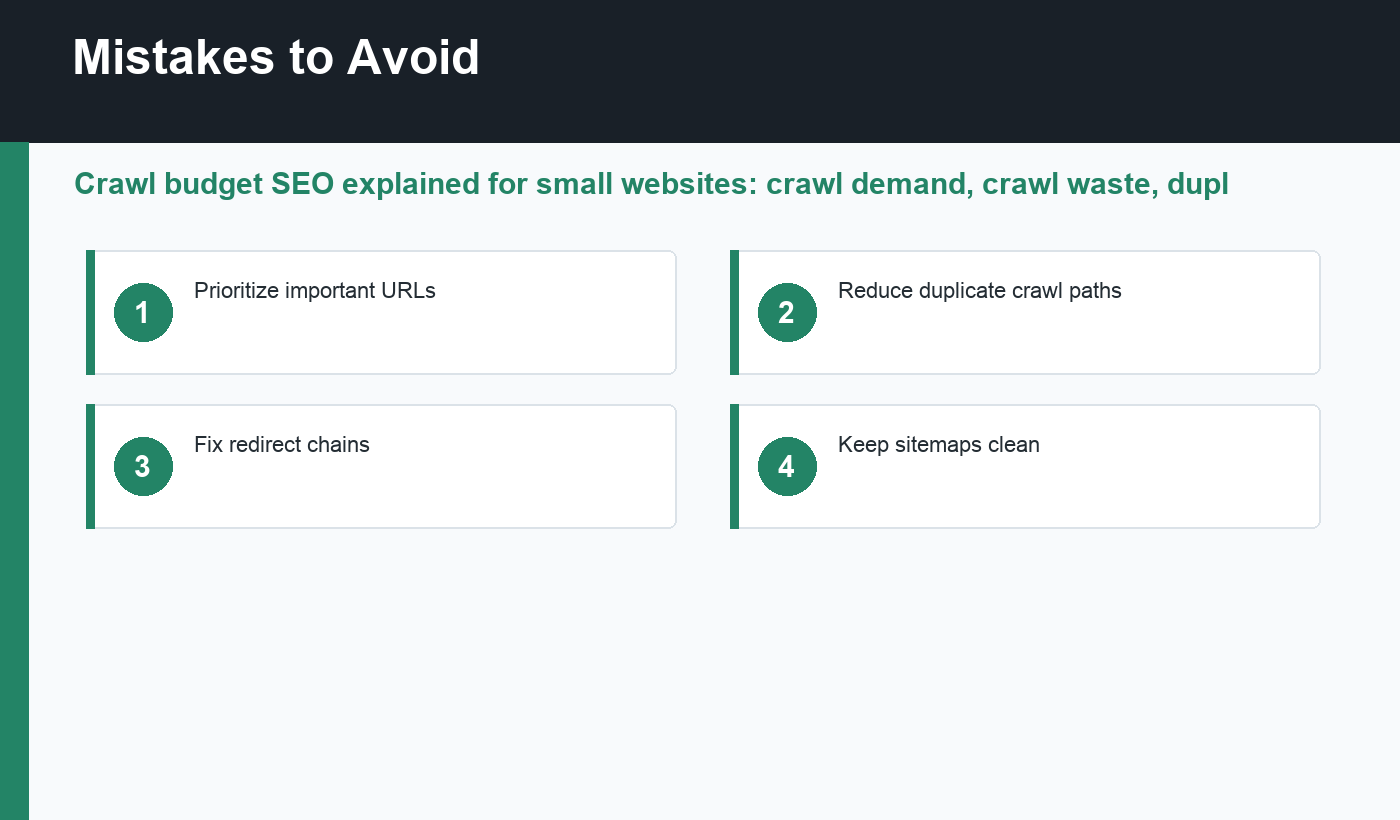
- Prioritize important URLs.
- Reduce duplicate crawl paths.
- Fix redirect chains.
- Keep sitemaps clean.
- Compare the live page with the CMS settings.
- Document the fix and verify the result later.
Do the checks on the final public URL, not only inside the editor. Caching, themes, plugins, CDNs, redirects, and JavaScript can change what users and crawlers actually receive. The live HTML is the truth.
Common mistakes to avoid
The first mistake is changing too many settings at once. If traffic or indexing changes later, you will not know which edit caused the result. The second mistake is optimizing for a tool score while ignoring search intent and usefulness. The third mistake is forgetting old pages when new content goes live.
Use tools to catch patterns, then apply judgment. A page can technically pass an audit and still need clearer examples, stronger internal links, a better title, fresher information, or a more useful format. SEO quality is both technical and editorial.
Maintenance checklist
- Review priority pages first.
- Check the page title and search intent match.
- Confirm indexability and canonical output.
- Review internal links and anchor text.
- Update outdated examples or screenshots.
- Check sitemap inclusion when appropriate.
- Record the change date and reason.
- Revisit performance after Google recrawls the page.
Small-site crawl budget priorities
Most small websites do not need to obsess over crawl budget, but they should still avoid obvious waste. Clean up endless calendar pages, faceted URLs, redirect chains, duplicate archives, and low-value parameter pages. These fixes also improve user experience and reporting clarity.
For larger sites, review server logs and crawl stats. The goal is to help crawlers spend more time on useful, indexable URLs and less time on repeated or low-value variations.
Small cleanup habits now prevent crawl problems from becoming expensive once the site grows.
Final recommendation
Use crawl budget SEO as a practical SEO habit, not a one-time task. Make small, intentional changes, verify the live result, and keep notes so future audits become faster and more reliable.
Discussion
Join the conversation