Refactoring Code: Improve Structure Without Changing Behavior

refactoring code are easier to learn when you connect the concept to a real programming decision. The goal is not to memorize terms. The goal is to make better choices while writing, reviewing, and maintaining code.
This guide explains refactoring code for beginners and early developers. It gives you a practical workflow, common mistakes, and simple ways to apply the idea in real projects.
refactoring code: the practical idea
Old code often works but becomes hard to change. Developers then avoid improvements because every edit feels like it might break hidden behavior.
Refactoring code means improving internal structure while preserving external behavior. That means the concept should help you write code that is easier to reason about, test, debug, and change later.
For a deeper technical reference, read Martin Fowler refactoring definition. Use documentation as a map, then confirm the idea by building a small example yourself.
Why this matters in real projects
Small projects forgive messy decisions. Larger projects do not. A weak structure can make every bug fix slower, every new feature riskier, and every handoff harder for another developer.
refactoring code give you a way to slow down before complexity spreads. You learn what data exists, what behavior belongs where, what can fail, and what needs to be verified before the code is trusted.
This connects naturally with Clean code principles and Unit testing basics. Those related topics show the same habit from another angle: make intent visible, keep feedback close, and reduce surprise.
A simple refactoring code workflow
- Identify the behavior that must not change.
- Add or run tests before moving code.
- Make one small structural change.
- Run the same checks again.
- Commit refactors separately from feature changes.
Keep the workflow small enough that you can repeat it without ceremony. The strongest developer habits are not dramatic. They are ordinary checks done consistently before the code grows expensive to change.
When practicing refactoring code, write down what you expect before running the code. After running it, compare the actual result with the expected result. That one habit trains careful thinking faster than reading another long tutorial.
What to practice first
Start with Behavior, Names, Duplication, and Tests. These ideas appear constantly in application code, API code, tests, deployment scripts, and debugging sessions.
Use tiny examples first: one file, one function, one request, or one command. Then apply the same idea to a real feature. A concept becomes durable when it survives contact with your own project.
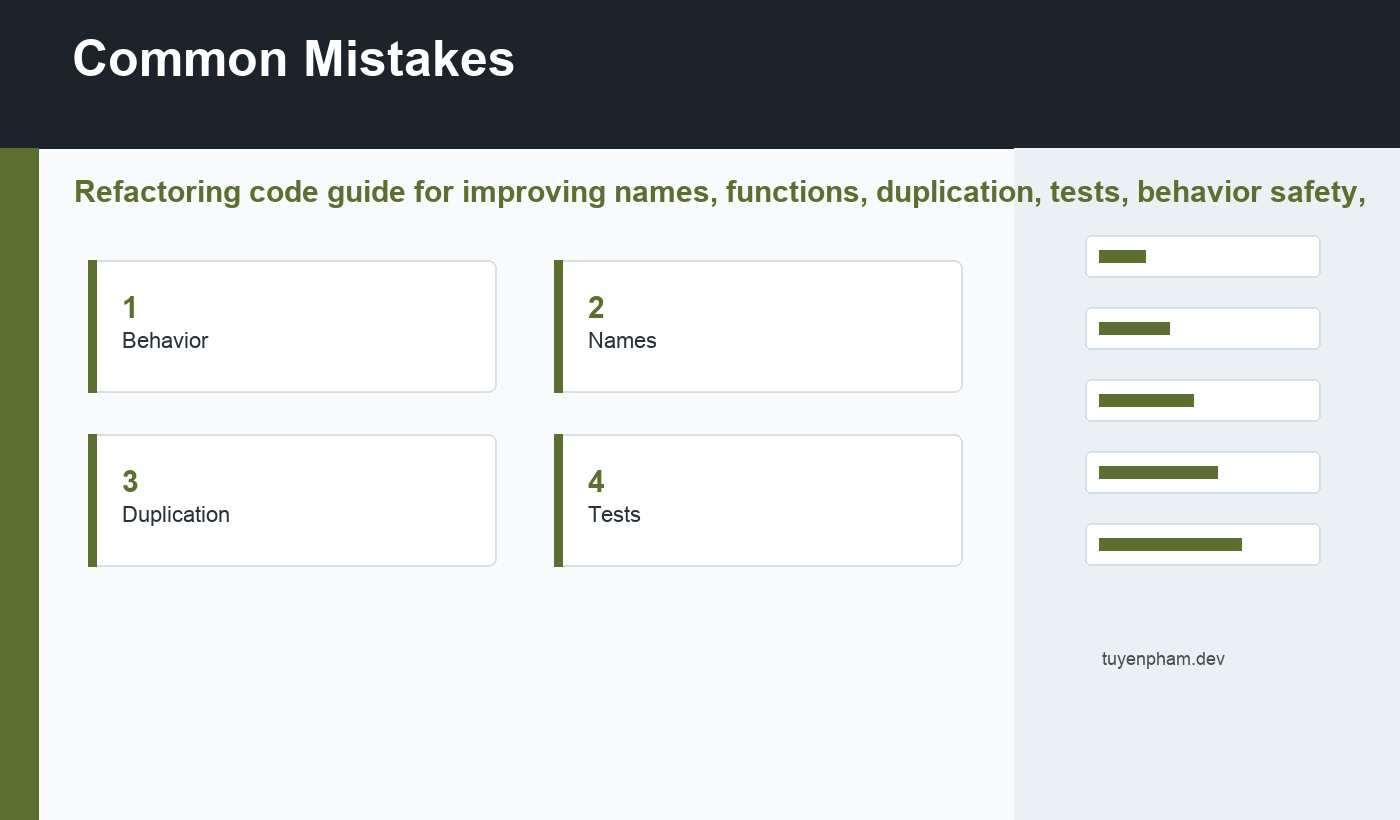
Common mistakes
- Changing behavior and structure at the same time.
- Refactoring without tests or examples.
- Renaming everything in a large diff.
- Cleaning unrelated files during a focused task.
Most beginner mistakes are not caused by a lack of talent. They happen because the feedback loop is too wide. If you make ten changes before running the code, the problem becomes harder to isolate.
How to apply this today
Choose one file in an active project and inspect it through the lens of refactoring code. Ask what the code is trying to do, what assumptions it makes, and where a future developer could misunderstand it.
Then make one small improvement. Rename a vague value, add a missing check, split one crowded function, write one test, improve one log message, or document one setup requirement.
Do not mix cleanup with unrelated feature work when the change is risky. A focused improvement is easier to review, easier to revert, and easier to learn from.
How to measure progress
You are getting better at refactoring code when you can explain your choice in plain language. You should know why you used a structure, pattern, command, test, or configuration approach instead of another option.
Progress also shows up in calmer debugging. When something breaks, you can reproduce the issue, inspect the right signal, and make one deliberate change instead of editing randomly.
Final recommendation
Treat refactoring code as a practical habit. Read the documentation, build a tiny example, apply it to a real project, and keep notes on what worked. That is how programming knowledge becomes reliable.
Discussion
Join the conversation