Product Schema SEO: Match Structured Data to Real Product Information

Product schema SEO helps a search engine interpret product information that a page genuinely presents. Google documents different product experiences, including product snippets and merchant listings, with requirements that vary by use case. Valid markup can make a page eligible for supported features, but it does not guarantee that they appear. Begin with an accurate product page, then describe its identity, offer, availability, and other applicable facts. Structured data should reinforce the visible product information rather than invent a more attractive version of it.
product schema SEO: a practical decision process
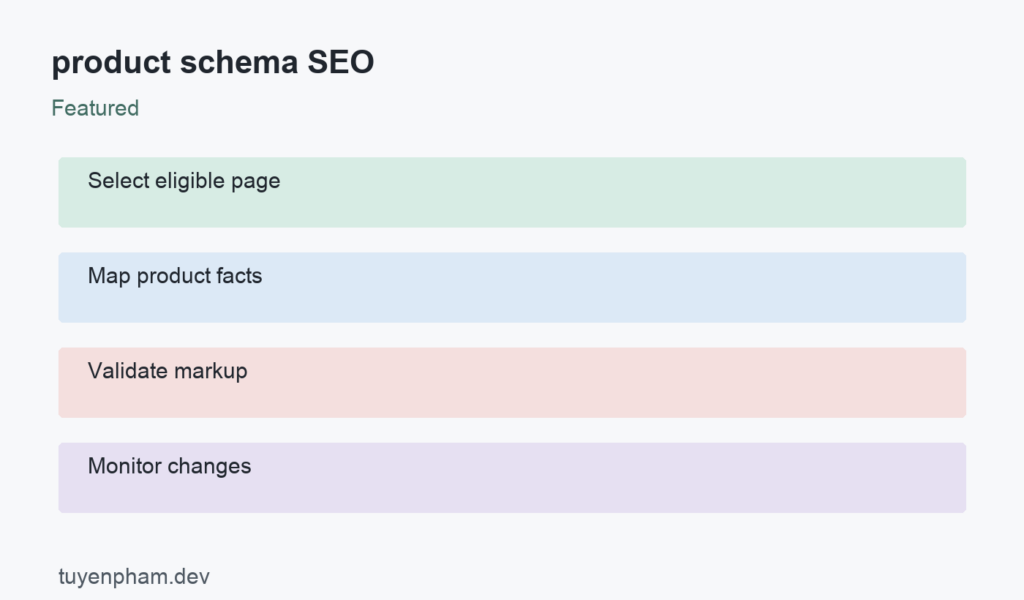
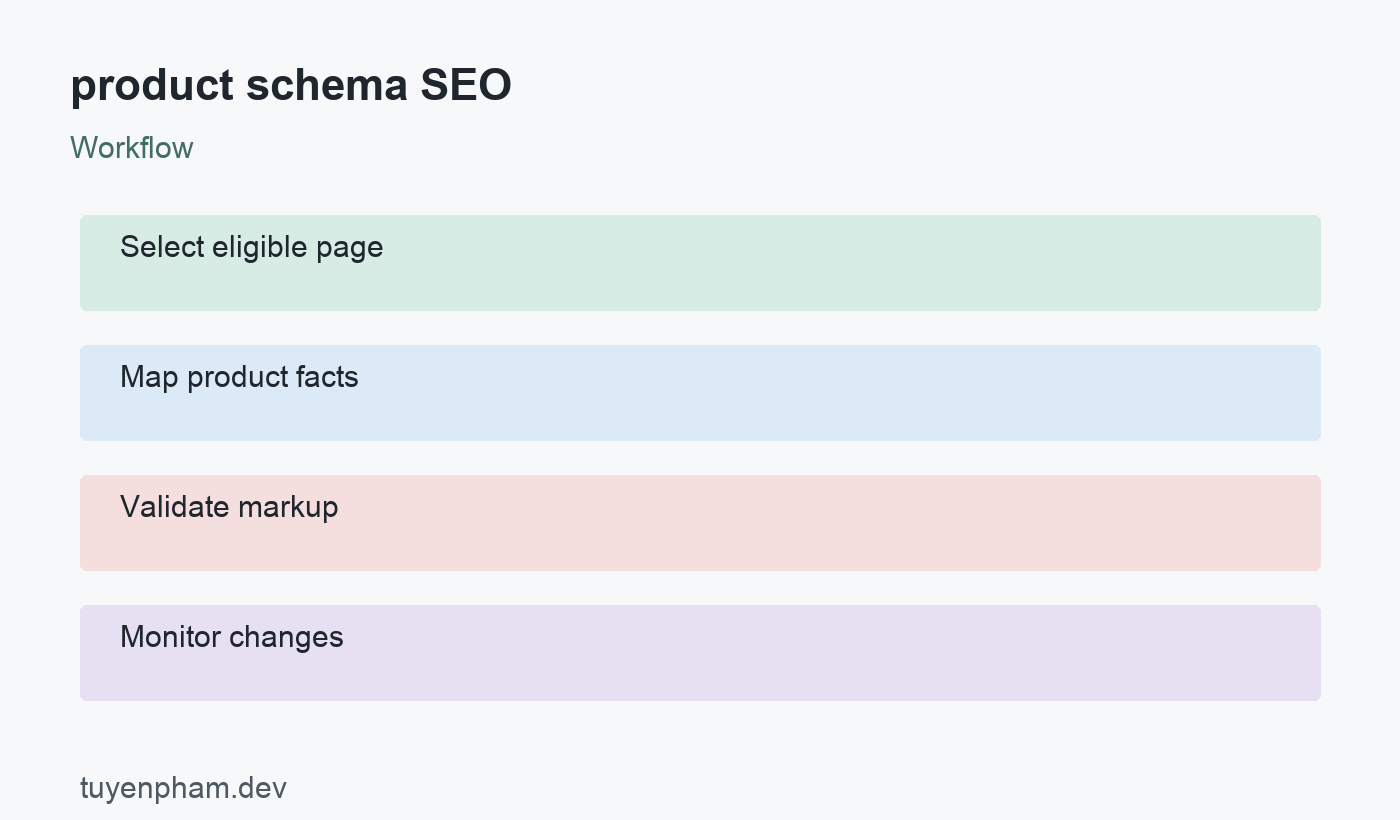
Follow this sequence: Select eligible page → Map product facts → Validate markup → Monitor changes. Use it to organize the work, then verify the editorial and technical choices described below. The example is hypothetical and illustrates the decision rather than claiming a measured ranking result.
Match the page to the intended product experience
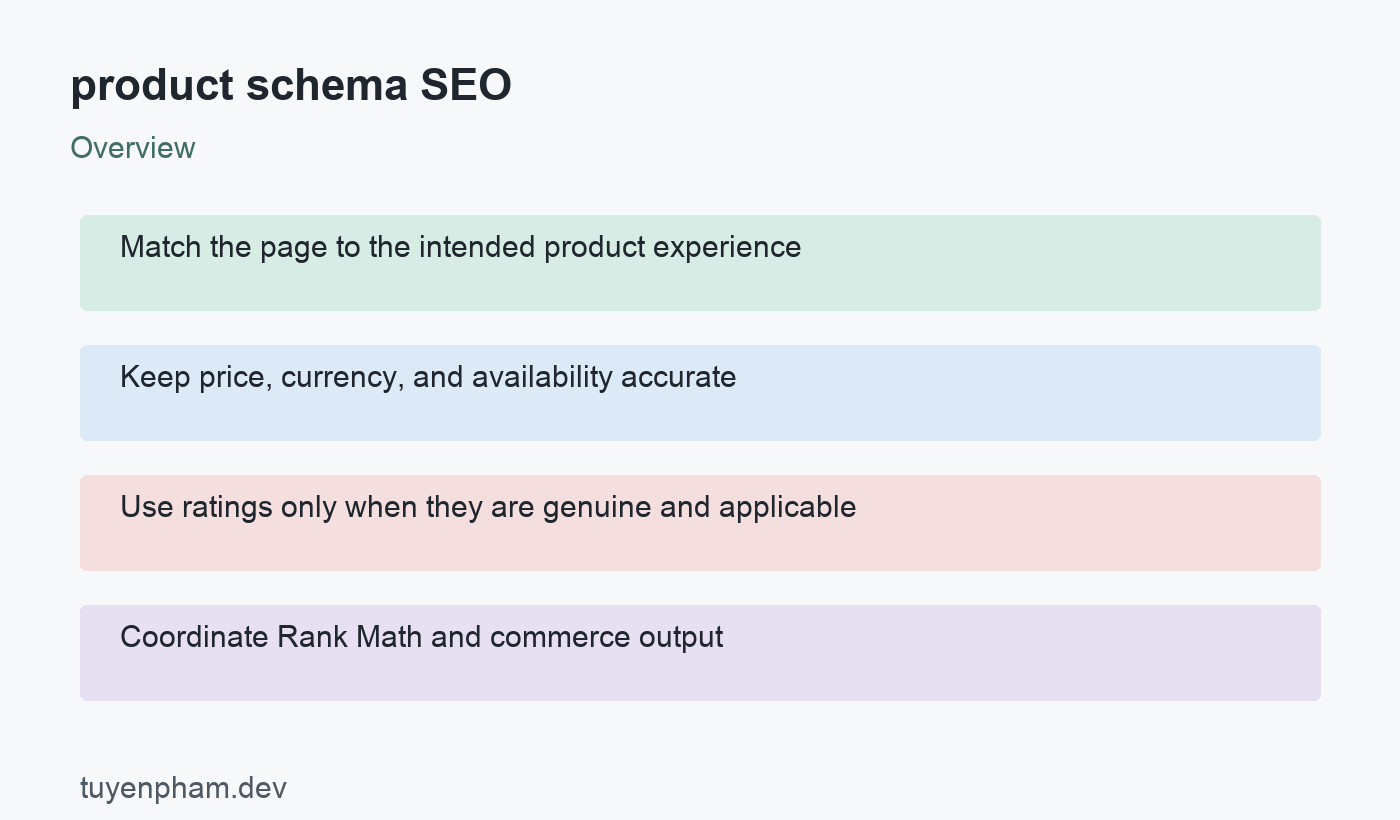
A product page, a review, and a category listing do not all qualify for the same structured-data treatment. Check Google documentation for the specific experience and current requirements. A page offering a purchase can have different eligibility details from a page discussing a product. Avoid applying one Product object with fabricated offer data to an entire category. Product variants and multiple offers require deliberate modeling. Choose the representation based on the real page and commerce system, not on a desire to obtain a particular search appearance.
Keep price, currency, and availability accurate
Map structured data from the same source that supplies visible product information wherever possible. Prices, sale periods, availability, and currency can change quickly. A cached schema block that disagrees with the page can mislead users and invalidate the implementation. Use appropriate identifiers when they actually exist and do not make up GTIN values. Ensure the destination page works for the intended visitor. If a price depends on choices or location, model the offer according to the relevant requirements rather than selecting an arbitrary convenient number.
Use ratings only when they are genuine and applicable
Do not manufacture aggregate ratings or attach a store-wide rating to every product. Reviews and ratings must follow the policies for the markup and feature being used. Show relevant information on the page and preserve its relationship to the actual product. A valid JSON document is not evidence that the claims inside it are true. If a page has no applicable rating data, omit it and meet the requirements through an appropriate supported combination of properties rather than inventing proof of popularity.
Coordinate Rank Math and commerce output
Rank Math documents Product schema and WooCommerce integration that can use commerce data. Confirm which plugin or theme owns the final product markup. Several tools may output separate objects that disagree about price or availability. Check the rendered source and the Rich Results Test instead of relying on the editor configuration. Some schema customization options depend on product edition and setup, so follow documentation for your environment. Keep the implementation tied to product updates rather than manually maintaining every changing value in an SEO field.
Validate a changing product, not just one snapshot
Test a product in stock, an out-of-stock product, and any variant or sale state used by the store. Distinguish required errors from optional recommendations. Monitor Search Console reports for the relevant product enhancement and investigate regressions after theme or plugin releases. Merchant Center feeds can also supply product information, so check consistency across connected sources where applicable. Search eligibility is not the same as a visibility promise. Maintain accuracy even when Google chooses a plain result for a valid page.
Worked example
A store changes a backpack price from 79 to 69 during a sale. The visible page updates, but a second plugin still outputs an old Offer with price 79. The fix identifies the authoritative product source, removes conflicting markup, and refreshes the appropriate cache. Testing also covers the end of the sale and an out-of-stock state. The goal is consistent product facts across the page and its structured data, not merely a green validator result at one moment.
Implementation checklist
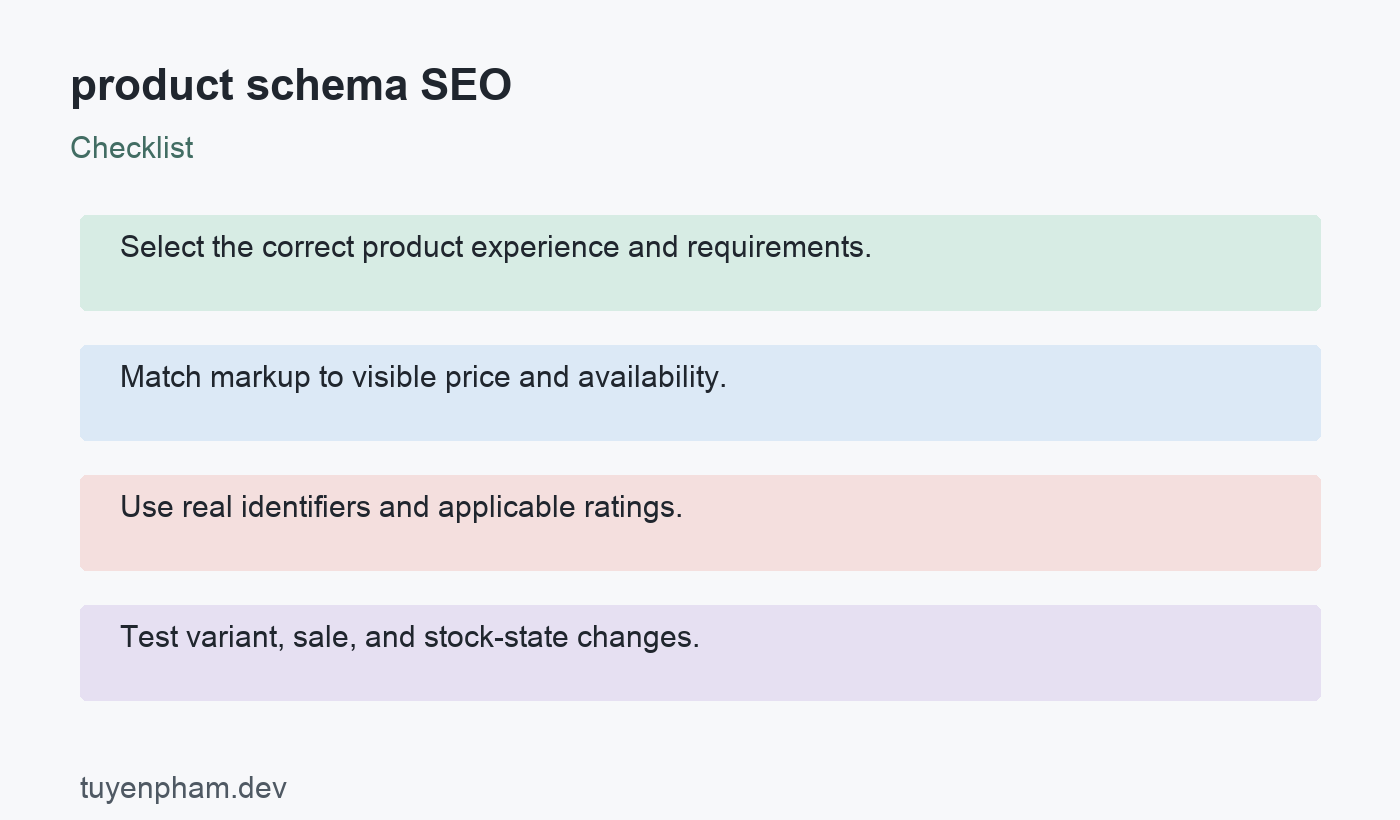
- Select the correct product experience and requirements.
- Match markup to visible price and availability.
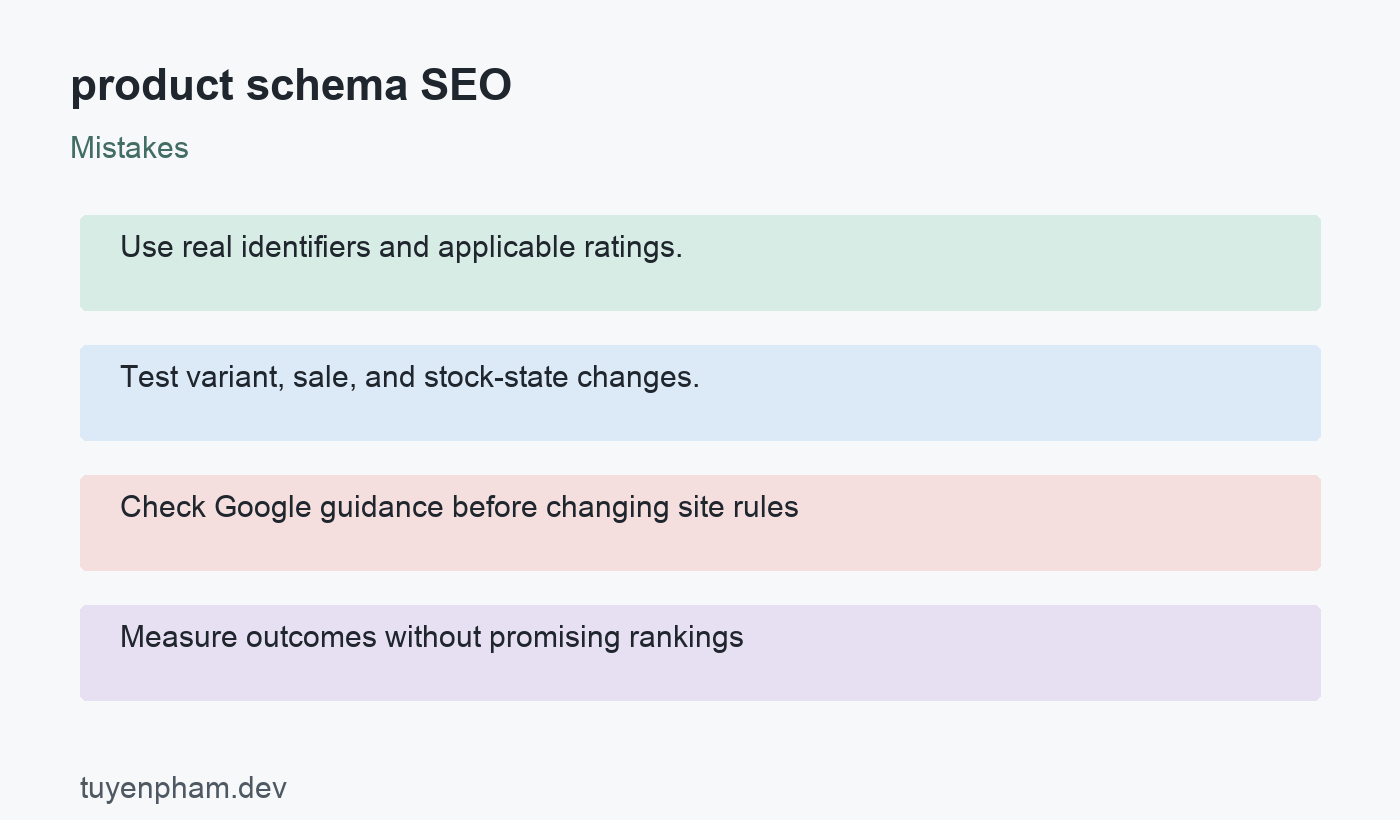
- Use real identifiers and applicable ratings.
- Test variant, sale, and stock-state changes.
A focused task for your website
Audit three product pages with different states. Extract visible product facts and compare them with every Product and Offer object in the rendered page. Run the Rich Results Test and classify errors and recommendations. Change a product value in a test environment and confirm the markup updates with it. Document which component owns the data. If feeds are connected, compare their current information too before declaring the product representation consistent.
References and next steps
Consult Google Search Central documentation for the relevant search requirements and Rank Math guidance on this topic for practical workflows. Continue with Ecommerce Seo Basics and the SEO audit checklist for related implementation checks.


Discussion
Join the conversation