Ecommerce SEO Basics: Product and Category Page Optimization

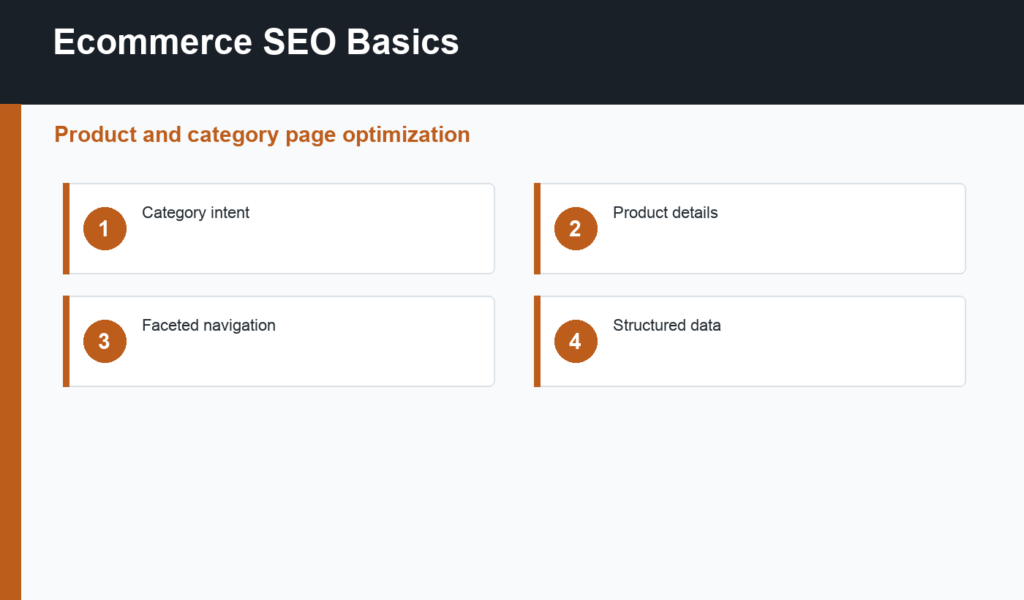
Ecommerce SEO basics help product and category pages earn search traffic from people who are comparing, choosing, and buying. Ecommerce SEO is different from ordinary blogging because the site must manage product details, categories, filters, stock changes, reviews, duplicate URLs, and structured data.
This guide covers beginner priorities for small stores. It connects general SEO basics with product and category page decisions that affect revenue.
Ecommerce SEO basics start with categories
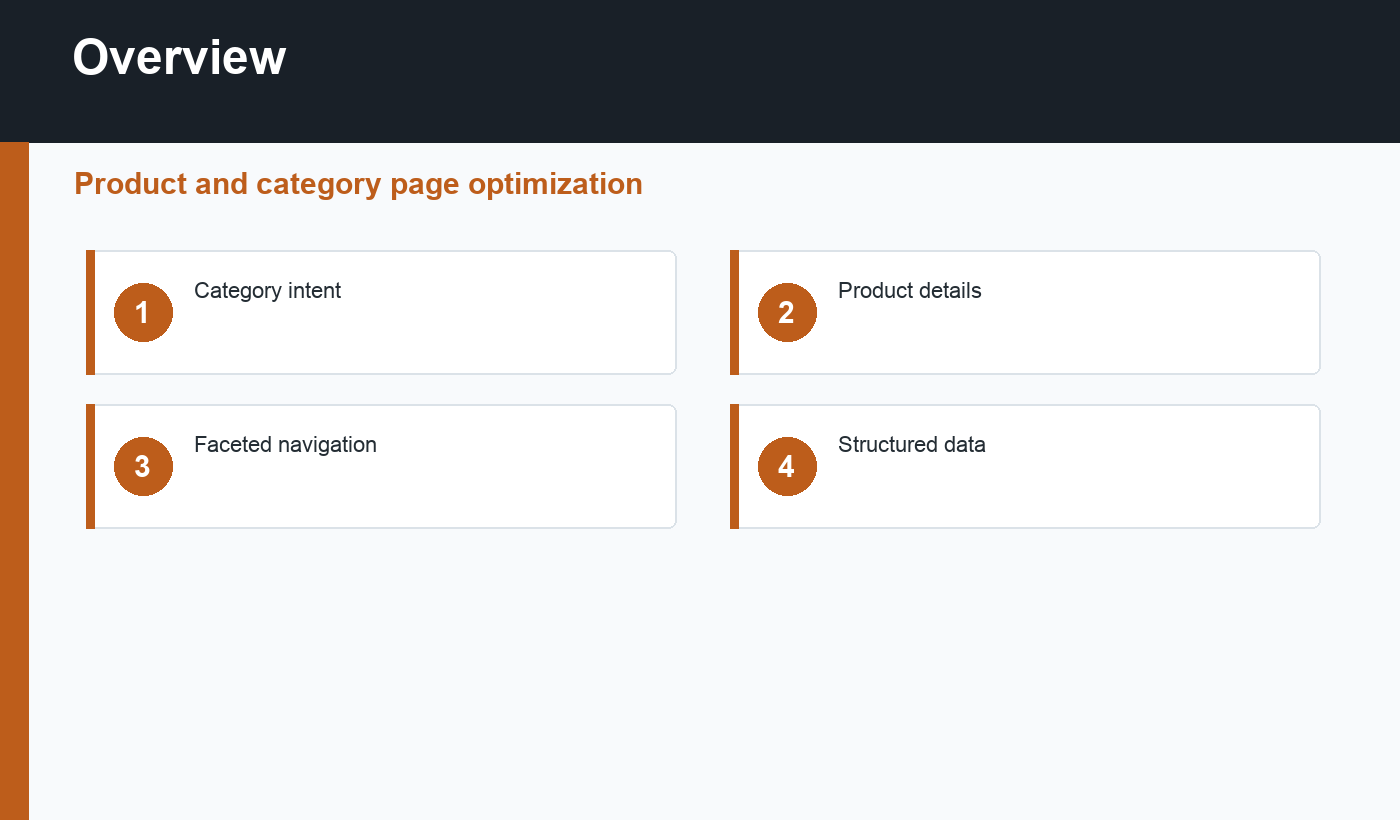
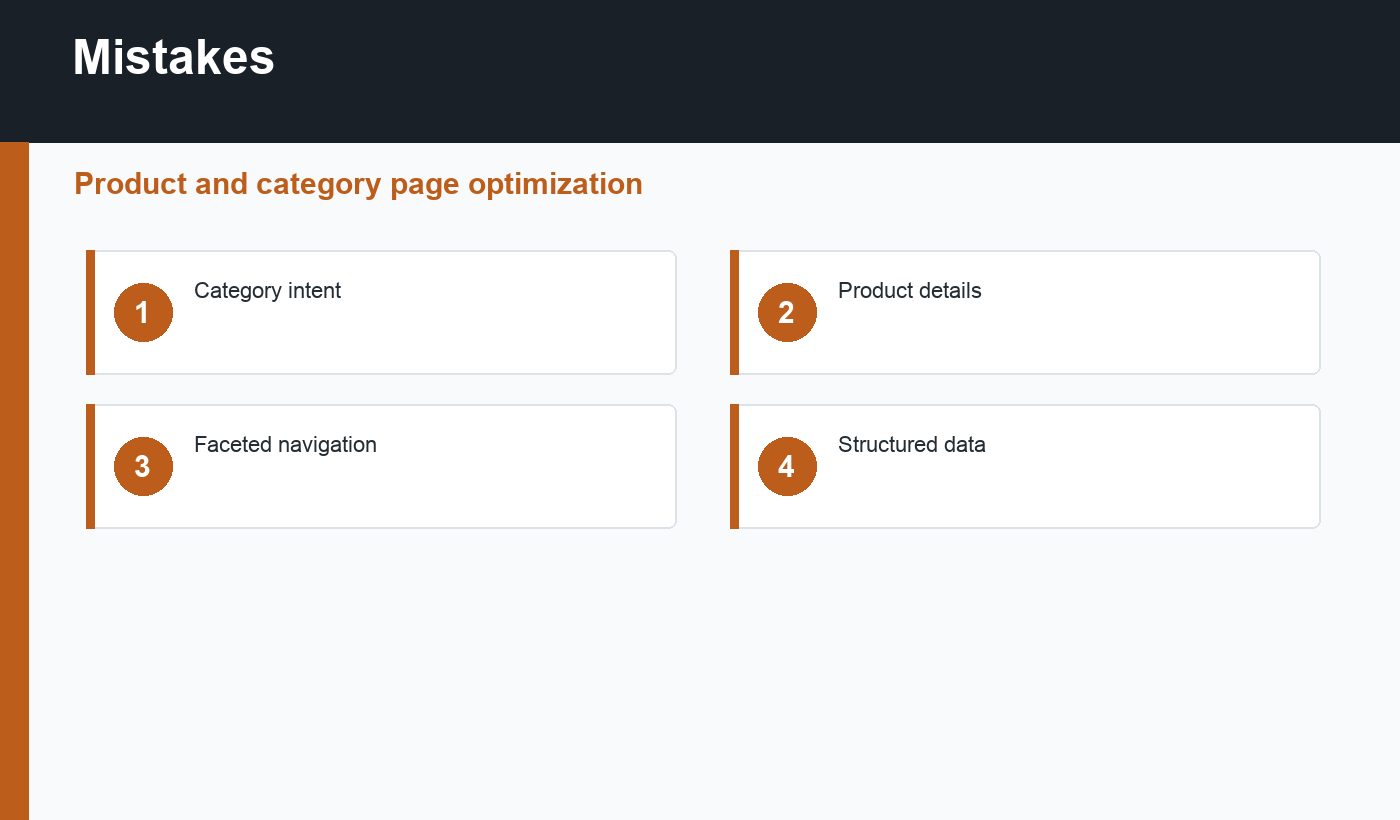
Category pages often target broader commercial intent than individual products. A category page for “running shoes” can attract shoppers who are still comparing options. It should include useful filters, clear product listings, short helpful copy, internal links to subcategories, and clean indexability rules.
Google’s ecommerce SEO documentation explains product data, structured data, URLs, and discovery considerations for online stores. Use it as a primary reference when building store templates.
Optimize product pages
Product pages should answer buyer questions. Include unique descriptions, specifications, benefits, high-quality images, price, availability, shipping or return details, reviews when available, and clear calls to action. Avoid using only manufacturer descriptions if many other stores publish the same text.
Use descriptive titles that include the product name and a key differentiator. Meta descriptions should be accurate and helpful. Image alt text should describe the product, not repeat keywords mechanically.
Handle filters and duplicate URLs
Faceted navigation can create many URL variations for color, size, price, brand, rating, and sorting. Some filtered pages are useful. Many are duplicate or thin. Decide which filtered pages should be indexable and which should be canonicalized, blocked from crawling, or kept out of sitemaps.
This is where a technical SEO checklist matters. Ecommerce sites can create crawl waste quickly if every filter combination becomes a crawlable URL.
Use structured data carefully
Product structured data can help search engines understand price, availability, ratings, brand, and product details. The markup should match visible page content. Do not add review markup if reviews are not actually shown to users.
For WordPress or WooCommerce sites, an SEO plugin may help output product schema, but the store data itself still needs to be accurate. Schema cannot fix missing product information.
Ecommerce SEO checklist
- Make category pages useful for shoppers.
- Write unique product descriptions.
- Add complete product details and images.
- Keep price and availability accurate.
- Control filter and sorting URLs.
- Use product schema that matches visible content.
- Keep out-of-stock handling intentional.
- Track organic traffic, revenue, and conversion rate together.
Out-of-stock and discontinued products
Out-of-stock handling affects both users and SEO. If a product will return soon, keep the page live, explain availability, and suggest alternatives. If a product is permanently discontinued, redirect to the closest replacement or a useful category when that helps users. Avoid deleting valuable pages without a plan.
For seasonal products, keep stable URLs when possible. Updating one strong page each season is often better than creating a new thin page every year.
Also review internal search data from your store. Searches with no results, repeated product questions, or frequent filter combinations can reveal category pages, buying guides, or product content that shoppers already want.
Keep SEO and merchandising connected. A category that ranks well should still help shoppers choose quickly with useful sorting, filters, trust signals, and clear product information.
Review top categories regularly because small improvements to those pages can affect many products and many search journeys at once.
For new stores, improve a few important categories deeply before creating dozens of thin collection pages.
Final recommendation
Master ecommerce SEO basics by making product discovery easier and purchase decisions clearer. Strong category pages, complete product pages, clean technical rules, and accurate structured data work together.



Discussion
Join the conversation