Long Tail Keywords: Target Specific Needs Without Creating Thin Pages

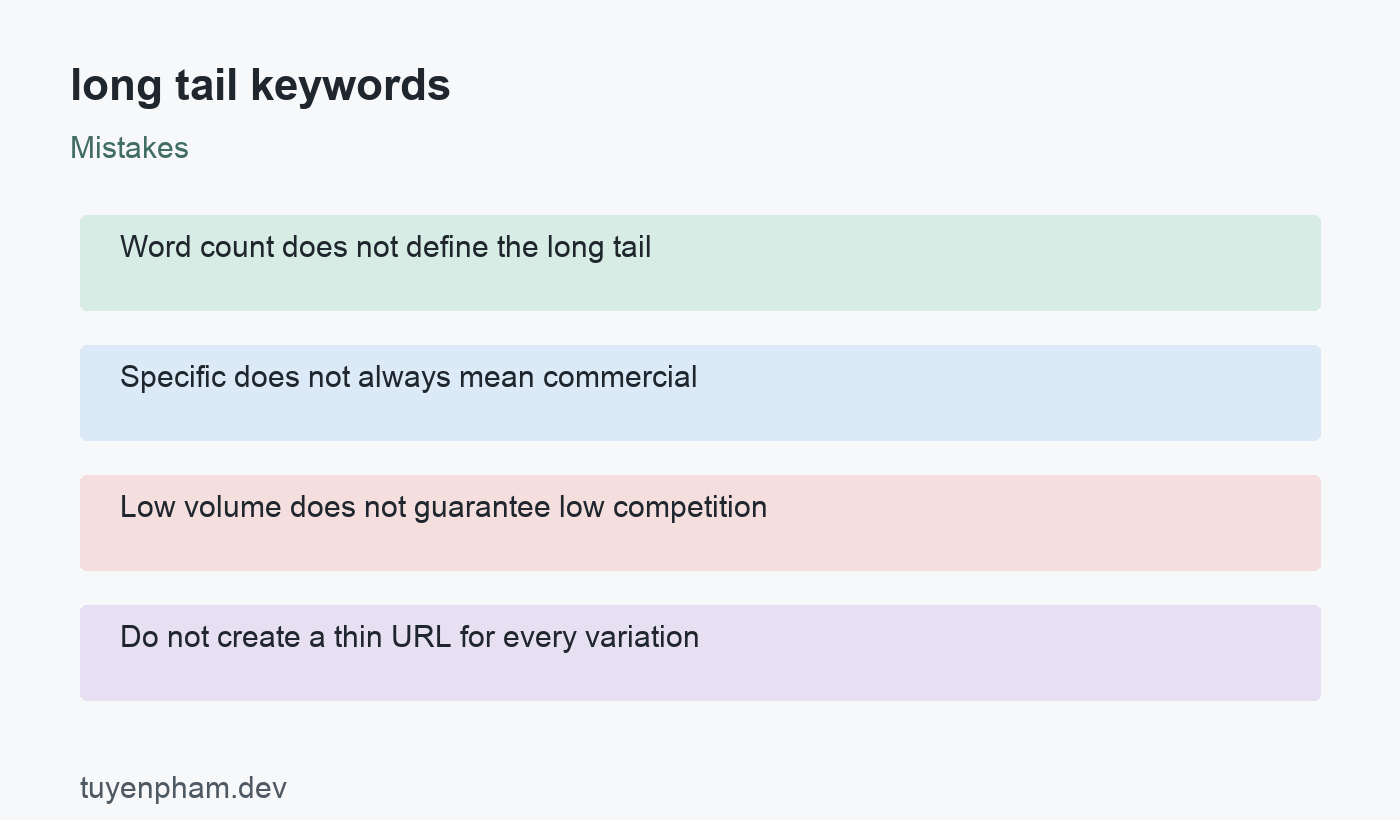
Long tail keywords are lower-demand queries in the long tail of the search-demand distribution. They often express a specific need, but they are not defined simply by having three or more words. A short niche query can have little demand, while a long popular phrase can be widely searched. Specific queries can be valuable when they match your audience and offering. Their length does not guarantee low competition, easier rankings, or a visitor who is ready to buy.
long tail keywords: a practical workflow
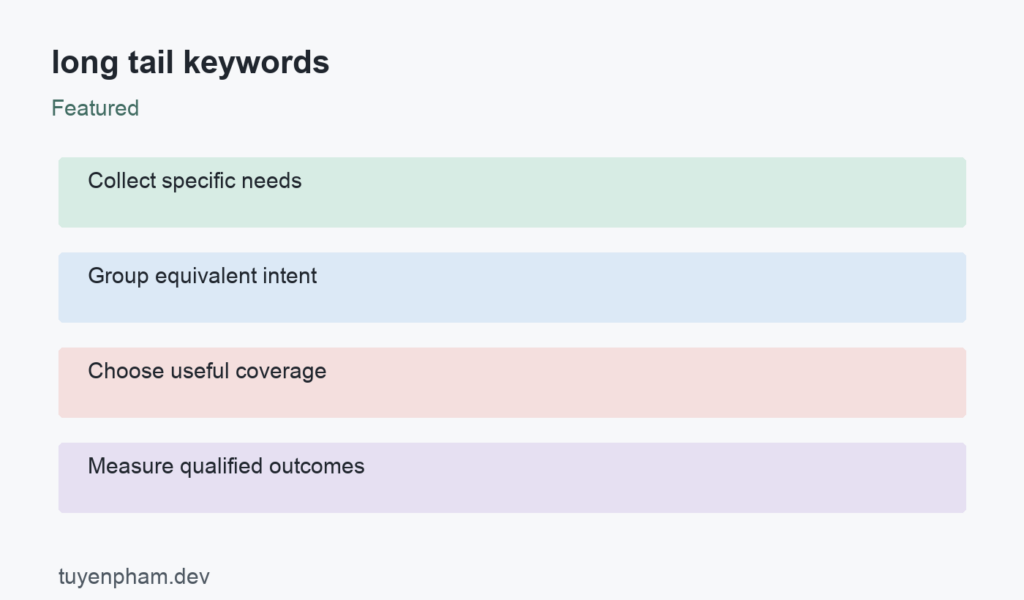
Use this sequence to organize the work: Collect specific needs → Group equivalent intent → Choose useful coverage → Measure qualified outcomes. The sections below explain the evidence, decisions, and limitations at each stage. The worked example is hypothetical and illustrates a process rather than a measured result from this website.
Start with problems your audience recognizes
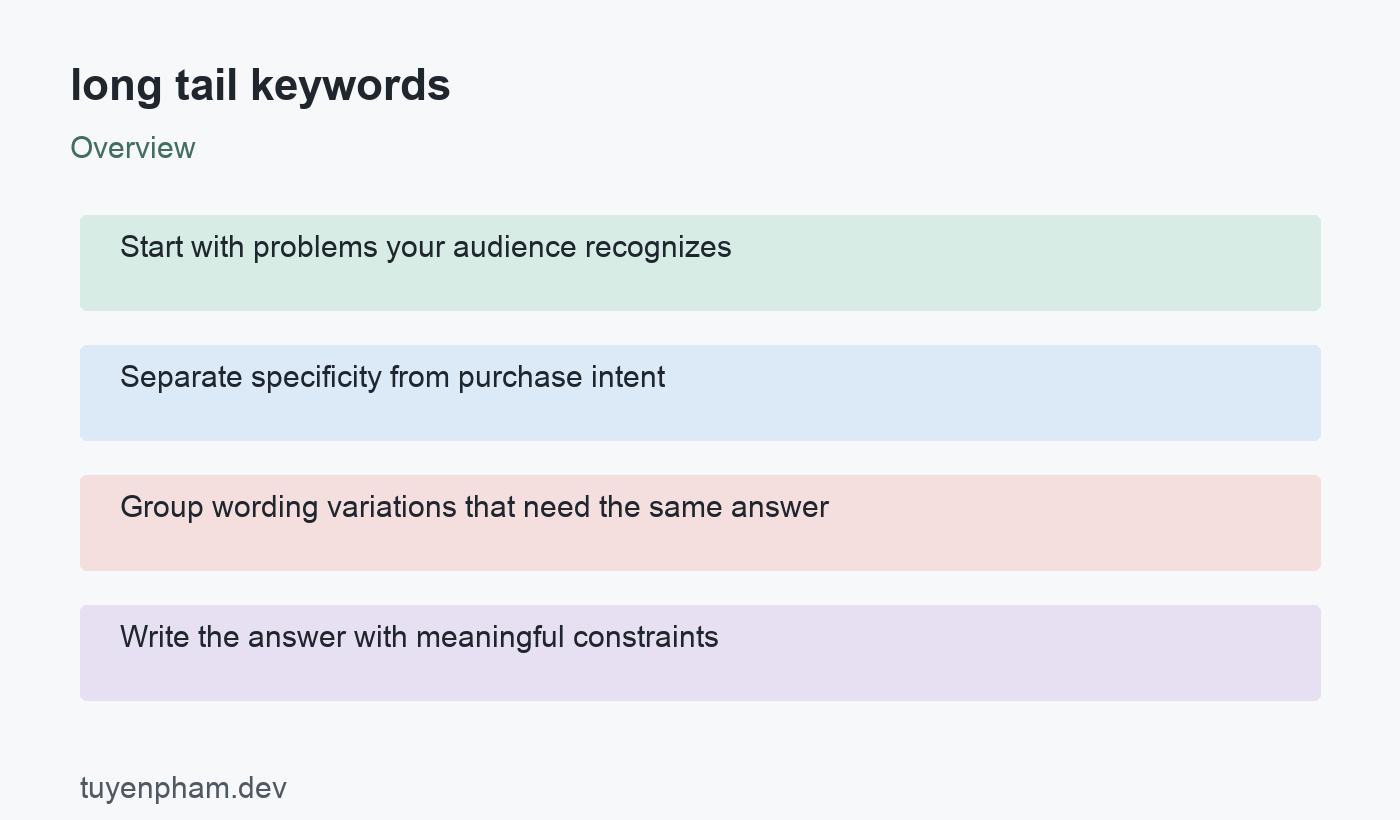
Collect specific questions from support conversations, product use, internal site search, and relevant search-query data. Look for constraints such as platform, version, budget, environment, or a particular error. These details can reveal a real task. Keyword tools may underestimate very small query groups, so use them with qualitative evidence rather than discarding every phrase shown as zero volume. At the same time, an obscure phrase is not automatically valuable merely because no competitor has written an exact-match title.
Separate specificity from purchase intent
A query about fixing a deployment error can be highly specific while remaining informational. A query naming a subscription plan and price can be closer to a purchase decision. Evaluate the task rather than assigning intent from phrase length. Inspect relevant results to understand expected formats and constraints. Rank Math compares broad and specific keyword opportunities; use that distinction to think about audience fit, while treating statements about easier rankings or better conversion as possibilities to verify on your own site.
Group wording variations that need the same answer
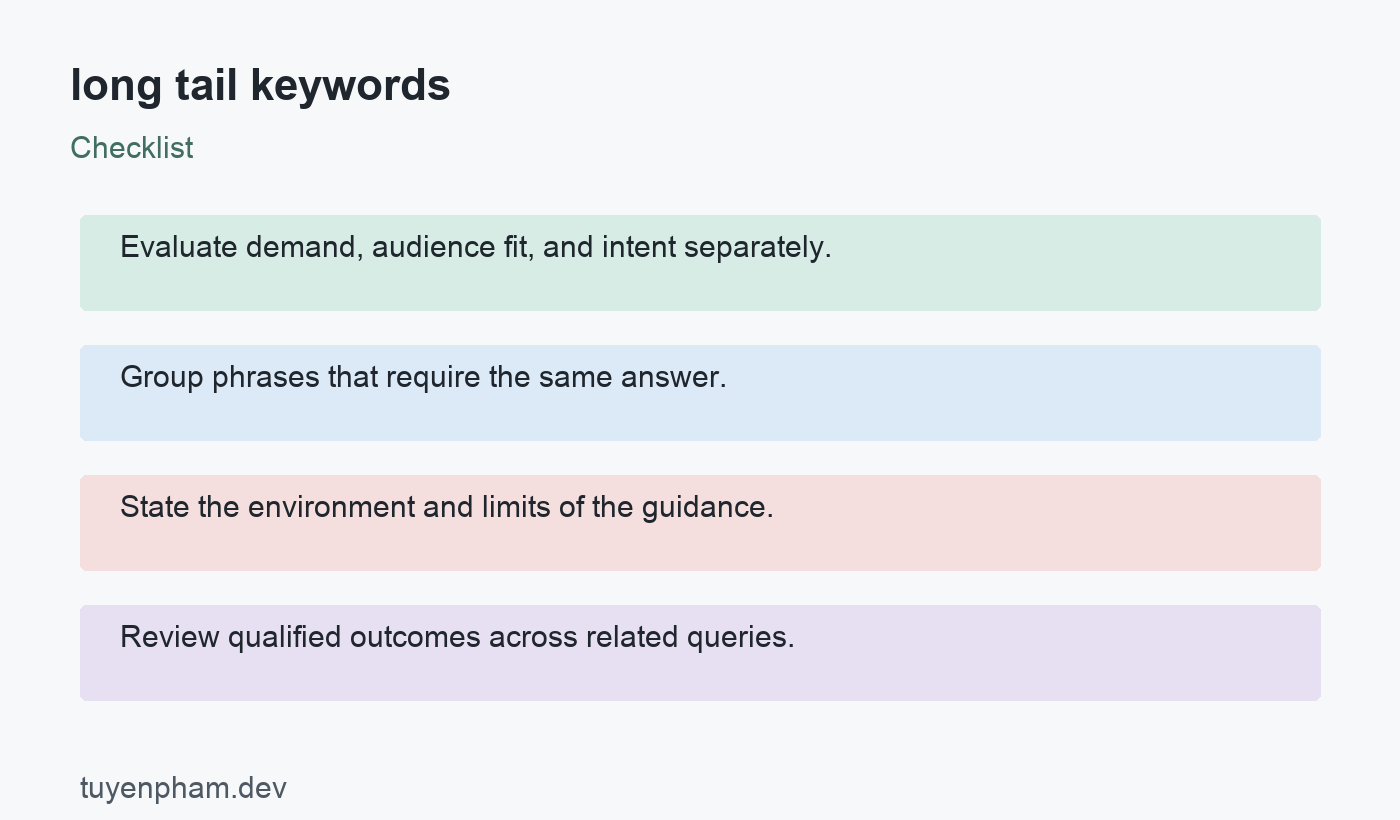
Different phrases can describe the same problem. Google’s language matching systems can relate a page to queries even when it does not repeat every exact wording. Create one clear resource when the required procedure, evidence, and outcome are substantially the same. Split topics when the environment or user task genuinely changes the answer. Avoid a collection of near-identical pages where only a city, version, or adjective differs. That approach increases maintenance work without necessarily giving readers more useful guidance.
Write the answer with meaningful constraints
Explain who the instructions apply to, what prerequisites are needed, and which outcome the reader should expect. Add a relevant example and important failure cases. Use natural terminology rather than repeating a long phrase in every heading. A focus keyword in Rank Math can organize an editorial brief, but its stored value is not a list of queries Google is required to rank the page for. The content should solve the problem and link to broader context when readers need it.
Measure a topic group instead of one tiny phrase
Individual low-demand queries can be noisy and may not all appear in Search Console reports. Review relevant query groups, landing-page outcomes, and qualified actions over a reasonable period. A page can receive useful visits from variations you did not anticipate. Avoid interpreting a few daily clicks as a stable trend. Keep the resource current when platform behavior changes, and consolidate repetitive coverage when several pages end up answering the same task.
Worked example
A site receives repeated questions about a WordPress sitemap returning a 404 after a permalink change. Queries such as "sitemap missing after permalink update" and "WordPress sitemap 404 fix" may need the same troubleshooting procedure. One resource can explain diagnosis, configuration checks, and safe next steps. A different problem involving an authentication wall deserves separate treatment if the answer changes. The grouping follows the required solution, not an arbitrary number of words in the search query.
Verification checklist
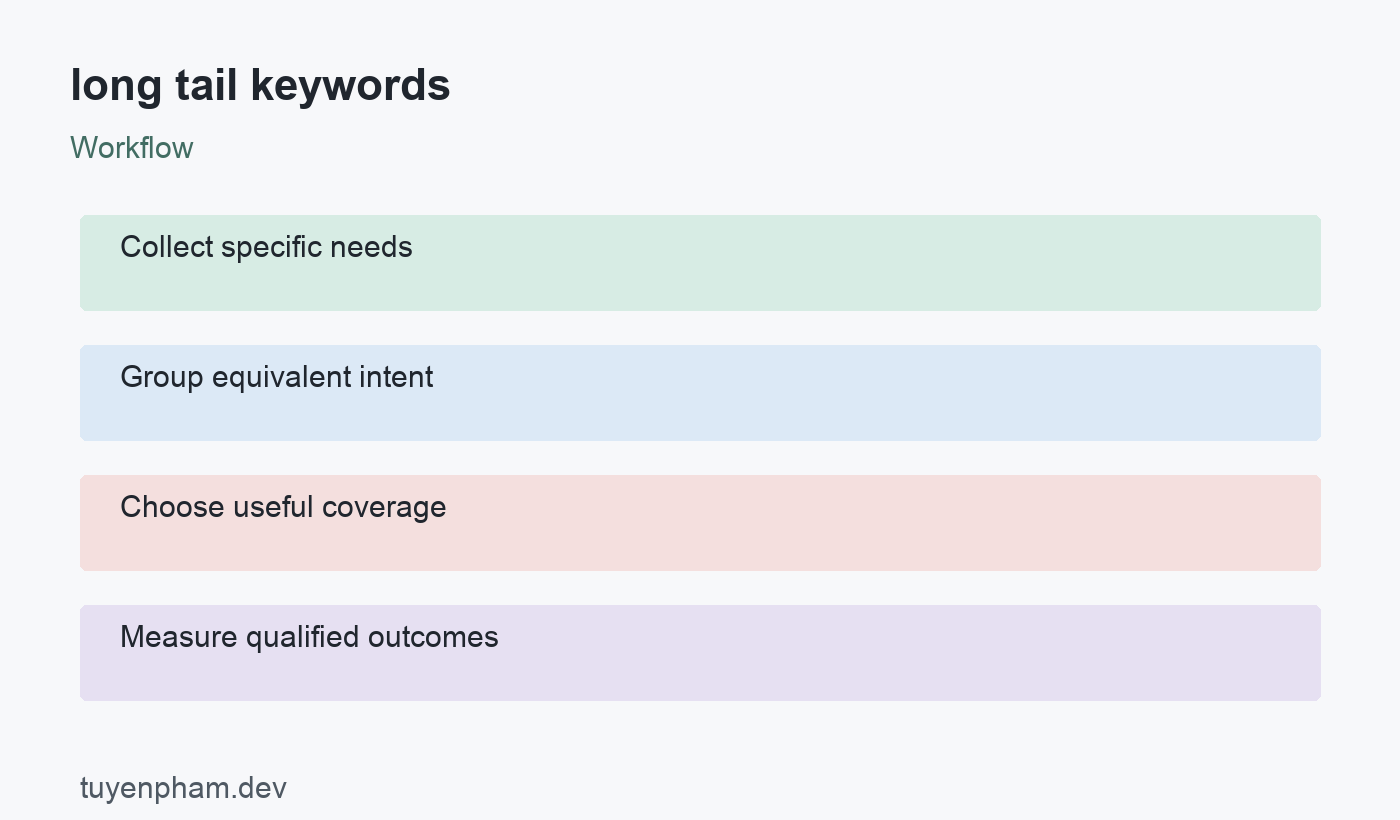
- Evaluate demand, audience fit, and intent separately.
- Group phrases that require the same answer.
- State the environment and limits of the guidance.
- Review qualified outcomes across related queries.
A focused task for your website
Collect twenty specific questions from one audience workflow. Group them by the solution a reader needs, then choose one existing page to improve and one distinct topic worth a new resource. Write the prerequisites and success criteria before drafting. Add examples that support the answer instead of repeating every phrase. At review, assess the topic group and page usefulness. Do not declare failure simply because one exact query has little reported data.
References and related reading
Review Google Search Central documentation for the relevant platform guidance, and Rank Math guidance for the related workflow for practical SEO checks. Continue with Keyword Research For Seo and the SEO audit checklist to connect this task with the rest of your site review.
Discussion
Join the conversation