Keyword Research for SEO: Beginner Workflow That Works


Keyword research for SEO is the process of finding topics people search for, understanding why they search, and deciding which pages your site should create. Good keyword research is not just collecting high-volume phrases. It is choosing topics your site can answer better than the pages already ranking.
This workflow fits before writing an SEO content brief and before optimizing a page with an on-page checklist. Research first, write second, optimize third.
Keyword research for SEO starts with seed topics
Start with broad seed topics from your business, audience, products, services, and existing content. A WordPress site may start with “WordPress SEO,” “site speed,” “schema markup,” and “indexing.” A PHP learning site may start with “PHP basics,” “PHP forms,” and “PHP security.”
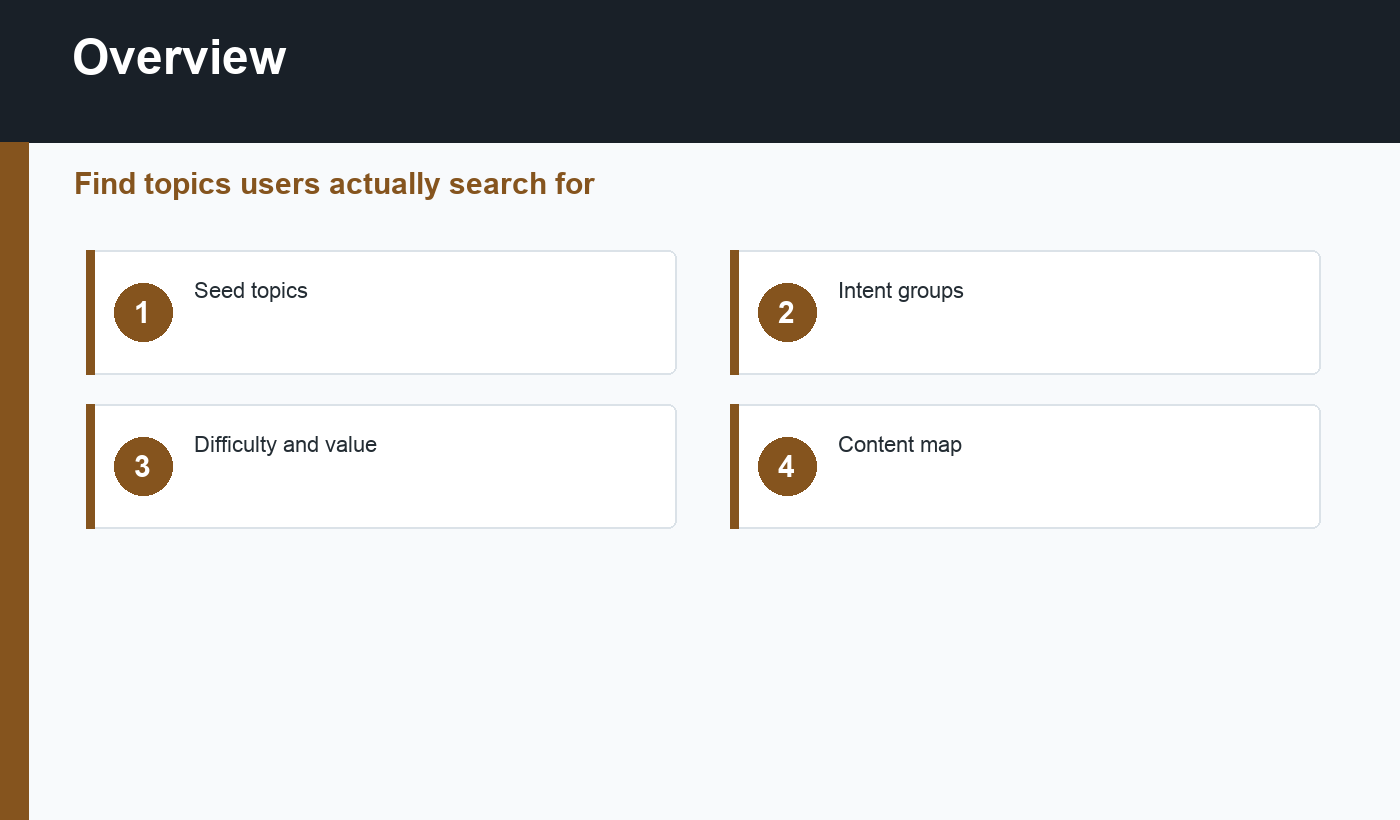
Then expand seeds into specific queries. Use Google autocomplete, People Also Ask, Search Console data, competitor pages, internal site search, support questions, and keyword tools. Rank Math’s keyword research guidance is useful for turning broad ideas into targetable article topics.
Group keywords by intent
Do not create a separate article for every similar phrase. Group keywords that share the same intent. “How to write title tags,” “SEO title examples,” and “meta title best practices” may belong on one strong page. A comparison query and a tutorial query usually need different pages.
Look at the current search results. Are top pages guides, product pages, local packs, videos, tools, category pages, or comparisons? The format tells you what users and search engines expect.
Balance difficulty and value
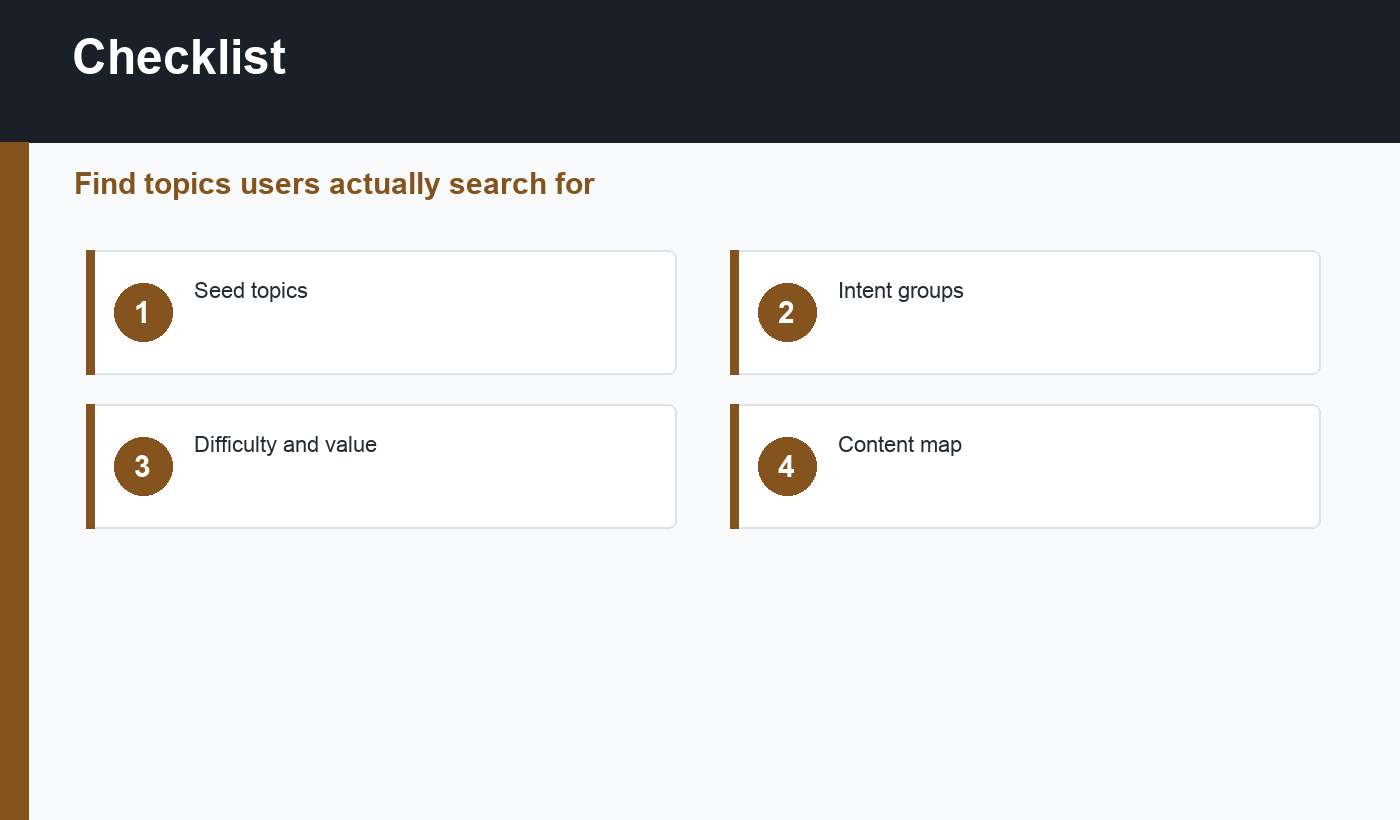
A keyword with huge volume is not always the best target. New sites often grow faster by publishing specific, useful pages with realistic competition. Choose keywords where your expertise, examples, and internal links can create a genuinely better result.
Business value matters too. A low-volume query from a ready buyer can be more valuable than a high-volume beginner query. Build a mix of educational, comparison, and conversion-focused pages.
Map keywords to pages
Each important page should have one primary keyword and a cluster of related terms. Avoid targeting the same primary keyword with multiple pages. That creates internal competition and makes it harder to decide which page should rank.
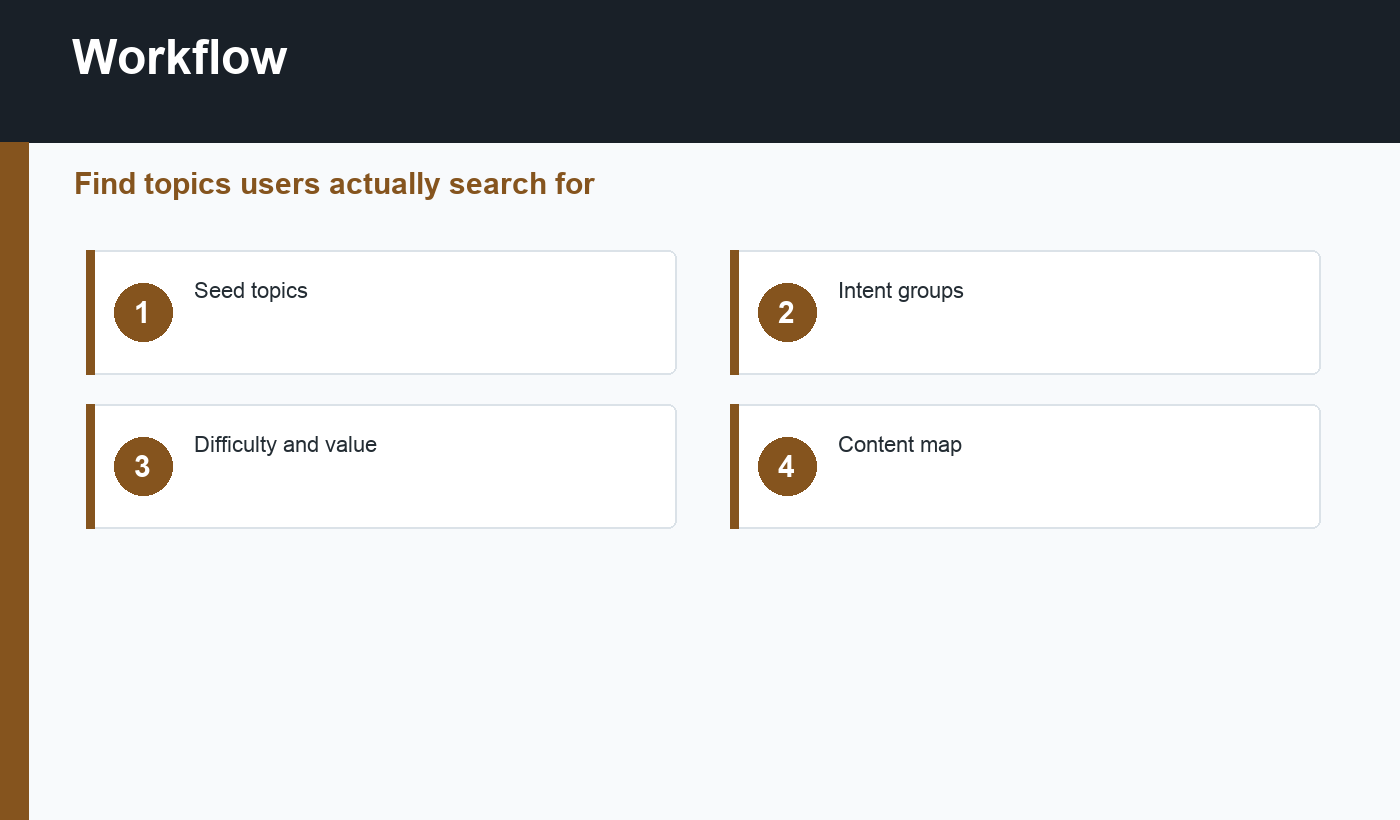
Use internal links to connect the map. A broad pillar page can link to supporting articles, and supporting articles can link back to the pillar. This is the same structure described in internal linking for SEO.
Keyword research checklist
- Collect seed topics from real audience problems.
- Expand ideas with search data and competitor review.
- Group keywords by shared intent.
- Check the format of ranking pages.
- Estimate difficulty and business value.
- Assign one primary keyword per page.
- Plan internal links before writing.
- Refresh research as search results change.
Turn research into priorities
After collecting keywords, score them with a simple model: relevance, intent clarity, business value, competition, and whether you can create a genuinely useful page. A topic that scores well across those areas should move ahead of a high-volume keyword that does not fit your site.
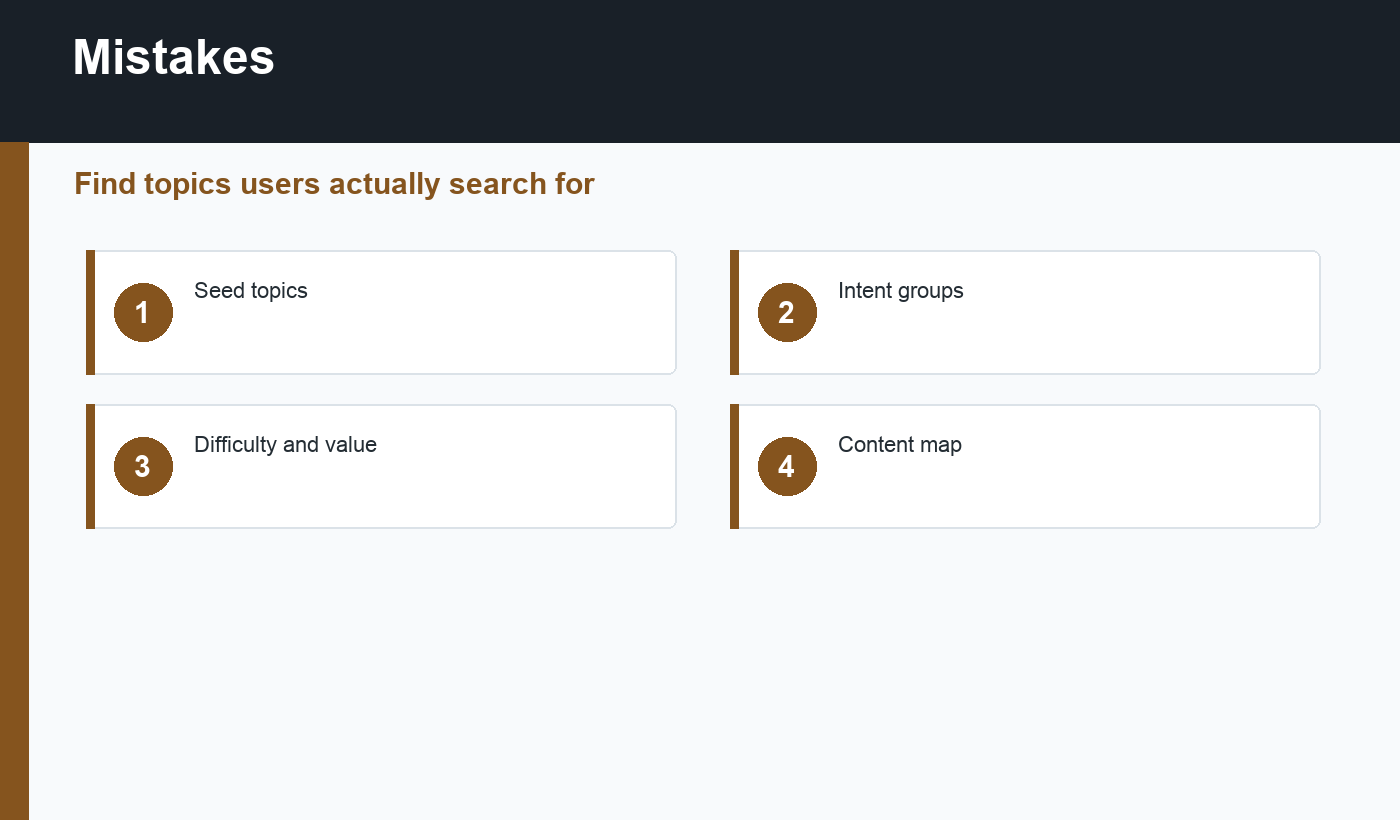
Keep the keyword map visible while publishing. When a new article goes live, add internal links from related older pages and note which future articles should link back. Research becomes more valuable when it shapes the whole content system.
Revisit the map after you collect performance data. Search Console can show which queries already earn impressions. Those near-miss keywords often become strong refresh opportunities because Google has already tested the page for related searches.
Final recommendation
Use keyword research for SEO as a decision system. The best keyword is not only searched; it is relevant, realistic, useful, and connected to a page your site can make genuinely helpful.


Discussion
Join the conversation