Feature Flags: Release Changes with Safe Defaults and Clear Ownership

Feature flags separate deploying code from enabling a particular behavior. A team can ship an implementation while keeping the old path available, then enable it for a defined cohort when operational evidence supports the change. A flag is not an authorization system, and disabling it cannot reverse every side effect. Design the fallback, ownership, targeting, and removal plan before adding another conditional. This keeps the release mechanism understandable and prevents temporary switches from becoming a permanent tangle of poorly tested application states.
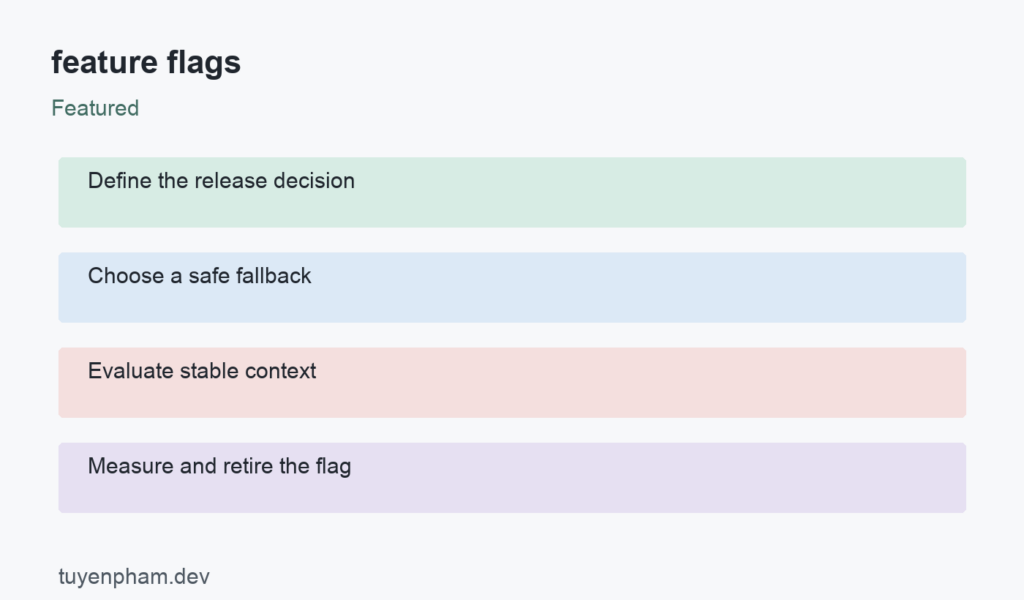
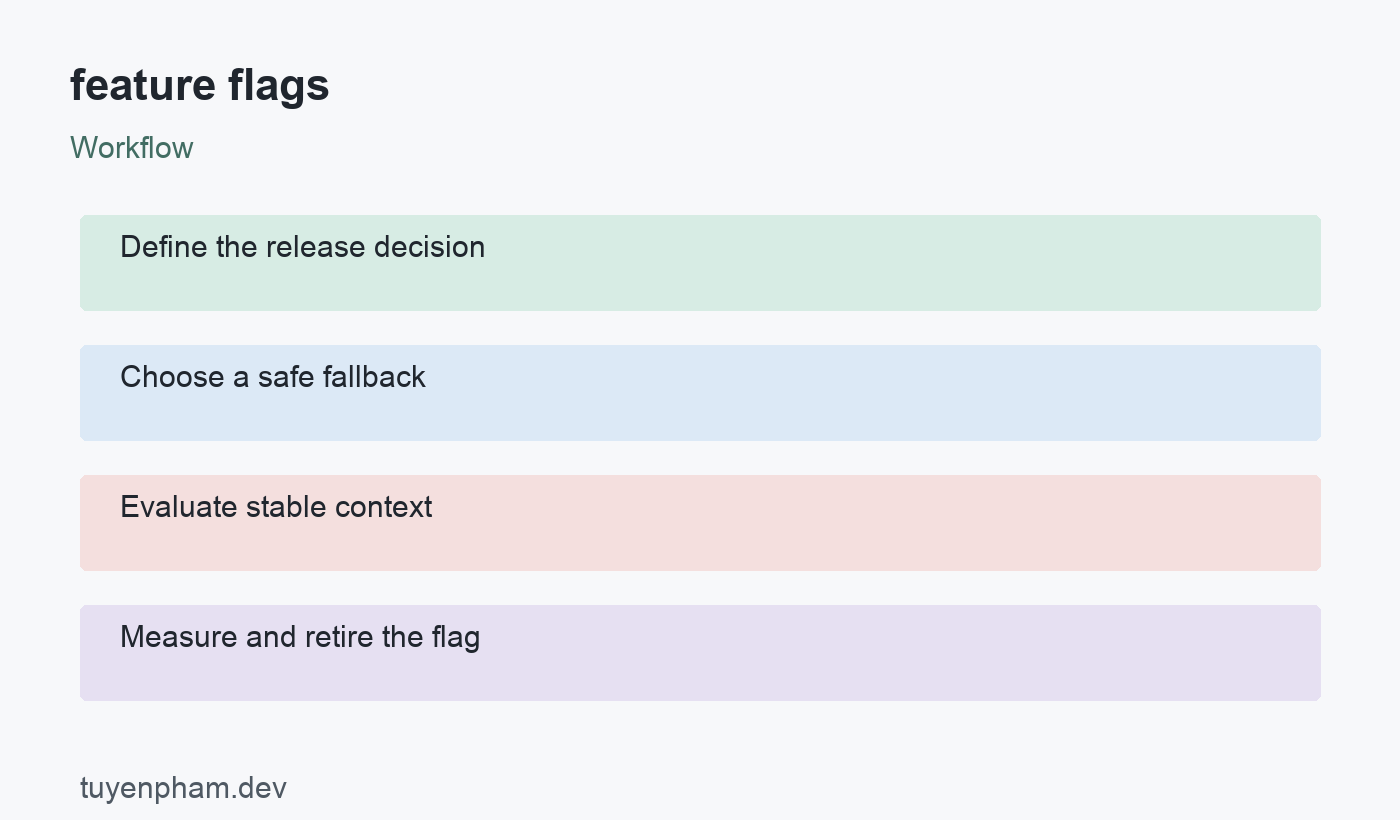
feature flags: a practical implementation workflow
Give the flag a specific decision and owner
Name the behavior being selected rather than using an unexplained identifier. Record who owns it, which environments use it, when it should be reviewed, and what completion means. A temporary release flag differs from a long-lived product configuration setting. Keep those lifetimes explicit. Before adding a switch, ask whether configuration already provides the required behavior. Avoid creating multiple flags for the same decision in unrelated layers, because frontend and backend combinations can diverge. Write the intended rollout and rollback procedure with the initial implementation.
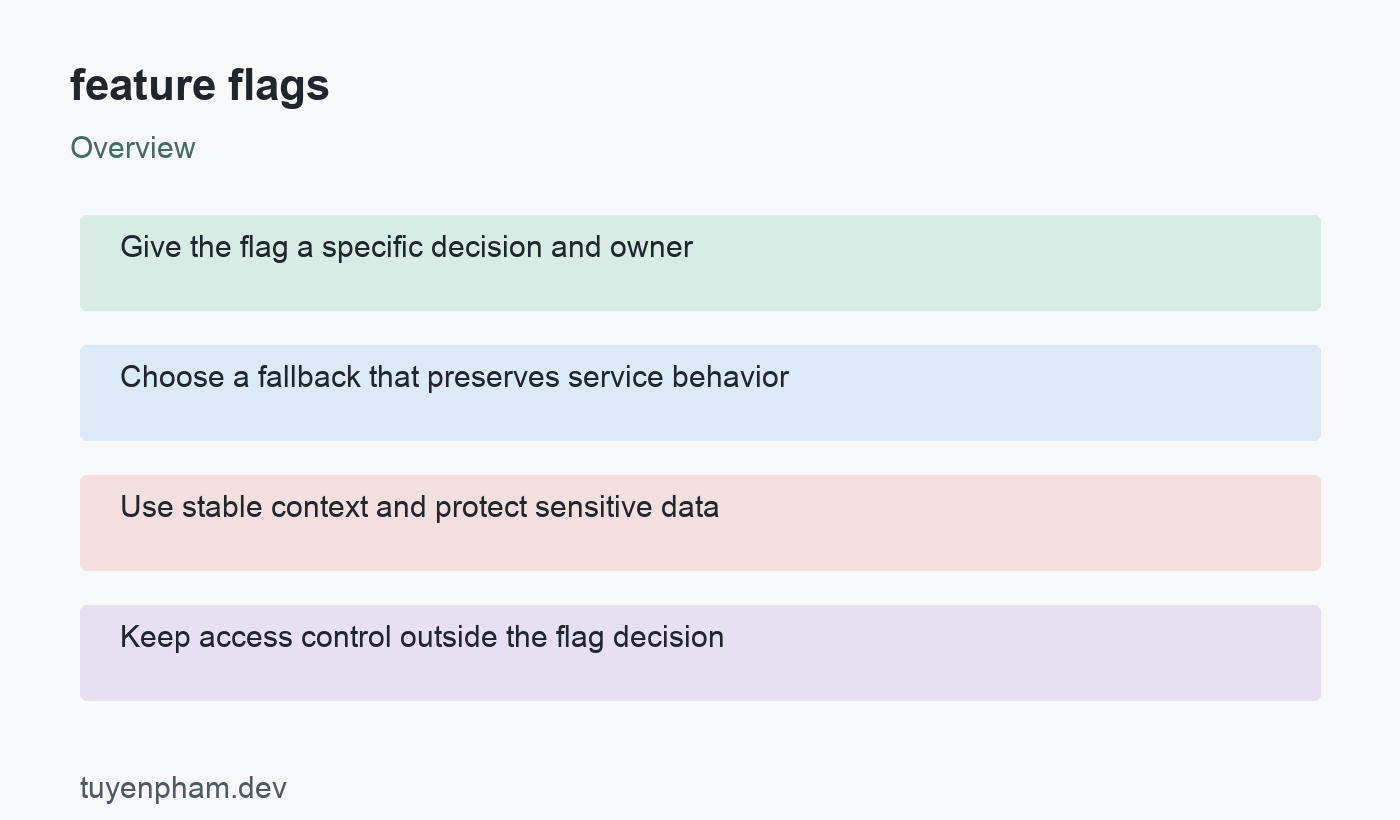
Choose a fallback that preserves service behavior
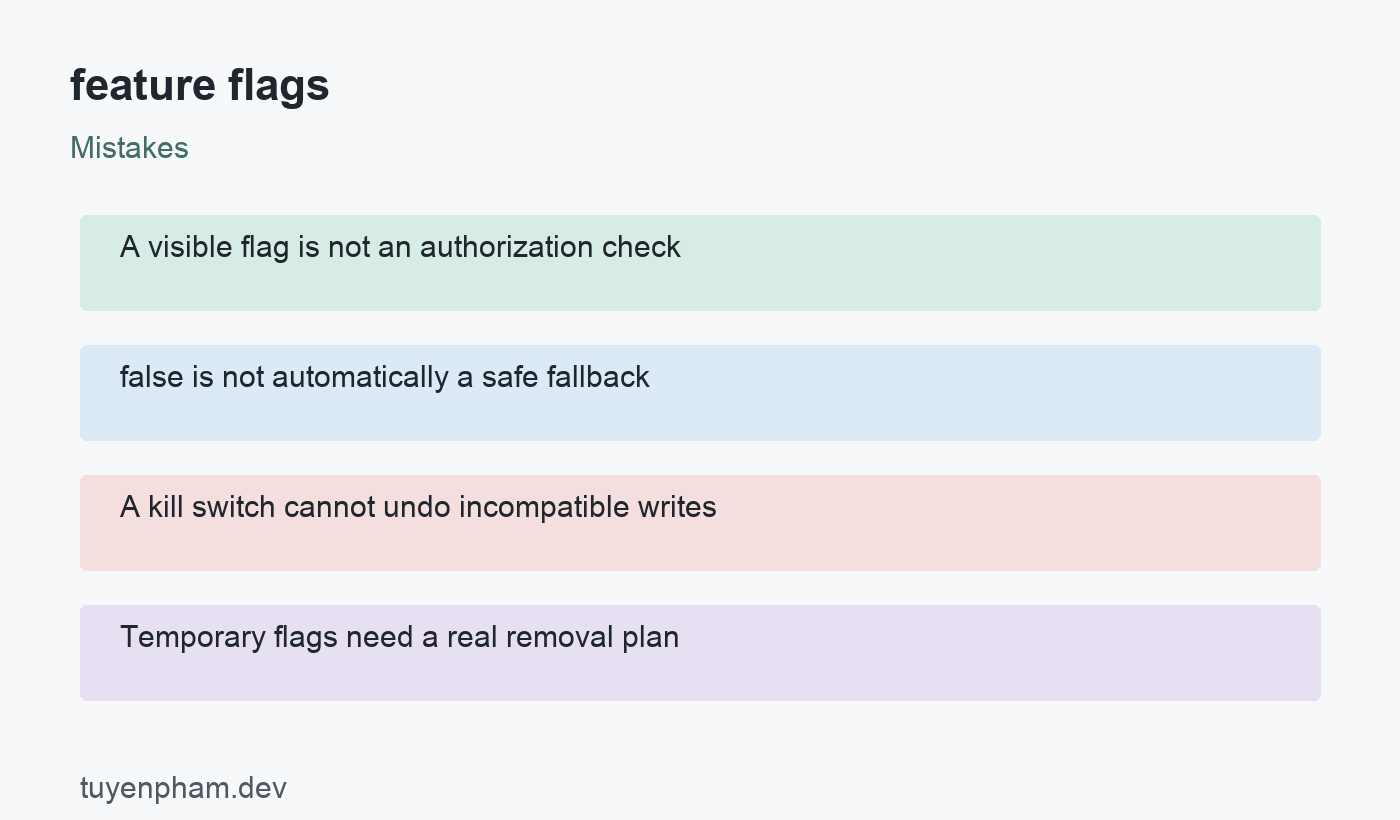
OpenFeature typed evaluation APIs require a default value and define fallback behavior for evaluation failures. Select that default using the product risk: false is not inherently safe for every feature. If disabling a new payment path sends requests to an obsolete provider, the old path is not a dependable fallback. Test missing flags, provider initialization failure, type mismatch, and connectivity loss according to your SDK and provider. Surface evaluation failures operationally without showing implementation diagnostics to users. A working fallback needs compatible code, data, and dependencies, not just a boolean literal.
Use stable context and protect sensitive data
Targeting commonly uses a stable subject identifier so the same account receives consistent treatment. Providers define their own rollout algorithms, and consistent assignment across systems should be verified rather than assumed. Supply only the context fields required by the targeting policy. Avoid sending unnecessary personal data to an external flag service. In a multi-tenant system, decide whether the cohort is based on a user or an account; mixing the two can create inconsistent shared workflows. Keep request context isolated so one caller does not influence another caller evaluation.
Keep access control outside the flag decision
A client-visible flag can help render an interface, but a caller can still invoke the backend directly. The server must authorize the action independently. Do not expose secret configuration through a browser bundle or a public flag payload. Evaluate important server-side decisions at a clear boundary and keep the result stable through one logical operation where consistency is required. If the flag changes halfway through a multi-step action, the application should not alternate incompatible behaviors unpredictably. Record the evaluated variation when it is needed to explain a release outcome.
Test both paths and remove completed flags
Every active flag increases the number of possible states. Test the relevant combinations, especially where a new path writes data later read by an old path. Gradual enablement and a kill switch do not replace compatible migrations or recovery plans. Measure meaningful errors, latency, and product outcomes by variation without claiming that a rollout automatically constitutes a valid experiment. When the decision is permanent, remove the obsolete branch, tests, and provider configuration through a reviewed change. A stale flag with no owner becomes operational uncertainty rather than release flexibility.
Code example
This example accepts an OpenFeature-compatible server client configured with a provider. It returns a choice rather than executing a report. false is a suitable fallback only if the current renderer remains supported. Authorization and provider lifecycle setup belong outside this helper.
export async function selectRenderer(client, accountId) {
  const enabled = await client.getBooleanValue(
    "new-report-renderer",
    false,
    { targetingKey: accountId }
  );
  return enabled ? "new" : "current";
}
Worked example
A hypothetical reporting service introduces a renderer behind a release flag. It starts with an internal account cohort and records the selected renderer in request diagnostics. Both renderers read compatible data, and the old one remains available during rollout. When provider evaluation fails, the tested fallback is used. Authorization still runs before report creation regardless of the flag. After sufficient operational review, the team enables the new path permanently and removes the switch. The flag supports a release decision; it does not prove a statistical experiment result on its own.
Verification checklist
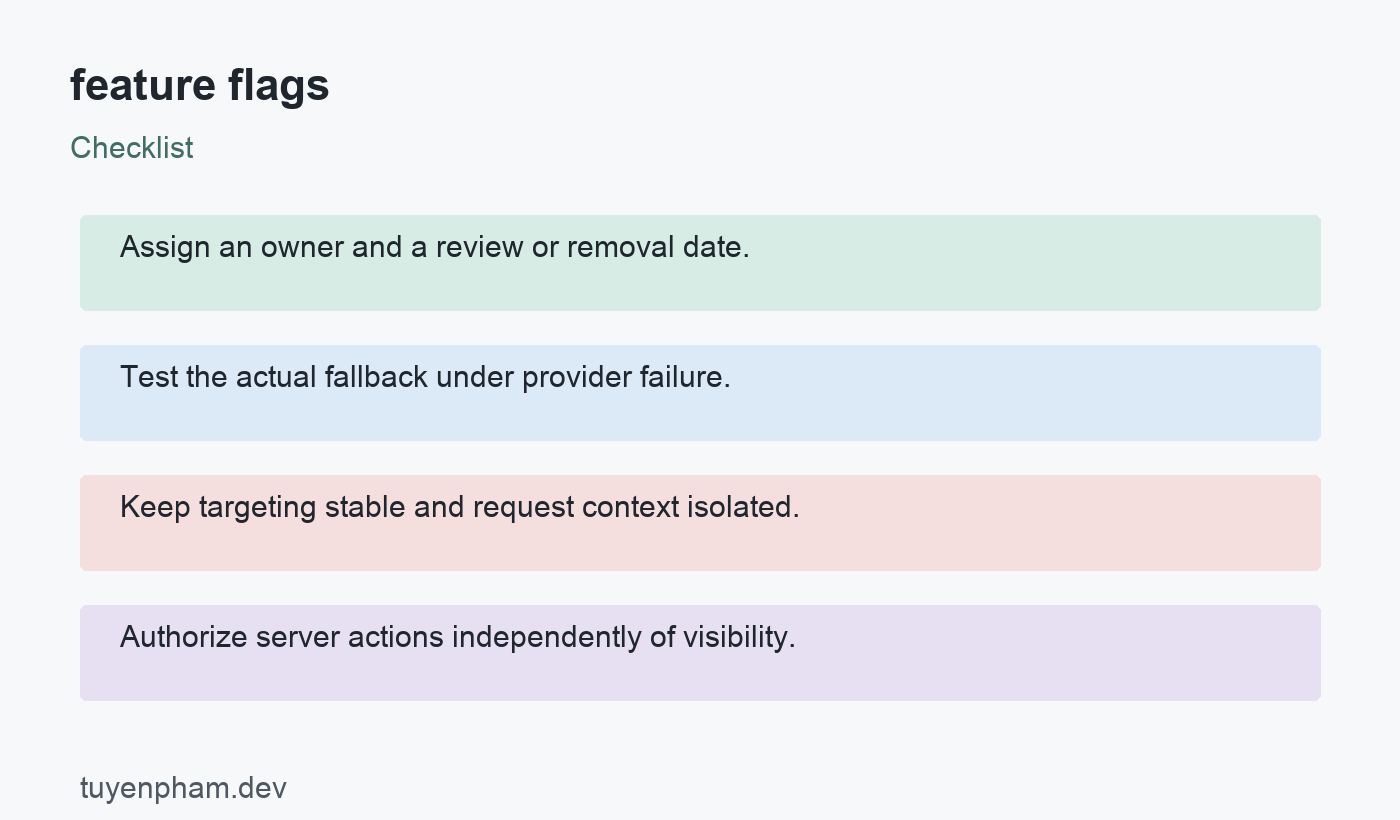
- Assign an owner and a review or removal date.
- Test the actual fallback under provider failure.
- Keep targeting stable and request context isolated.
- Authorize server actions independently of visibility.
Practice task
Wrap one small behavior in a feature flag with a documented fallback. Use a fake provider to test enabled, disabled, missing, and failed evaluations. Run two account contexts and verify that one does not leak into the other. Change the flag during a multi-step test and define where the decision is captured. Write a rollback checklist that includes data compatibility, then create a removal change that deletes the temporary switch once the feature is permanent.
Sources and related reading
Consult OpenFeature flag evaluation specification; OpenFeature evaluation context; OpenFeature JavaScript server SDK for API contracts and implementation details. Continue with Ci Cd Pipeline and Integration Testing for related concepts.
Discussion
Join the conversation