Anchor Text SEO: Write Link Labels That Explain the Destination

Anchor text SEO concerns the words or image description that communicate where a link leads. Useful link labels let readers decide whether the destination helps their task and give search engines context about the linked resource. Start with the reason for adding a link, then describe that destination accurately. An exact keyword repeated across every source page is not a substitute for relevance. The label and the surrounding sentence should make sense together, with a working URL that fulfills the promise.
anchor text SEO: a practical workflow
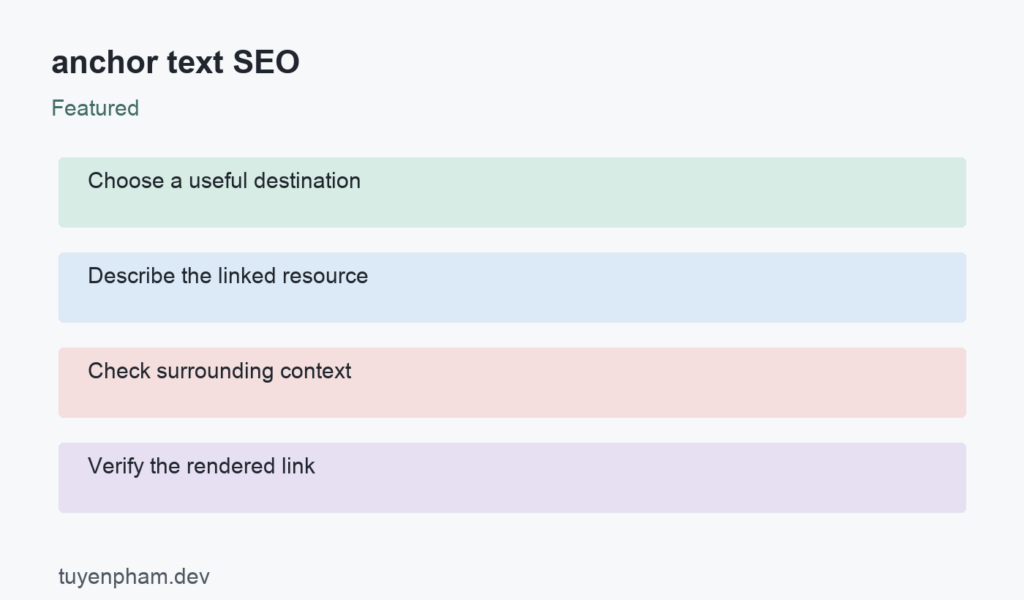
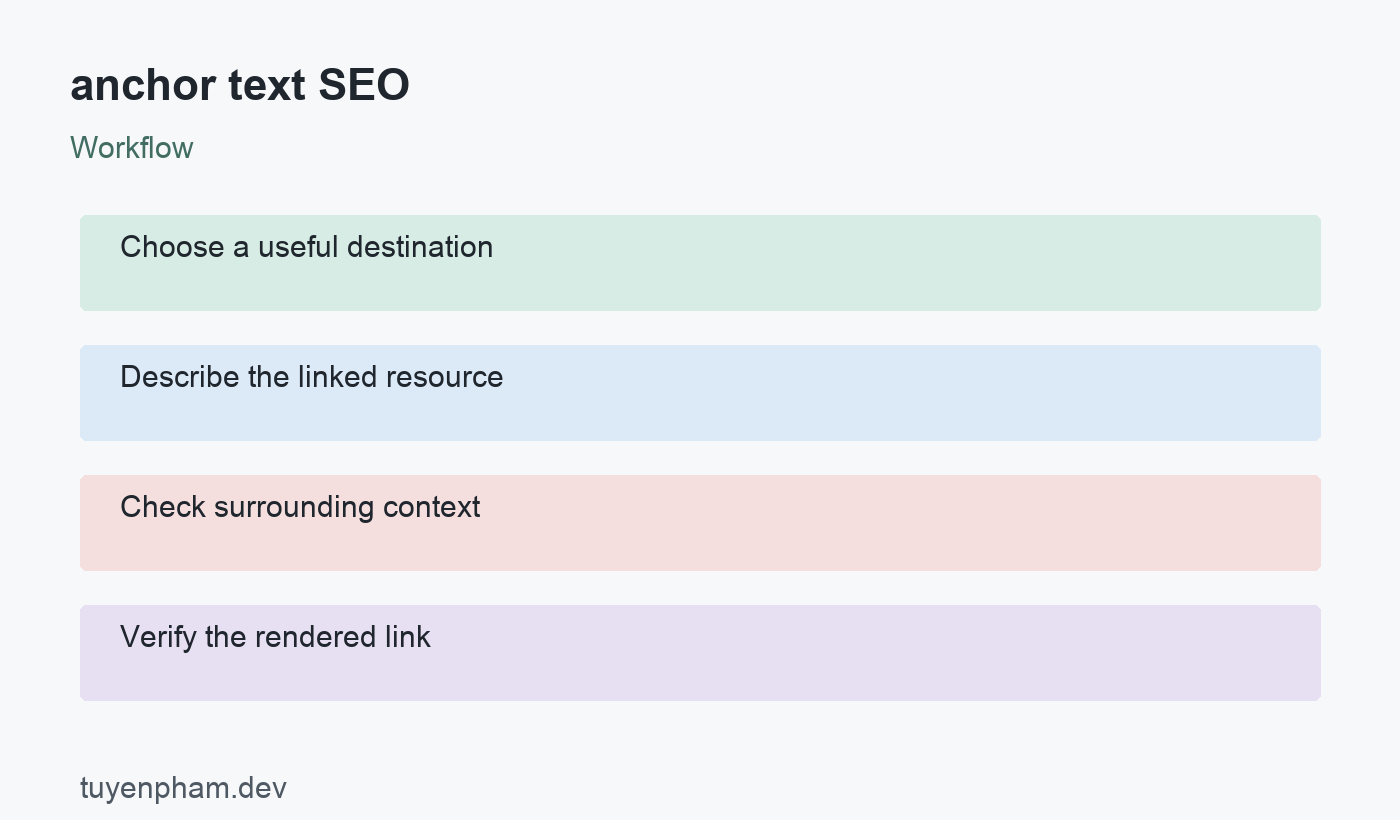
Use the following sequence to organize the review: Choose a useful destination → Describe the linked resource → Check surrounding context → Verify the rendered link. The sections below explain the decisions and evidence needed at each stage. The worked example is hypothetical and illustrates the process rather than claiming a measured result from this website.
Choose the link because the reader needs it
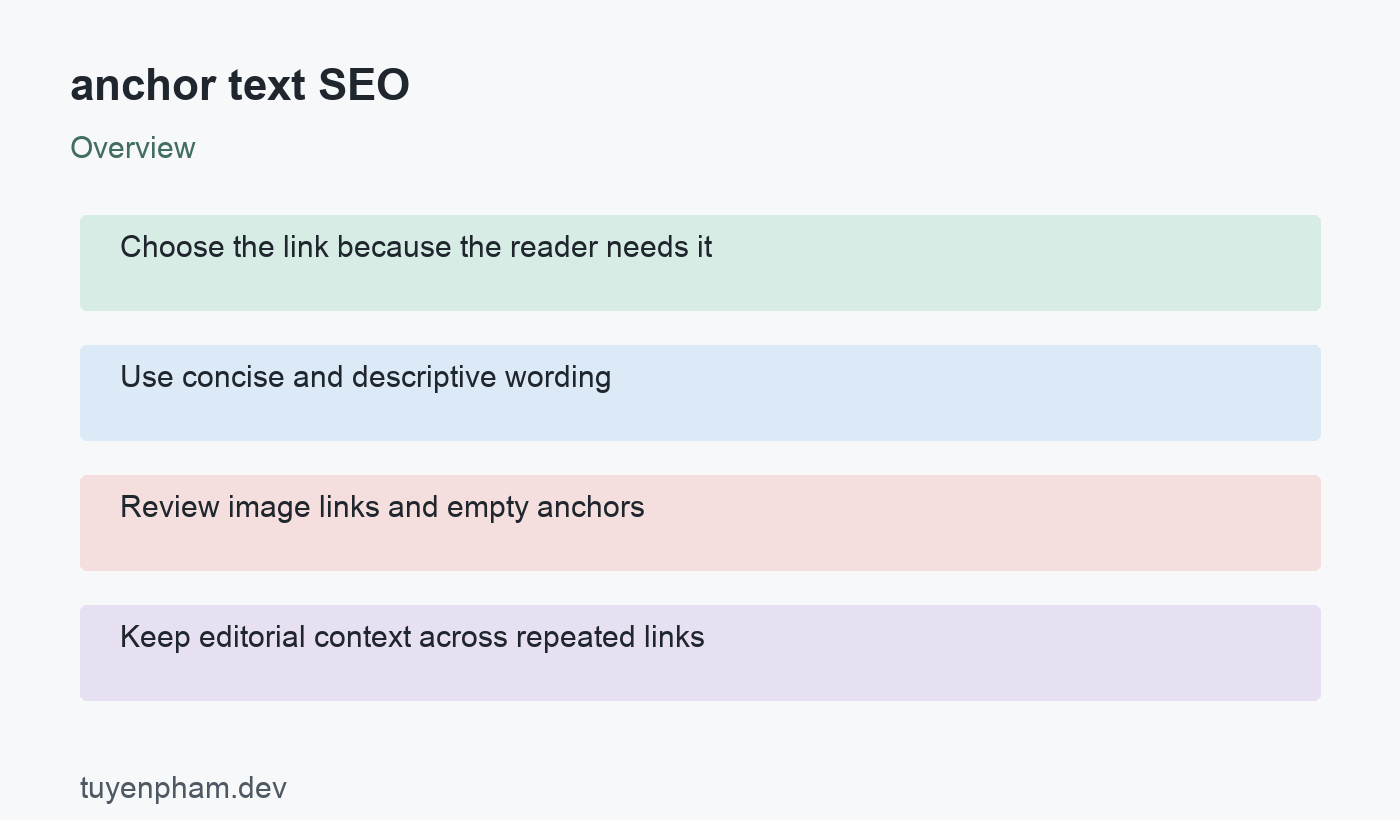
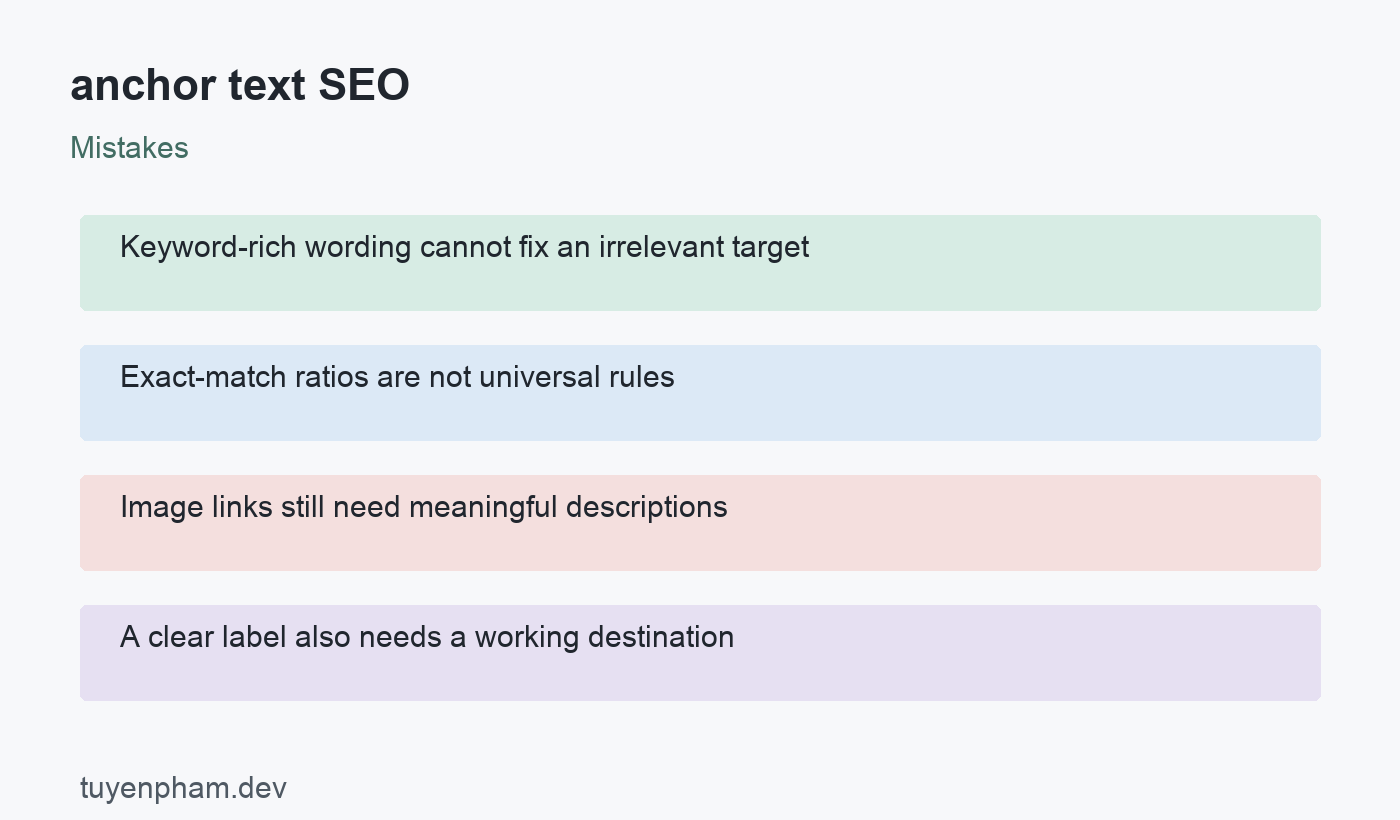
A link can provide a prerequisite, supporting evidence, a detailed procedure, or a next step. Identify that relationship before choosing the label. A generic mention of a broad topic does not always need a link, and an unrelated resource does not become relevant through a keyword-rich anchor. Read the destination and confirm that it delivers what the source sentence implies. The strongest improvement may be replacing the destination or rewriting the sentence rather than changing a few words inside the anchor.
Use concise and descriptive wording
Google recommends link text that is descriptive, reasonably concise, and relevant to both source and destination. A label such as "database backup checklist" gives more useful context than a standalone "click here" in many situations. Keep the phrase natural and avoid adding a string of related keywords. The surrounding sentence can explain scope and limitations without making the whole paragraph clickable. Do not force the full page title into every link if a shorter accurate label serves the reader better.
Review image links and empty anchors
When an image is the link, appropriate alt text can provide meaningful link context. Describe the destination or function accurately and avoid adding an unrelated keyword list. Check icon-only navigation for a usable accessible name as well as a crawlable href. A visual button can look complete while its HTML offers no clear label or destination. Inspect the rendered output, especially after template changes. Do not assume a title attribute repairs every unclear link or replaces thoughtful visible and accessible labeling.
Keep editorial context across repeated links
The same resource can be linked from several pages for different reasons. Allow labels to reflect the sentence and the reader task. There is no universal ratio of branded, generic, and exact-match anchors that makes an internal-link profile safe or successful. Rank Math’s anchor-text guidance can help classify common label types, but a classification is not a numerical ranking prescription. Avoid using an automated replacement to insert identical phrases into contexts where they sound misleading or unnatural.
Verify the destination and maintain the relationship
Check the final URL, redirects, and actual content. If a resource is renamed or consolidated, update relevant source links so they still describe the destination. Review high-use navigation separately from occasional editorial references. A clear label pointing to a broken page does not complete the task. Track reader behavior and usability feedback when improving important paths, and resist attributing a ranking change to one anchor edit without supporting evidence. The direct result should be a clearer, more reliable link.
Worked example
A tutorial says "Read more here" before a complex migration step. The destination contains a tested pre-migration backup procedure. The revised sentence links "pre-migration backup procedure" and explains that the guide covers database and file backups. A separate link to deployment rollback remains distinct because it serves a different task. Neither source needs to repeat the same commercial keyword. The labels help a reader choose the correct resource before changing the site.
Verification checklist
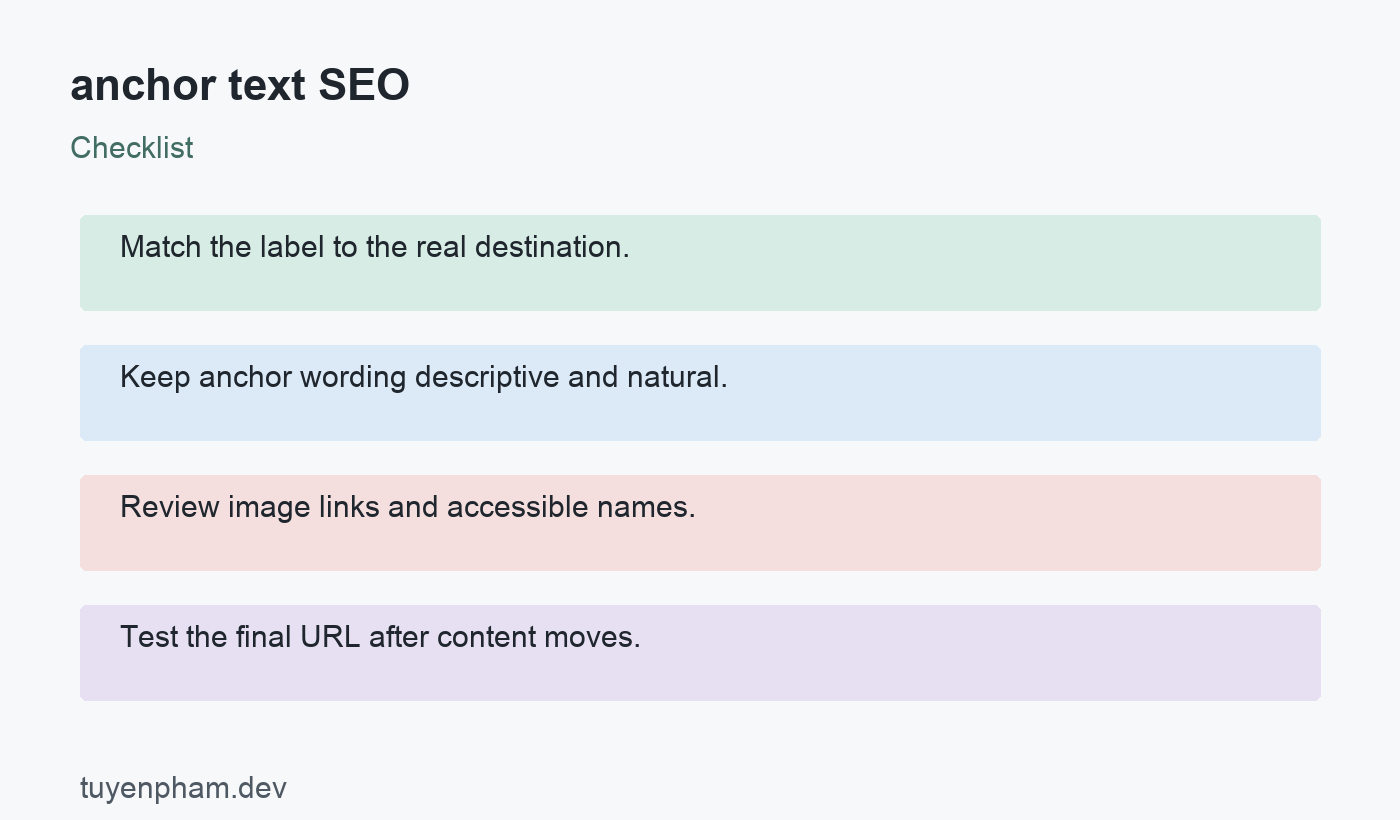
- Match the label to the real destination.
- Keep anchor wording descriptive and natural.
- Review image links and accessible names.
- Test the final URL after content moves.
A focused task for your website
Audit fifteen links from a small page group. Record source, destination, label, and the reason the link exists. Flag vague labels, empty image links, unrelated targets, and avoidable redirect hops. Improve five findings and read each revised sentence aloud. Test the rendered links with keyboard navigation and follow the destinations. Save the decisions so future automated link suggestions can be reviewed against reader relevance rather than an anchor percentage target.
References and related reading
Review Google’s official guidance and Rank Math’s related explanation or workflow for the relevant requirements and tool details. Continue with Internal Linking For Seo and the SEO audit checklist to connect this review with the rest of your website.
Discussion
Join the conversation