EEAT SEO: Make Experience, Expertise, and Trust Verifiable

EEAT SEO refers to applying the ideas of experience, expertise, authoritativeness, and trustworthiness to content quality. Google writes the framework as E-E-A-T and explains that it is not itself a specific ranking factor. Search quality raters use these concepts to evaluate results, but their ratings do not directly control the ranking of an individual page. The practical goal is to help a reader determine who created the content, what supports it, and whether it is dependable for the decision they are making.
EEAT SEO: a practical decision process
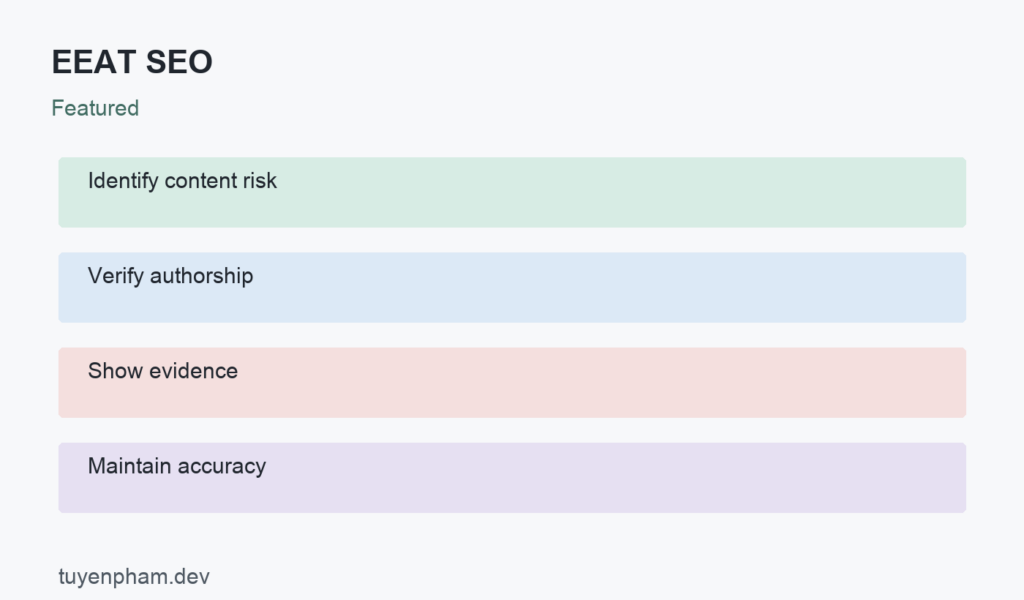
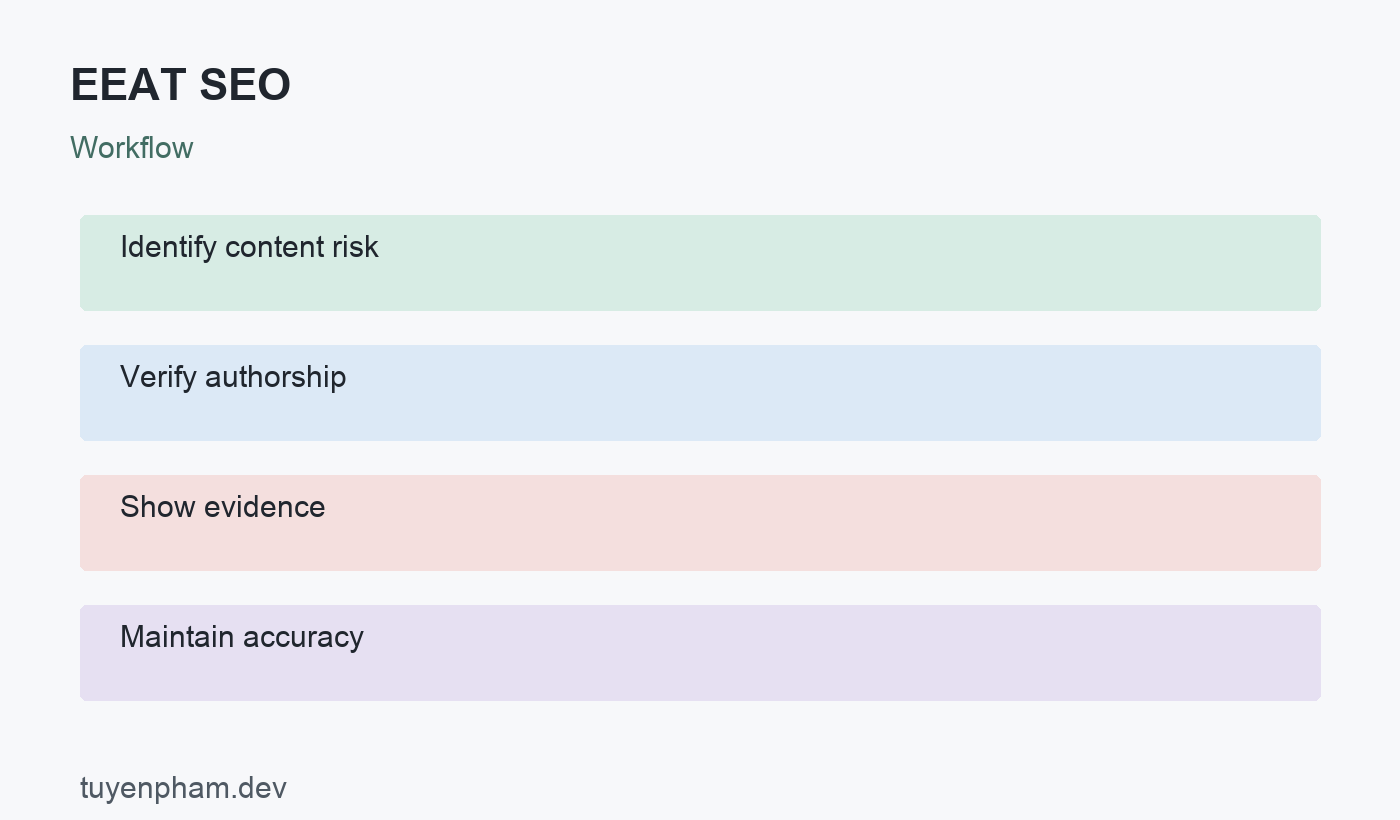
Follow this sequence: Identify content risk → Verify authorship → Show evidence → Maintain accuracy. Use it to organize the work, then verify the editorial and technical choices described below. The example is hypothetical and illustrates the decision rather than claiming a measured ranking result.
Match evidence to the risk of the advice
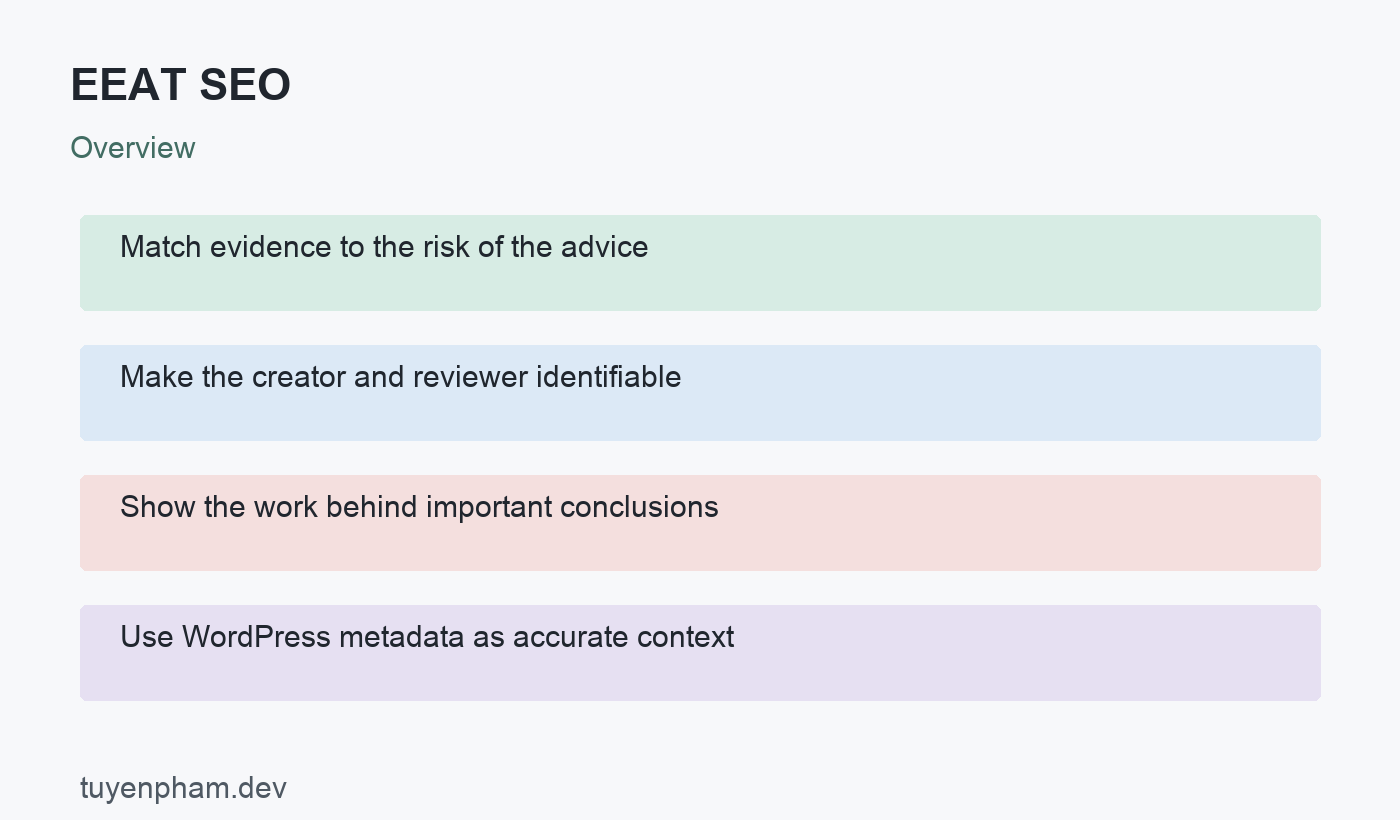
A personal account of using a software tool needs a different level of review from medical, financial, or safety advice. Identify the potential harm if a statement is wrong. Use qualified expertise where the topic requires it, and avoid presenting a personal anecdote as professional guidance. First-hand experience can make a review useful, but it does not automatically establish competence in every related field. Define the scope of the article and explain limitations that materially affect how readers should use the advice.
Make the creator and reviewer identifiable
Use accurate bylines and author pages that describe relevant background rather than inflated credentials. If someone reviewed a technical claim, state their role and what they reviewed. Link to verifiable evidence when appropriate and provide a way to contact the publisher. An author bio alone cannot rescue inaccurate content. Its purpose is to make accountability and context visible. Do not invent certifications, professional experience, or first-hand product use simply because they would make a page look more credible.
Show the work behind important conclusions
For a comparison, explain the criteria and how the products were assessed. For a tutorial, include tested steps and the environment where the result was observed. For an analysis, cite primary sources and separate observations from interpretations. Screenshots or sample data can support a claim when they actually show the relevant evidence. Stock illustrations cannot prove that a test occurred. If an example is hypothetical, label it as such. Clear provenance helps readers evaluate claims without relying on confidence in the writing style.
Use WordPress metadata as accurate context
Rank Math offers guidance on authorship and quality signals, and its structured-data features can describe a real author or organization. Ensure those details match the visible page and genuine relationships. Adding Person schema or an author URL does not create expertise or guarantee stronger rankings. Avoid conflicting authorship from several plugins. Review the rendered page as well as the editor fields, because readers and crawlers see the output. The primary improvement should remain truthful, useful content with clear ownership.
Maintain trust through corrections and transparency
Keep references current and correct material errors. Show a meaningful update date when substantive work was completed, rather than refreshing dates to imply new research. Explain commercial relationships that could affect a recommendation. For a store or service provider, clear contact information, policies, and reliable transaction behavior also matter to user trust. Measure reader feedback and correction patterns alongside search performance. Treat E-E-A-T as a quality review framework, not a points checklist or a reason to promise guaranteed visibility.
Worked example
A developer publishes a hosting comparison. A trustworthy version names the tested plan, workload, date, and measurement method, then describes what the results cannot establish. If the publisher receives referral compensation, that relationship is disclosed. A weaker version gives every provider a precise score without explaining any testing. Adding an author biography to the weaker version would not solve the missing evidence. Improving the methodology and the accuracy of the conclusions would make the comparison easier to assess.
Implementation checklist
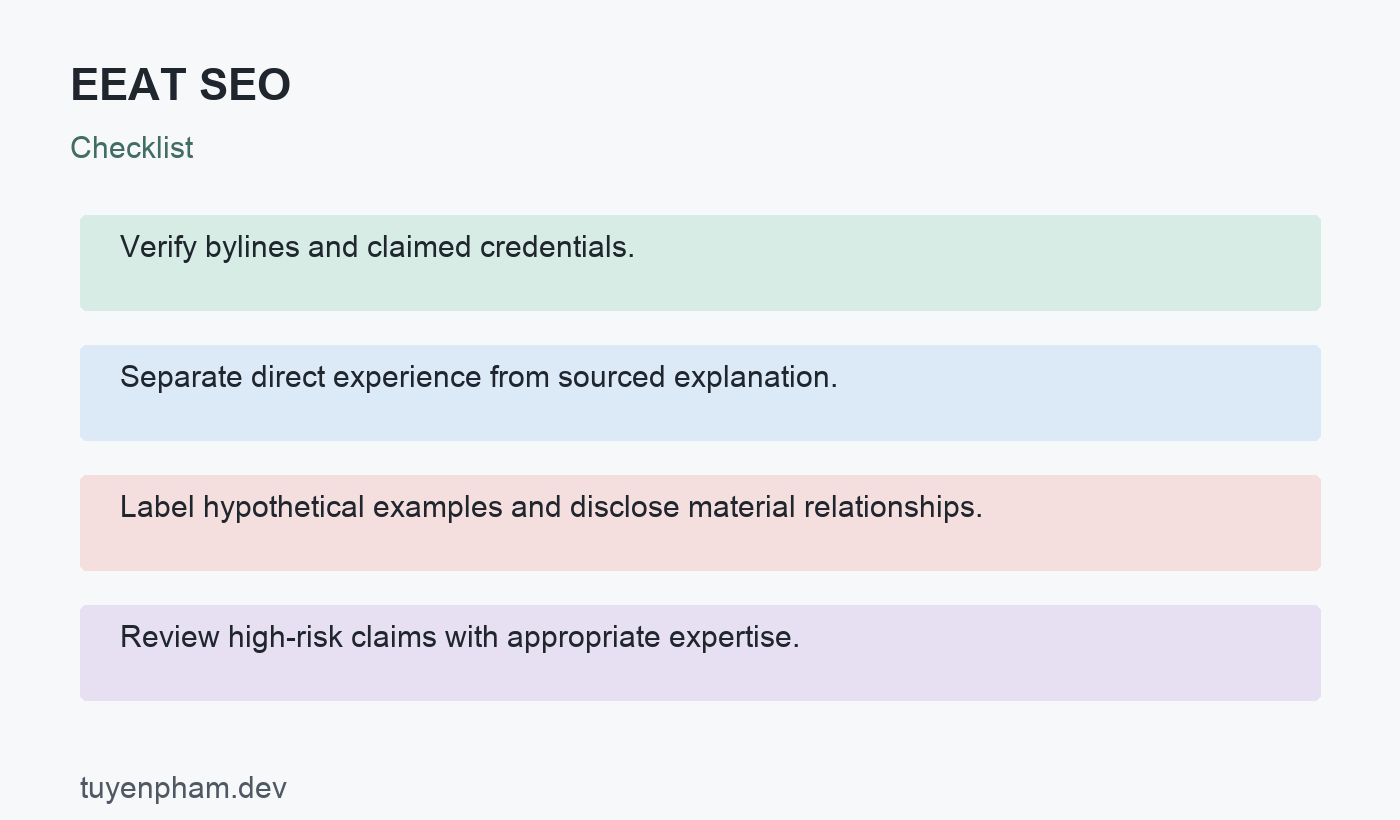
- Verify bylines and claimed credentials.
- Separate direct experience from sourced explanation.
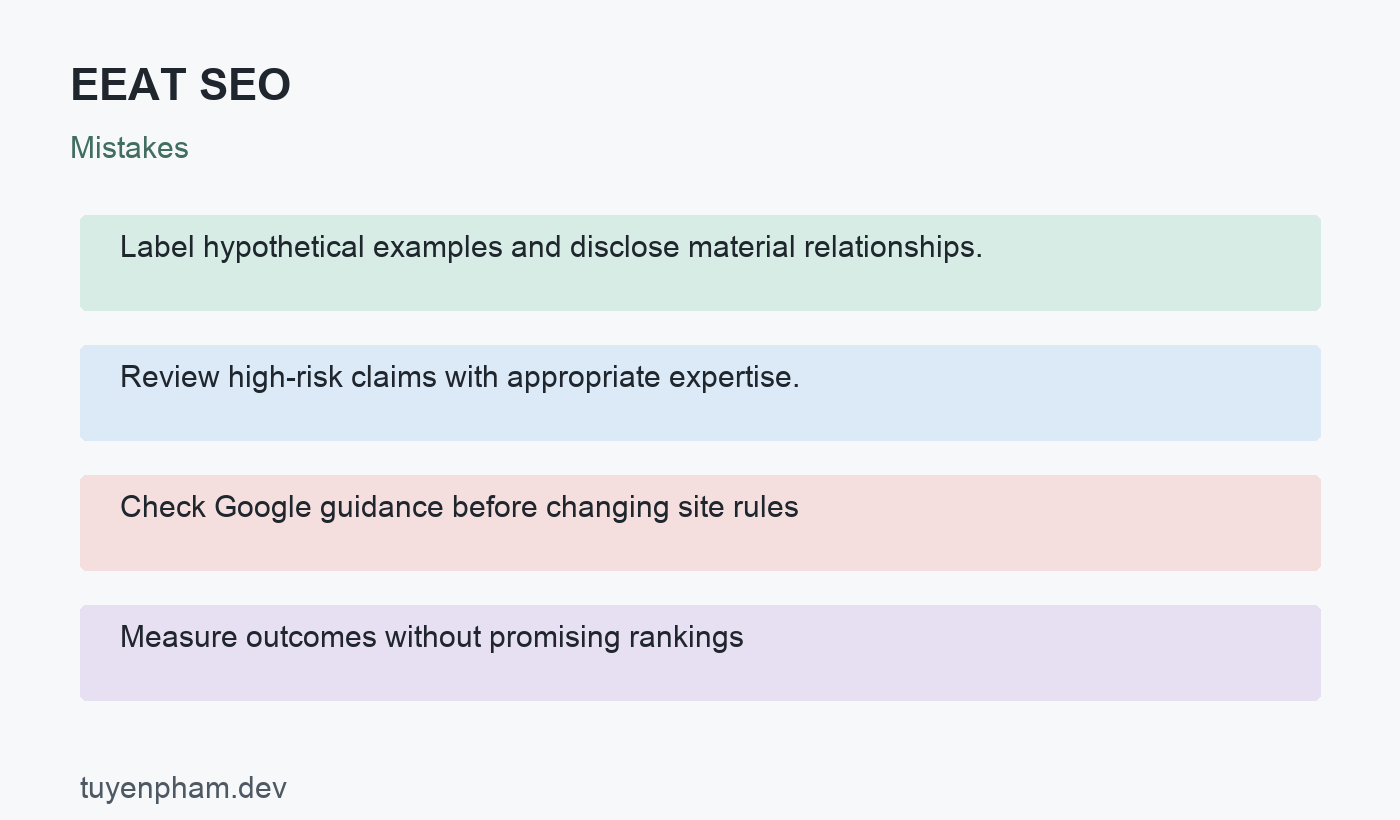
- Label hypothetical examples and disclose material relationships.
- Review high-risk claims with appropriate expertise.
A focused task for your website
Audit one published tutorial or comparison. Highlight every statement that depends on experience, a measurement, or specialist knowledge. Record the evidence for each and remove unsupported claims. Check whether the byline, author page, dates, and visible disclosures are accurate. Ask a reviewer to identify what they still cannot verify. Revise those gaps before treating any change in search traffic as evidence that the content quality has improved.
References and next steps
Consult Google Search Central documentation for the relevant search requirements and Rank Math guidance on this topic for practical workflows. Continue with Seo Content Brief and the SEO audit checklist for related implementation checks.
Discussion
Join the conversation