Google Discover SEO: Prepare Useful Content and Measure Volatile Traffic

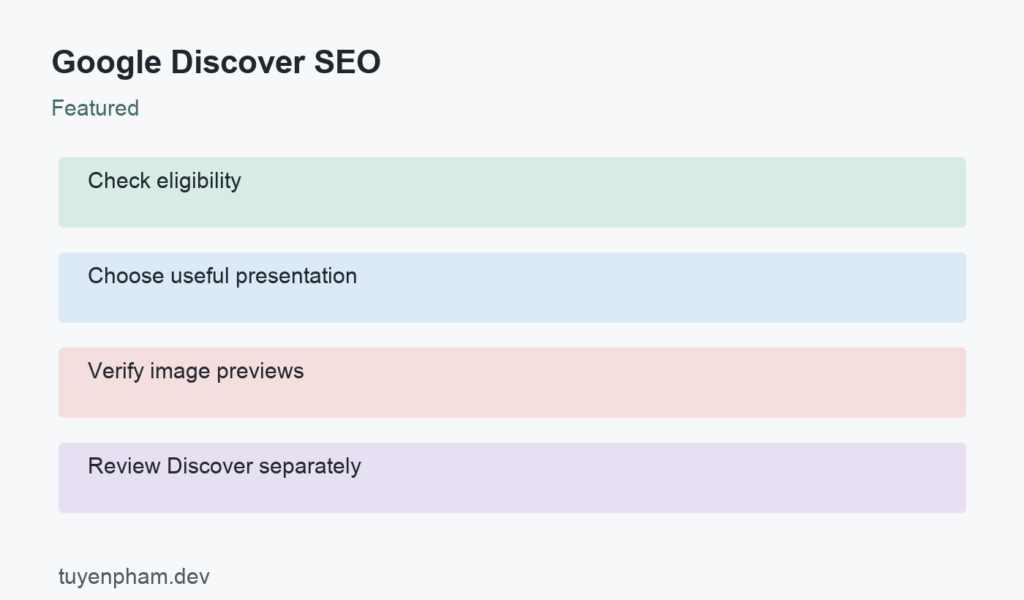
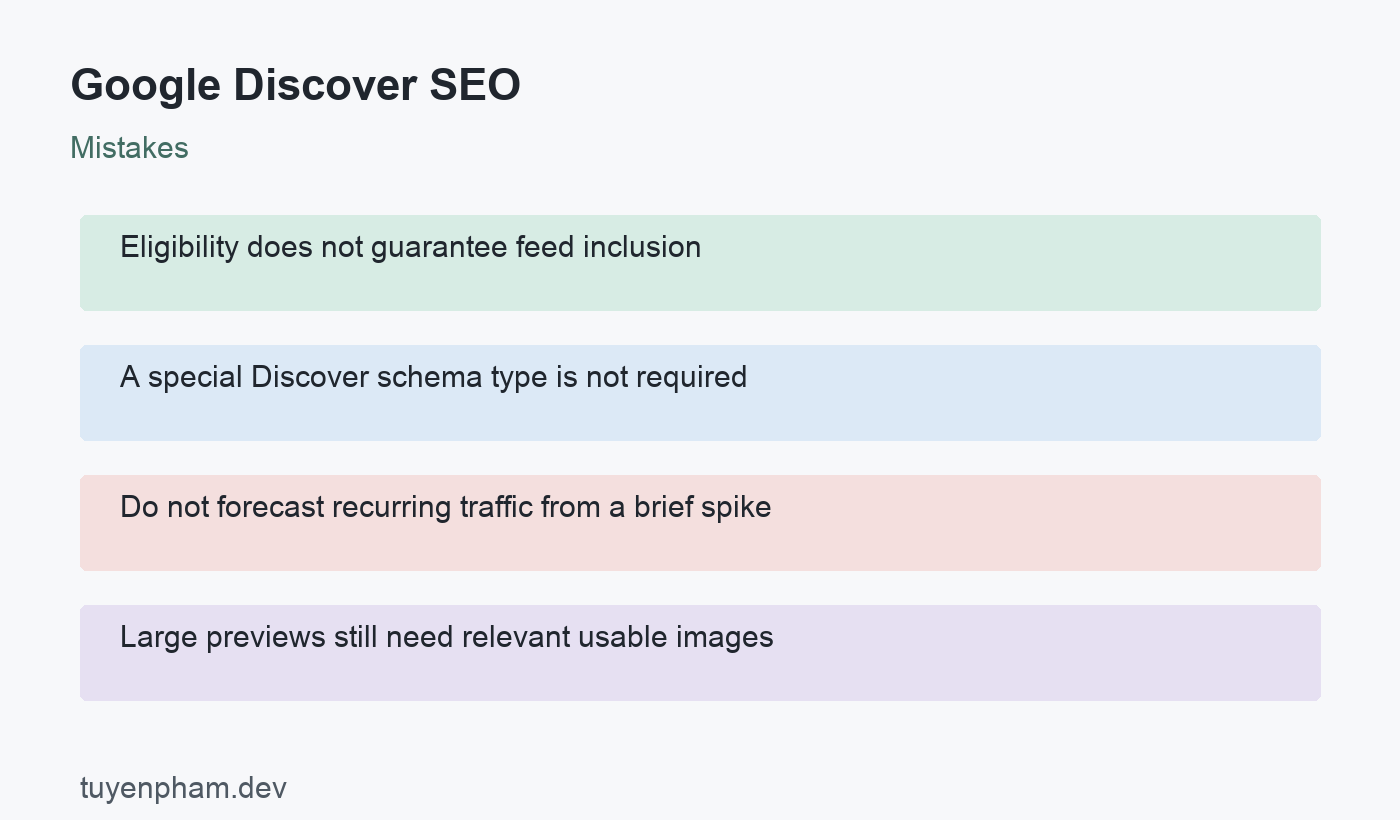
Google Discover SEO concerns an interest-based feed rather than a visitor entering a specific keyword. Google says indexed content that meets Discover policies is automatically eligible, with no special structured-data requirement. Eligibility does not guarantee appearance. Discover traffic can vary substantially as interests, content types, and systems change. Build useful content and accurate presentation first, then treat any Discover visits as a supplemental channel. Avoid making a predictable traffic promise from a feed that is inherently less dependable than a planned search-query baseline.
Google Discover SEO: a practical workflow
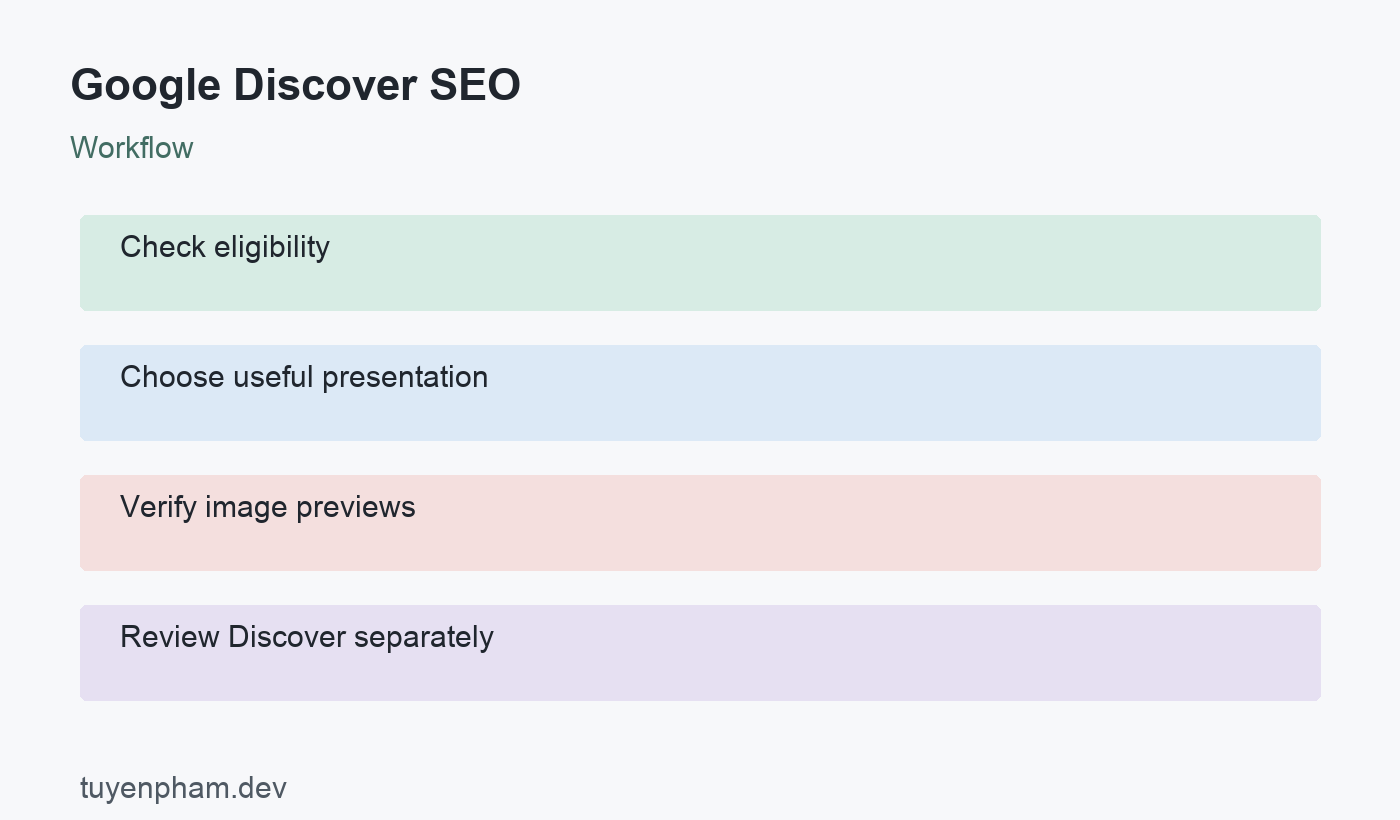
Use this sequence to organize the work: Check eligibility → Choose useful presentation → Verify image previews → Review Discover separately. The sections below explain the evidence, decisions, and limitations at each stage. The worked example is hypothetical and illustrates a process rather than a measured result from this website.
Understand eligibility and its limits
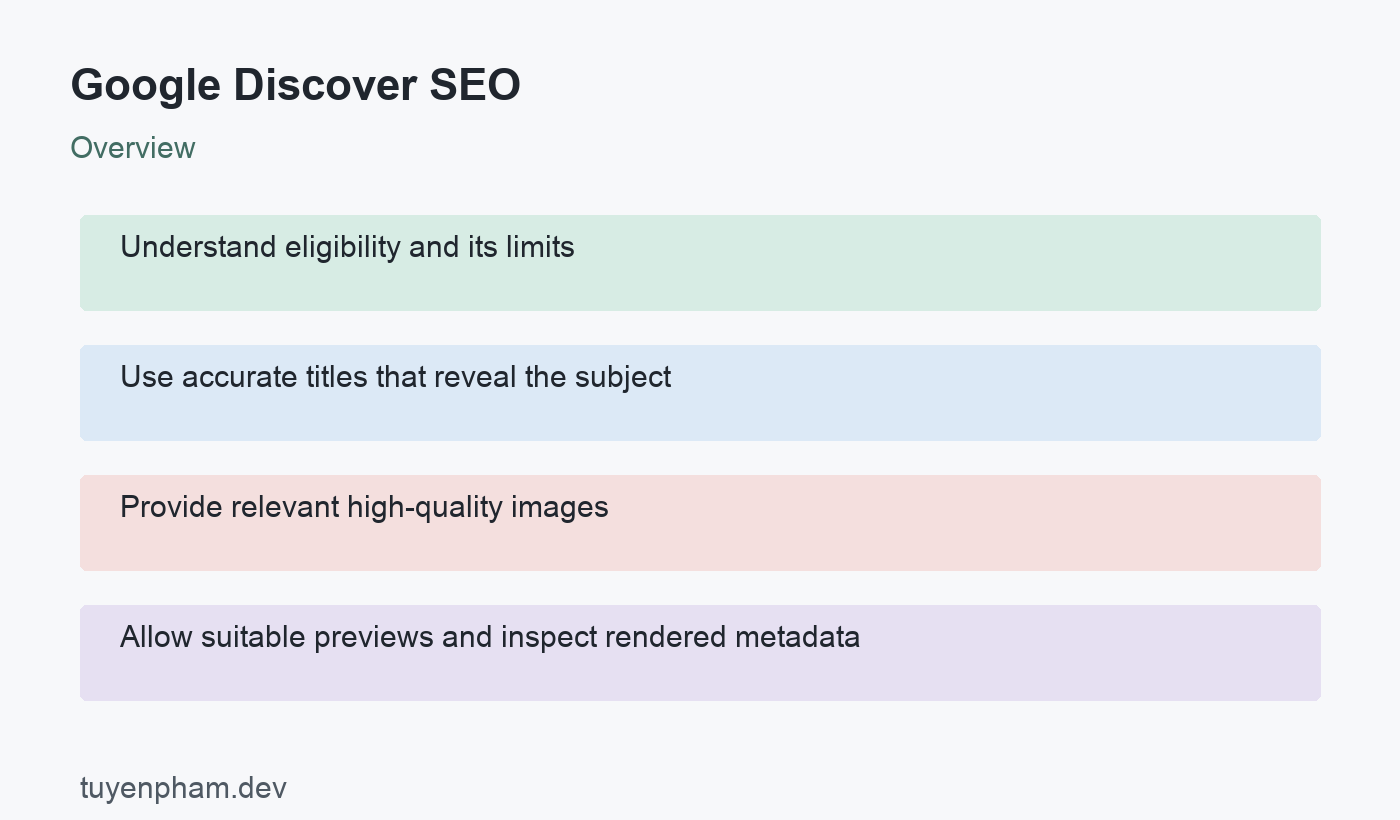
Confirm that the content can be indexed and complies with applicable content policies. A page does not need a fictional Discover schema type or a paid inclusion service. Google may surface older content when it remains relevant, so Discover is not restricted to breaking news. Indexed status alone still does not ensure selection. Diagnose ordinary access and indexability problems before assuming a special feed requirement is missing. Separate your implementation checks from the platform’s decision to show a particular story.
Use accurate titles that reveal the subject
Choose a title that communicates the substance of the resource and aligns with the page. Avoid exaggeration, misleading omissions, and sensational framing intended to induce clicks without delivering the promised information. A title can be engaging while remaining precise. Provide timely insights, a distinctive useful story, or relevant knowledge where your site has something to contribute. Do not imitate a publisher’s sensational format simply because one screenshot shows its page in the feed. Visibility in one moment is not proof of a reliable strategy.
Provide relevant high-quality images
Google recommends compelling large images, including a width of at least 1200 pixels and appropriate resolution. Its current guidance also addresses landscape presentation, cropping, and avoiding text-heavy or generic images. Choose imagery that represents the actual subject and that you have rights to use. Inspect the important content near likely crop regions rather than assuming the whole canvas appears. A site logo is usually not a meaningful story illustration. A relevant screenshot or explanatory visual should remain legible at the presentation size.
Allow suitable previews and inspect rendered metadata
Google documents max-image-preview:large or AMP as ways to enable large-image previews. AMP is not the only way to do this. Check the public robots metadata, representative image, and applicable structured data or og:image output. Rank Math’s Discover guidance can help identify relevant WordPress checks, but a high plugin score does not certify feed inclusion. Ensure image URLs work and that the featured image actually represents the article. Review theme and plugin output together so conflicting metadata does not misdescribe the page.
Report Discover as a separate, variable channel
Search Console provides a Discover performance report when the property meets the reporting requirements. Review impressions, clicks, and CTR with consistent periods, then connect visits to useful outcomes where measurement permits. The absence of a report does not alone prove an implementation error. A spike followed by a decline can reflect changing interests or distribution, not necessarily a content penalty. Google advises treating Discover traffic as supplemental. Plan business commitments around dependable evidence instead of extending a brief feed surge into a long-term guarantee.
Worked example
A publisher has an indexed article with an accurate title and a relevant 1400-pixel-wide photograph. Its public metadata allows large previews, but the article never appears in a sampled Discover feed. Those checks establish readiness, not a failure requiring an invented schema fix. A different article receives a brief traffic surge and then returns to its prior level. The team reports the surge separately from ordinary search and reviews reader outcomes without assuming the peak will recur every month.
Verification checklist
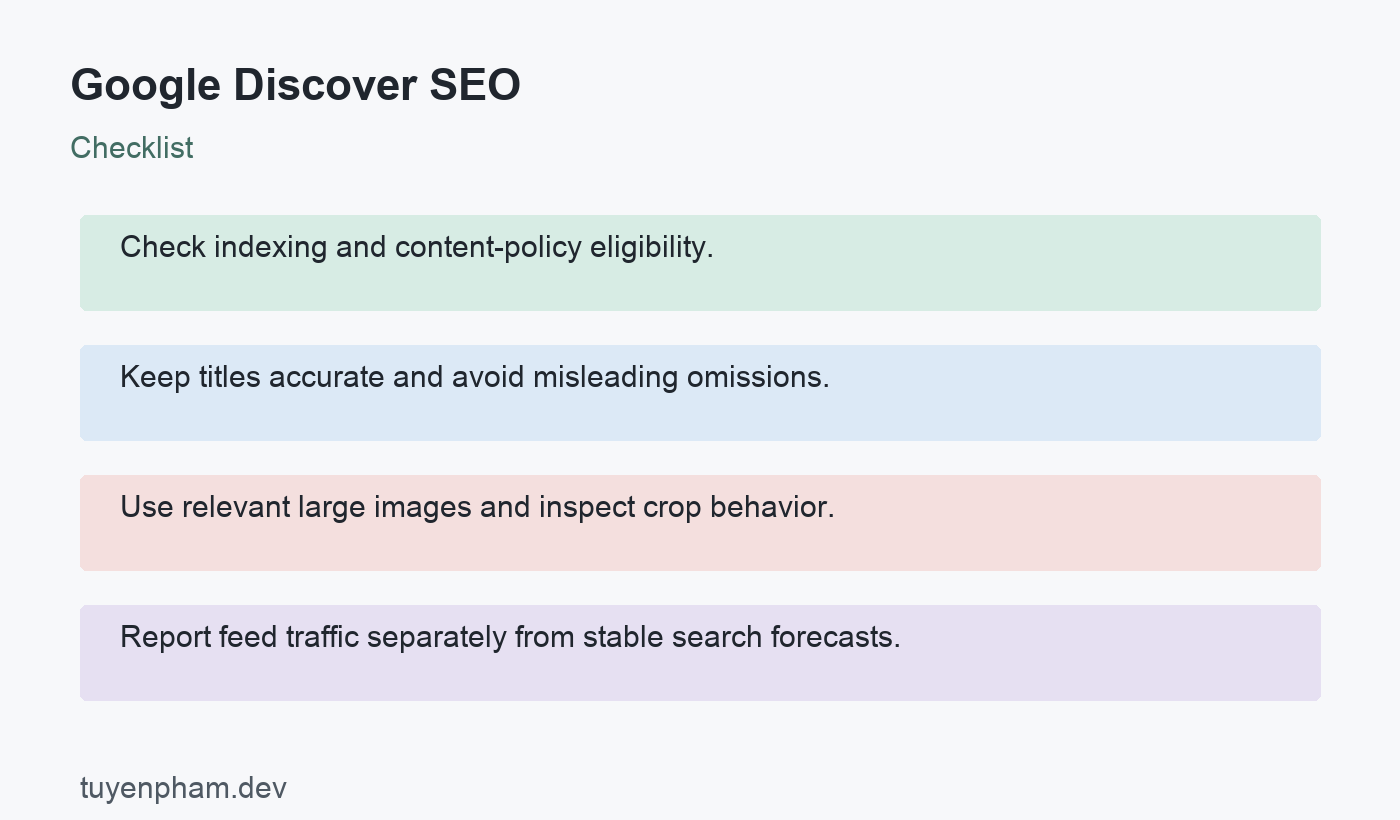
- Check indexing and content-policy eligibility.
- Keep titles accurate and avoid misleading omissions.
- Use relevant large images and inspect crop behavior.
- Report feed traffic separately from stable search forecasts.
A focused task for your website
Review three articles for eligibility, title accuracy, image relevance, and public preview settings. Test image accessibility and likely crop behavior on mobile. Compare theme and plugin metadata to the visible page. If a Discover report is available, review a consistent period and note the variability. Record any implementation issue you can verify, and avoid promising distribution merely because the checks pass. Improve the resource for readers even when Discover remains an uncertain channel.
References and related reading
Review Google Search Central documentation for the relevant platform guidance, and Rank Math guidance for the related workflow for practical SEO checks. Continue with Image Seo Checklist and the SEO audit checklist to connect this task with the rest of your site review.
Discussion
Join the conversation