Orphan Pages SEO: Find Disconnected Content and Restore Useful Paths

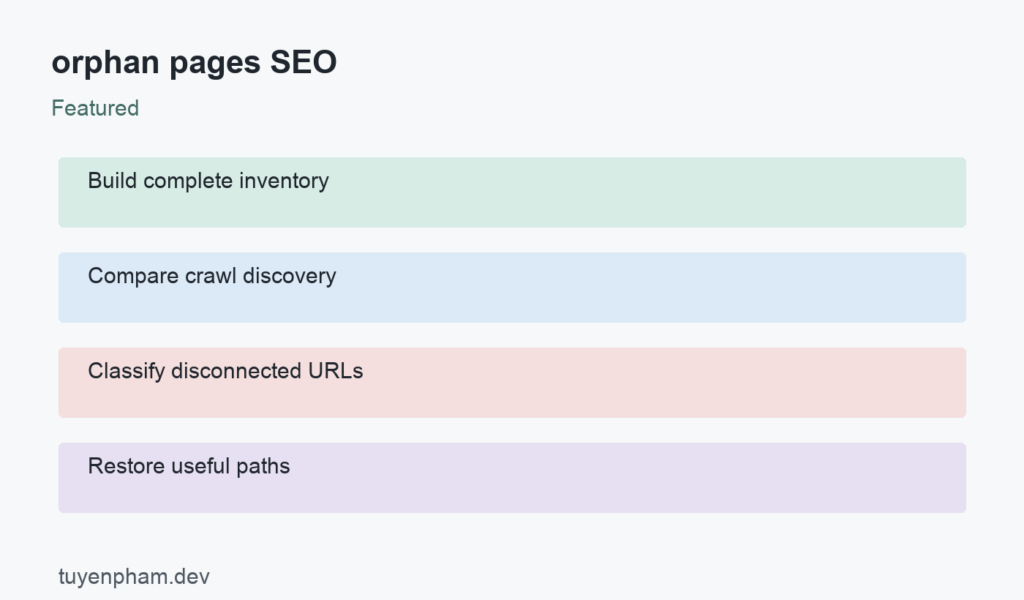
Orphan pages SEO deals with published pages that have no discoverable internal links pointing to them within the site structure being audited. Such pages are difficult for visitors to reach through normal navigation and offer little internal context. They are not automatically impossible to index: a search engine may discover them through a sitemap, an external link, or previous knowledge. The practical objective is to connect useful public content and deliberately handle URLs that no longer need to be part of the site.
orphan pages SEO: a practical workflow
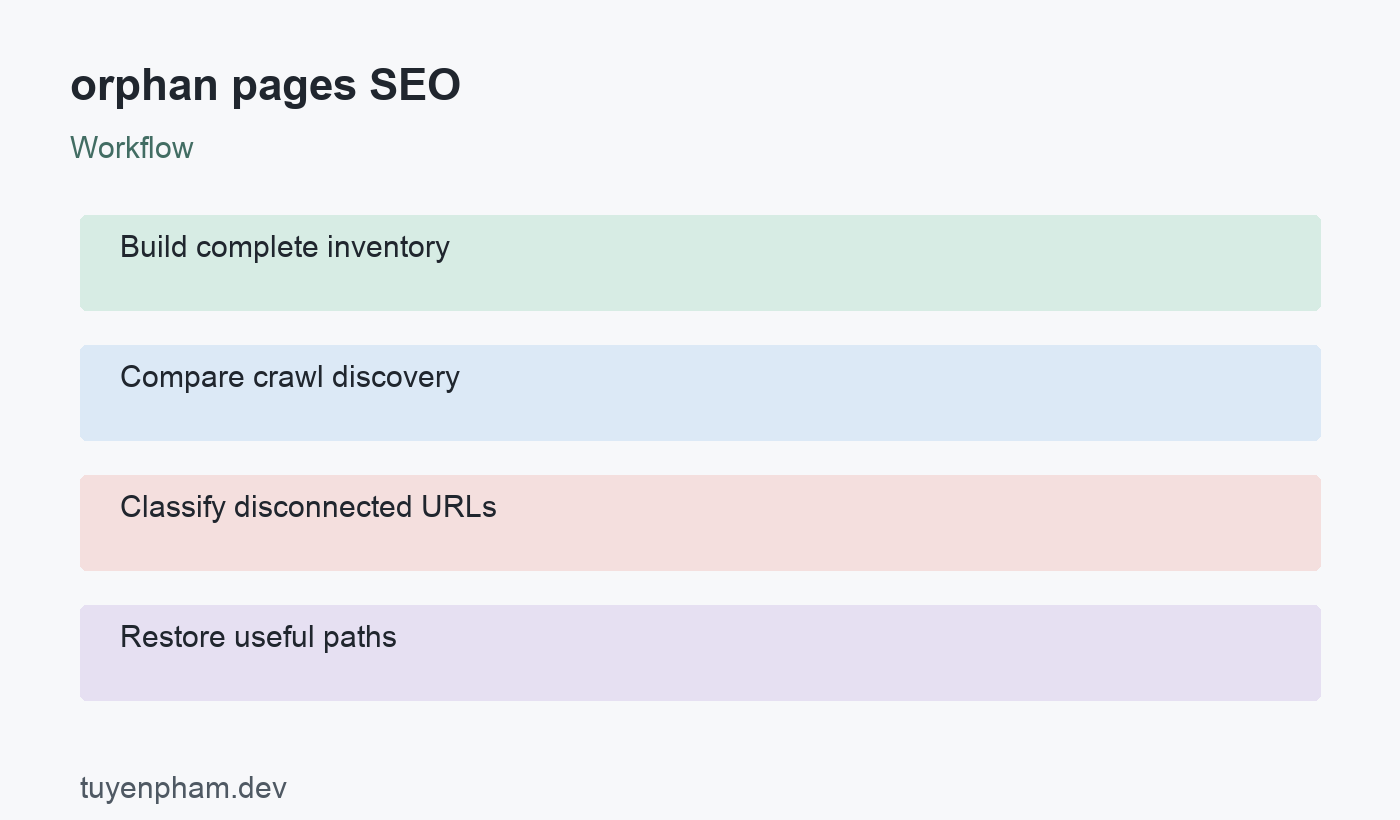
Use this sequence to organize the work: Build complete inventory → Compare crawl discovery → Classify disconnected URLs → Restore useful paths. The sections below explain the evidence, decisions, and limitations at each stage. The worked example is hypothetical and illustrates a process rather than a measured result from this website.
Compare independent URL inventories
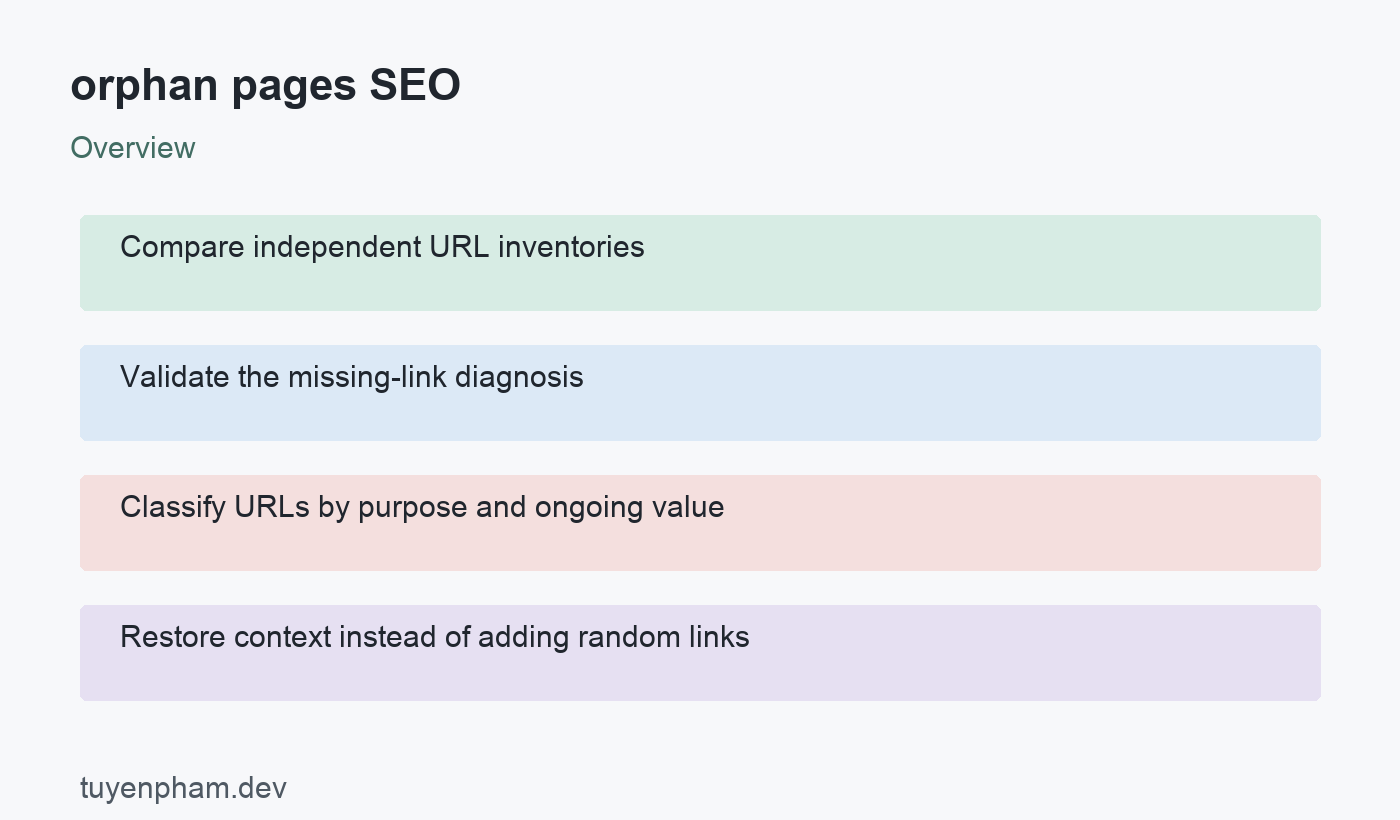
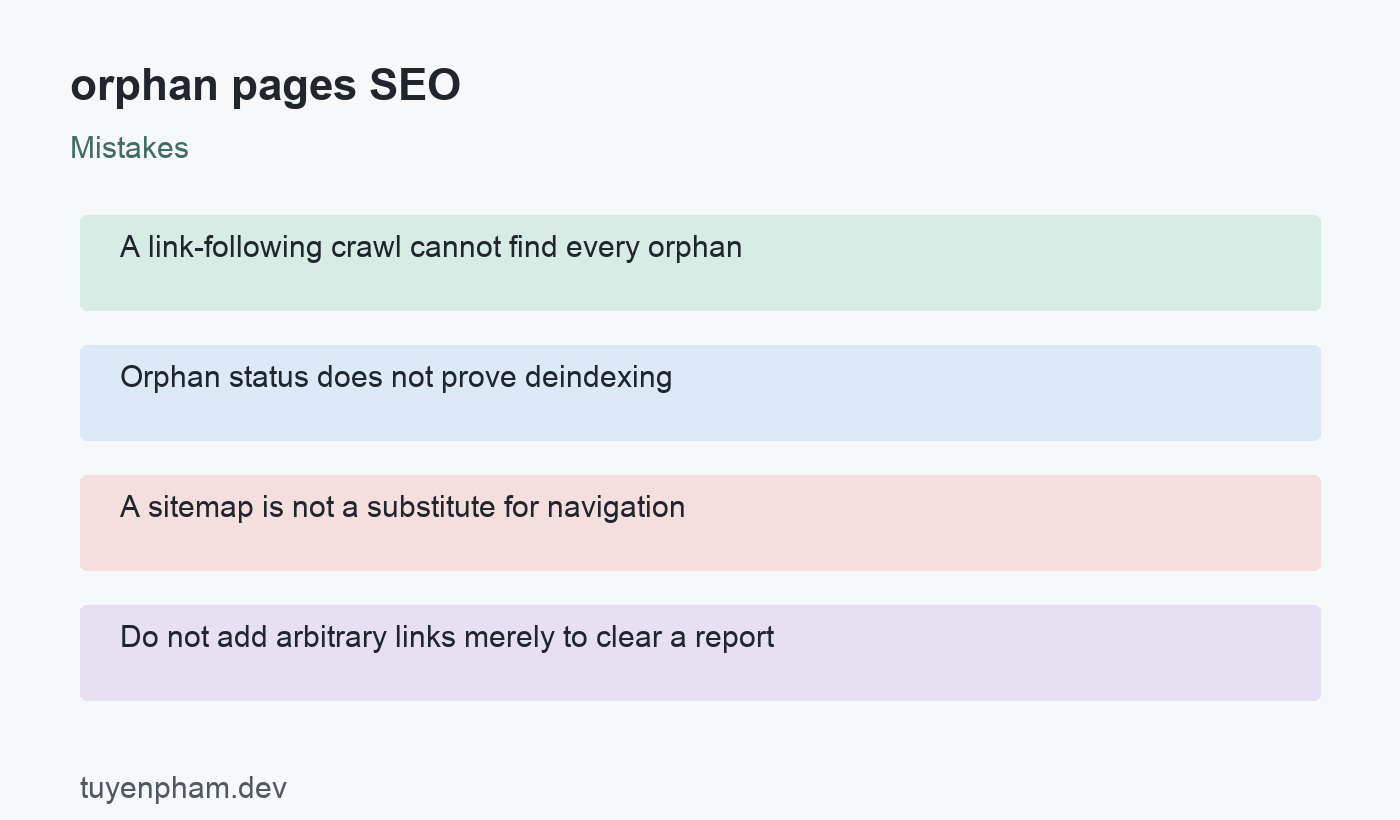
A crawl following links from the homepage cannot discover every orphan by itself. Compare its URL list with the CMS export, sitemap, analytics landing pages, and other relevant records. Normalize protocol, hostname, trailing-slash, and canonical variants carefully. Some apparent orphans are redirected aliases or pages behind deliberate authentication. Keep the evidence sources separate so you can explain why a URL entered the audit. A complete inventory matters more than claiming an orphan count from a single limited crawl.
Validate the missing-link diagnosis
Check whether links exist in navigation, related-content sections, pagination, or rendered JavaScript that the crawler did not process. Confirm that links use crawlable href values and that the source pages are themselves reachable. A page linked only from another disconnected page can remain isolated from the normal site structure. Review scope settings, robots rules, and exclusions before accepting an automated label. The definition depends on what was audited, so state whether the finding concerns all public pages or one section.
Classify URLs by purpose and ongoing value
Useful articles and product information usually deserve clear paths from relevant sections. Temporary campaigns, account pages, and intentionally restricted resources may have different requirements. Old duplicate material may be better consolidated than linked broadly. Read the page and inspect its role before choosing a remedy. Do not assume that every unlinked URL should become indexable or receive a navigation slot. The goal is a coherent public structure, not a numerical elimination of every exception in an automated report.
Restore context instead of adding random links
Google recommends that pages you care about have a link from at least one other page on your site. Choose a useful category, overview, or related article and add a descriptive link in an appropriate place. Rank Math discusses finding and fixing orphan pages, including tools that may suggest links. Review suggestions for reader relevance rather than accepting them as proof of quality. Sitemap inclusion can aid discovery, but it does not provide the same navigational context as an internal link.
Prevent new disconnections after site changes
Include internal-link checks when publishing, renaming categories, changing templates, or removing old content. Recheck whether pagination exposes deeper articles and whether related-content blocks still work after theme updates. Monitor the audit inventory over time and review valuable pages that remain unreachable from navigation. A fixed orphan does not necessarily produce an immediate ranking improvement. Success begins with a reliable reader path, correct page status, and a clear relationship to the rest of the site.
Worked example
A tutorial remains in the sitemap after its category archive was removed. It still receives occasional visits from an external reference, but no reachable article links to it. The audit compares the CMS inventory with a crawl and finds the disconnect. The tutorial is still useful, so the team links it from a relevant overview and places it in a maintained category. A retired campaign page found in the same audit receives a separate decision because it does not serve the same ongoing public purpose.
Verification checklist
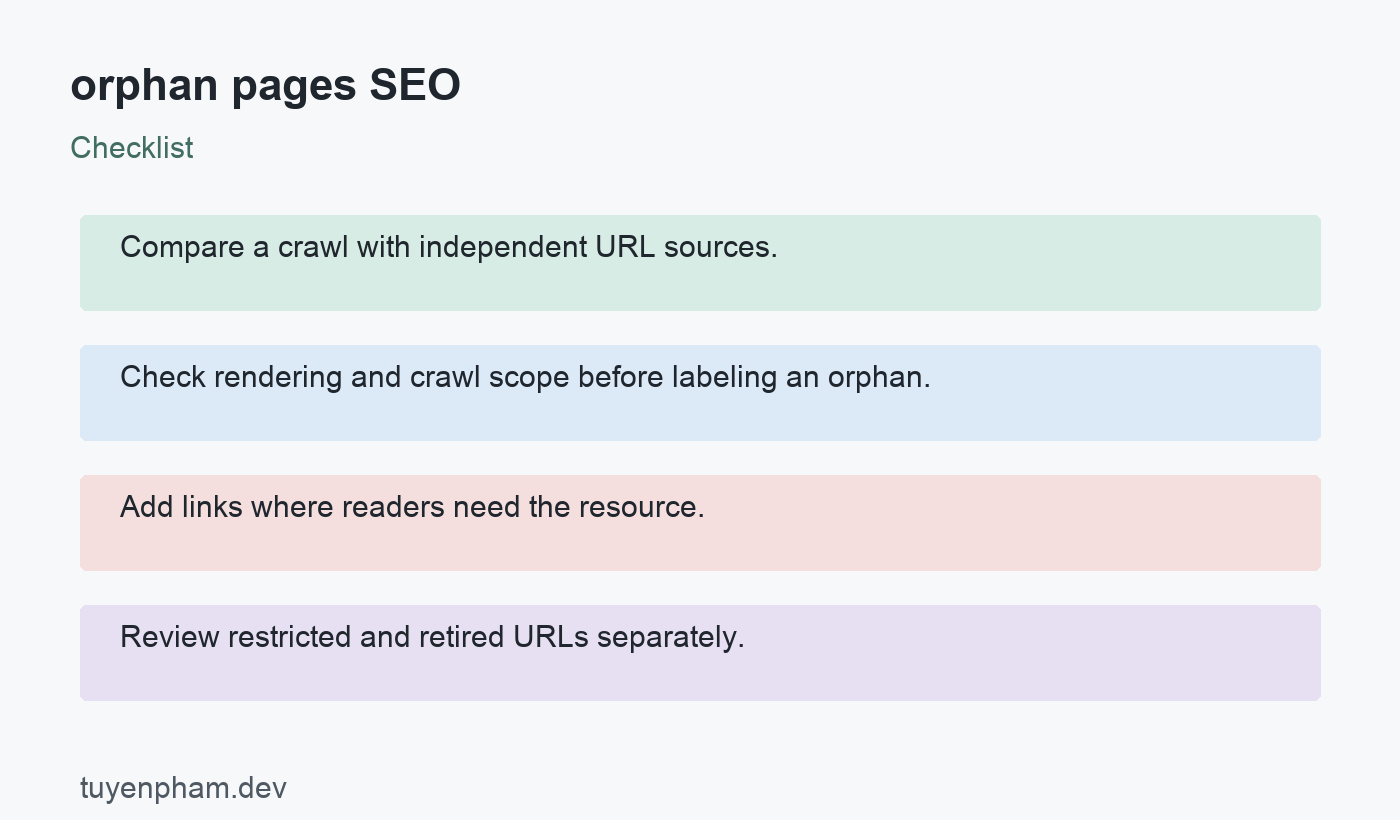
- Compare a crawl with independent URL sources.
- Check rendering and crawl scope before labeling an orphan.
- Add links where readers need the resource.
- Review restricted and retired URLs separately.
A focused task for your website
Export public CMS URLs and run a crawl from the main navigation. Compare the lists and inspect five mismatches manually. For each, record the status, purpose, canonical, and existing source links. Restore a relevant path for one useful page and verify it with a new targeted crawl. Make a separate plan for obsolete material. Keep a publishing checklist that requires a page to have a meaningful place in the site structure.
References and related reading
Review Google Search Central documentation for the relevant platform guidance, and Rank Math guidance for the related workflow for practical SEO checks. Continue with Internal Linking For Seo and the SEO audit checklist to connect this task with the rest of your site review.
Discussion
Join the conversation