Review Schema SEO: Check Eligibility and Represent Genuine Ratings

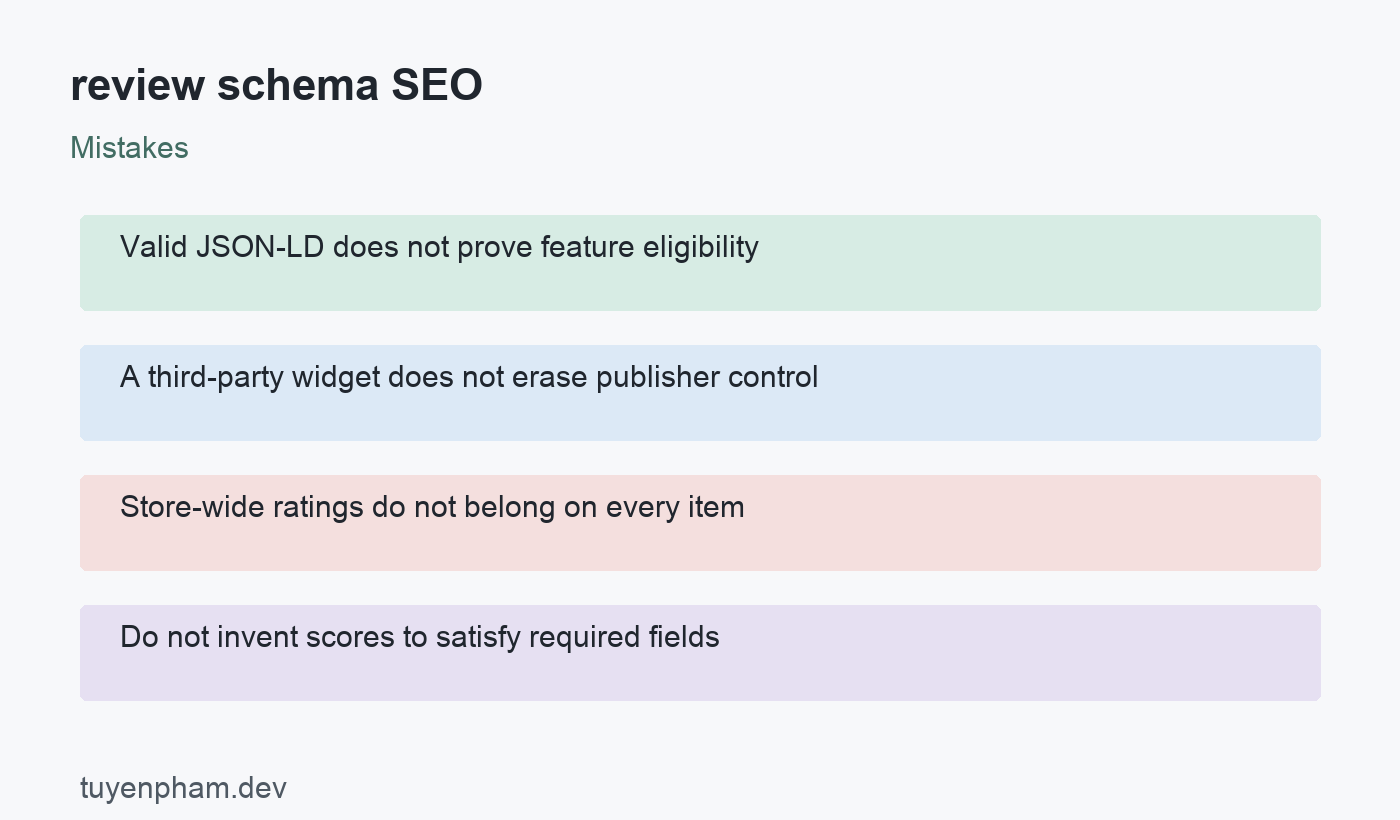
Review schema SEO describes genuine reviews and ratings for the item a page actually evaluates. Google’s review-snippet requirements depend on the item type and the relationship between the reviewer, publisher, and reviewed entity. Valid JSON-LD alone does not establish eligibility or guarantee stars. Start by identifying what is reviewed, where the rating comes from, and whether visitors can see the relevant information. Then apply the current feature rules instead of assigning review markup to every page that contains a testimonial.
review schema SEO: a practical workflow
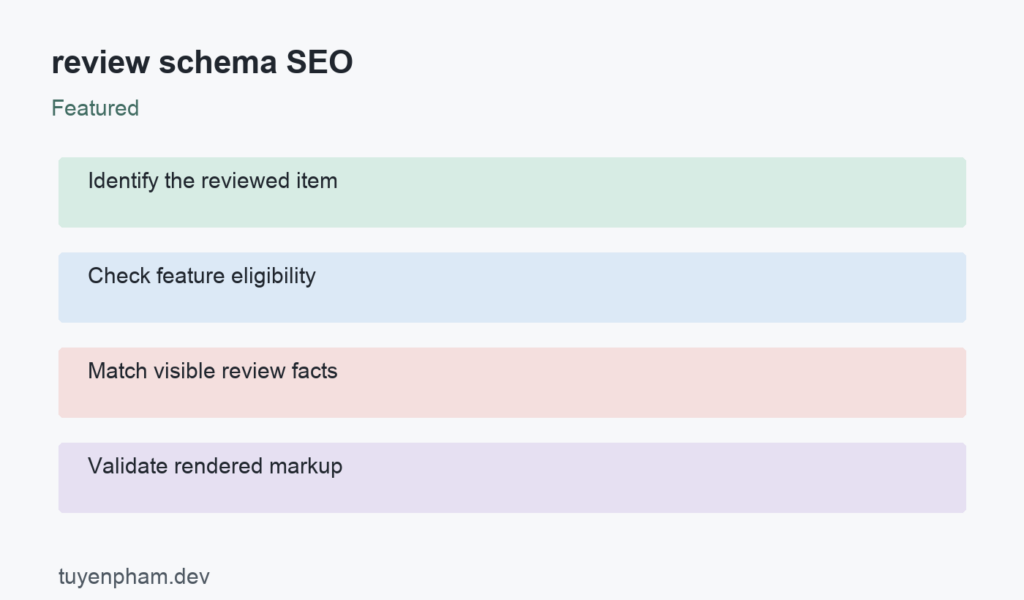
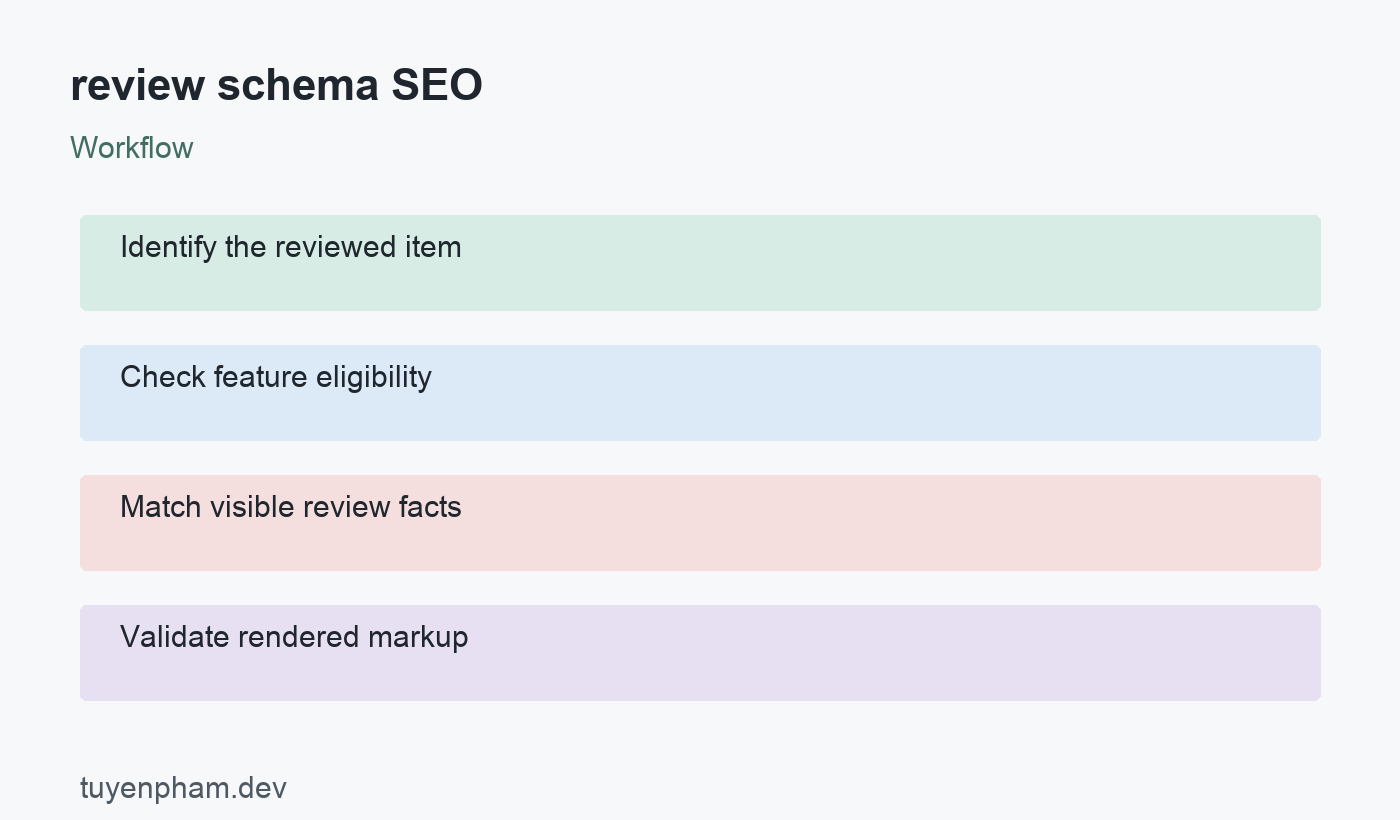
Use the following sequence to organize the review: Identify the reviewed item → Check feature eligibility → Match visible review facts → Validate rendered markup. The sections below explain the decisions and evidence needed at each stage. The worked example is hypothetical and illustrates the process rather than claiming a measured result from this website.
Identify the item and applicable feature rules
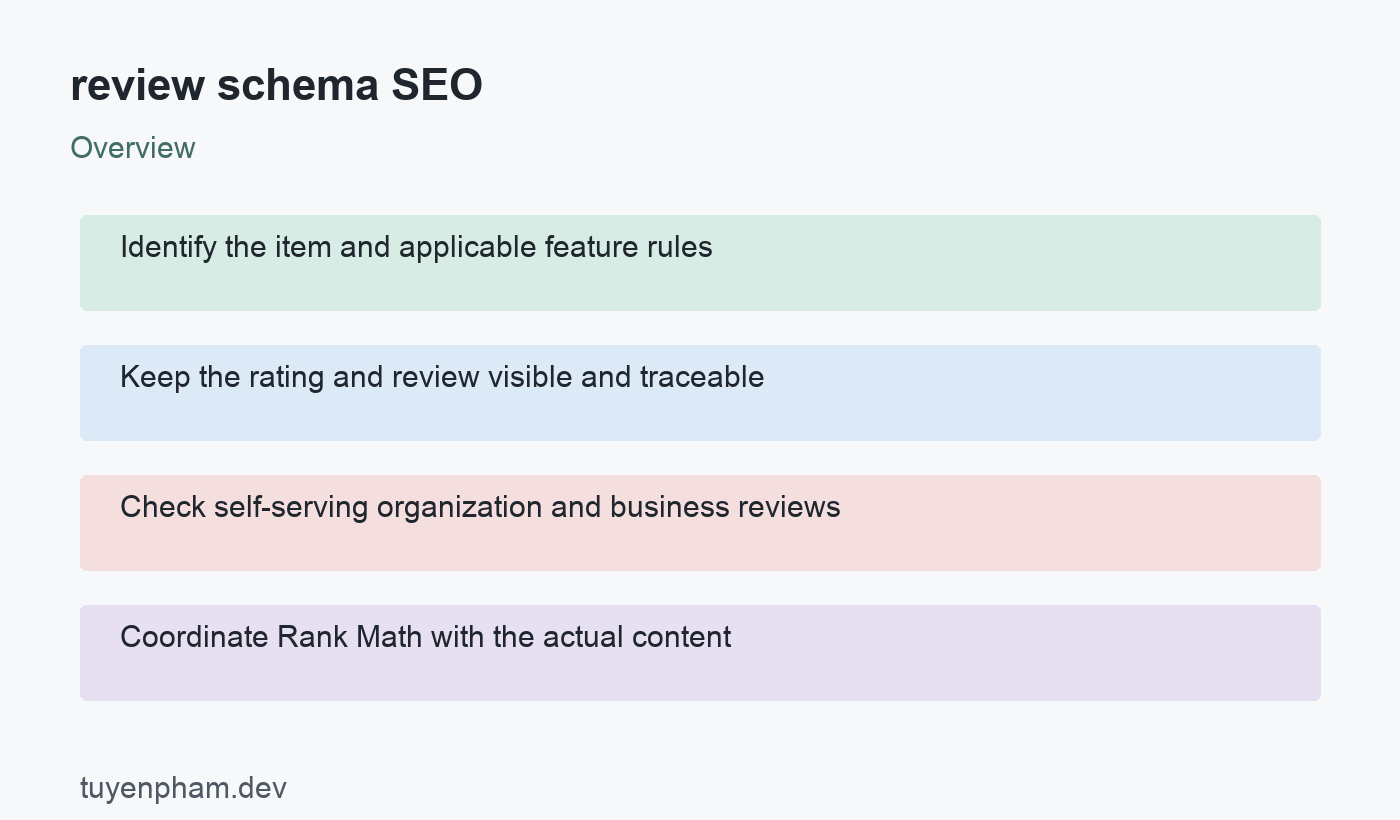
A review can concern a supported item such as a product or book, but a generic service claim does not automatically qualify for the same search treatment. Check the current supported types and requirements in Google’s documentation. Use the actual item identity and distinguish an individual review from an aggregate of ratings. Do not relabel an organization as a product simply to pursue stars. The choice should describe the real page and subject, with the required information available for that particular implementation.
Keep the rating and review visible and traceable
Show the relevant review and rating to readers, along with authorship and scale information when required. If an aggregate is used, it should represent genuine applicable ratings, with the count and value accurately reflected on the page. Google’s guidance includes restrictions on aggregating reviews from other websites. Do not invent a score, round a count misleadingly, or reuse a general brand rating for every item. A technical validator checks markup structure; it does not independently prove the evidence behind the rating.
Check self-serving organization and business reviews
Google says self-serving reviews for LocalBusiness and other Organization types are ineligible for the star review feature. This includes situations where the reviewed entity controls the page, even when a third-party widget supplies the review presentation. Genuine testimonials can still help visitors evaluate a provider, but that usefulness should not be confused with eligibility for review stars. Review the specific relationship and current rules before adding aggregate ratings to a business homepage or a service landing page.
Coordinate Rank Math with the actual content
Rank Math documents review schema setup and the fields used to describe ratings and items. Configure those fields only after checking eligibility and verifying the visible evidence. Ensure the theme or another plugin is not producing contradictory review objects. A schema type name in an editor does not override Google’s feature rules. Inspect the rendered output and keep identities, values, and counts aligned with the page. The implementation should make genuine information machine-readable rather than manufacture an appearance of popularity.
Validate changes and interpret reports carefully
Use the Rich Results Test for relevant structured-data errors and Search Console reports for supported enhancements. Required-property failures differ from recommendations for optional information. Check the page again when review counts, rating scales, or templates change. Passing validation does not guarantee display, and absence of stars does not by itself prove an indexing problem. Evaluate the correctness of the representation separately from the search system’s presentation choice. Preserve the source of the ratings so future maintenance can verify them.
Worked example
A service provider embeds genuine client testimonials on its own homepage. The team keeps the testimonials visible and accurate, but does not assume that a third-party widget bypasses the self-serving business-review restriction. A separate independent product review identifies the product, reviewer, rating scale, and methodology. That page is assessed against the applicable product-review requirements. The two pages have different subjects and publisher relationships, so one blanket review configuration would be inappropriate.
Verification checklist
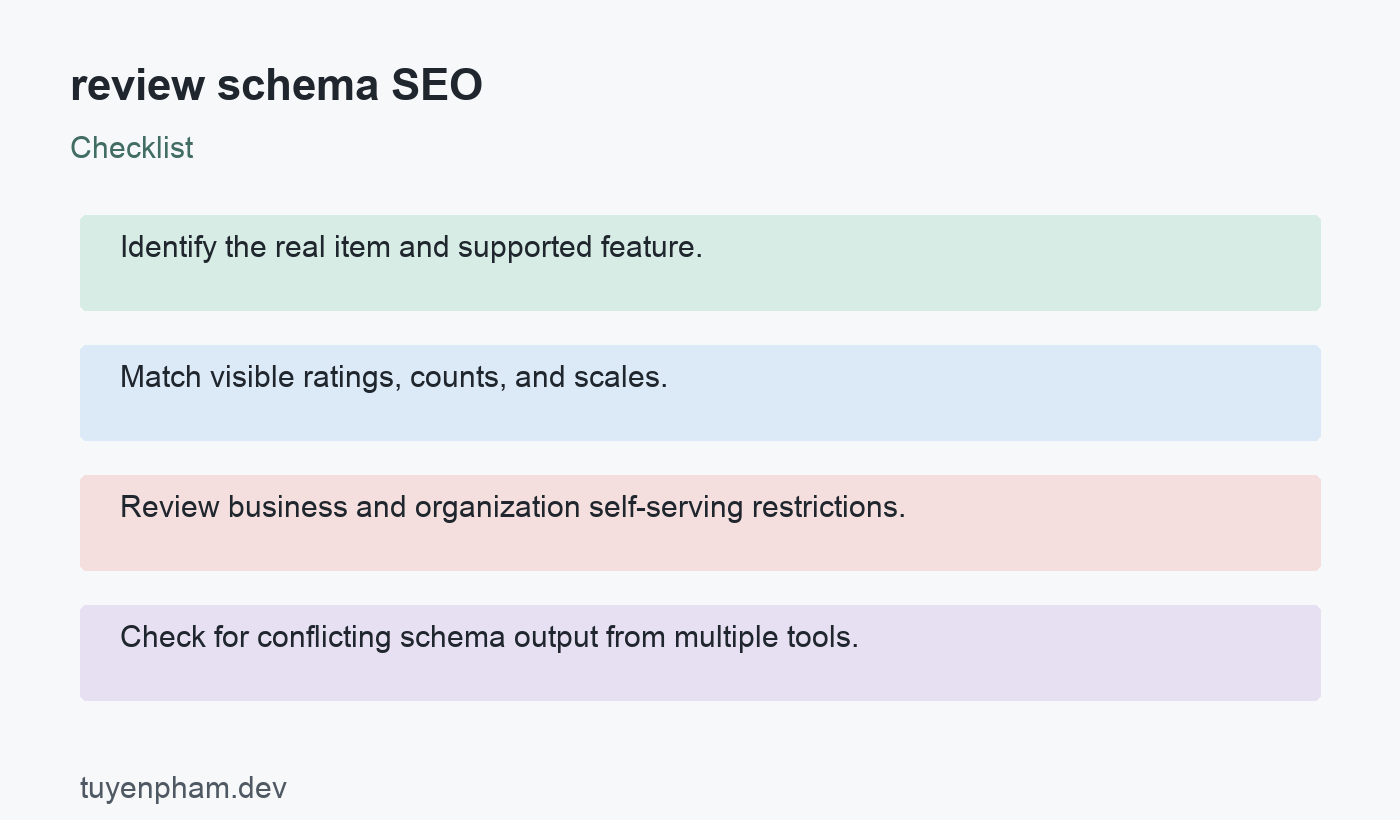
- Identify the real item and supported feature.
- Match visible ratings, counts, and scales.
- Review business and organization self-serving restrictions.
- Check for conflicting schema output from multiple tools.
A focused task for your website
Audit a page with ratings or testimonials. Record the reviewed item, rating source, publisher relationship, and visible values. Check the current requirements for that type before configuring markup. Inspect every relevant schema object in the rendered page, then validate the implementation. Fix inaccurate claims and conflicting values first. Document any reason the page is not eligible for a particular star feature so future editors do not reintroduce an inappropriate schema choice.
References and related reading
Review Google’s official guidance and Rank Math’s related explanation or workflow for the relevant requirements and tool details. Continue with Product Schema Seo and the SEO audit checklist to connect this review with the rest of your website.
Discussion
Join the conversation