Topical Authority: Build Useful Coverage Around a Clear Audience

Topical authority is an SEO planning concept for becoming a useful, credible resource in a subject area. It should not be treated as an official score that increases with every published article. Google emphasizes helpful, reliable content and a clear purpose; a large inventory of shallow pages does not satisfy that goal. Start with an audience and its problems, then create connected resources that answer those problems with sufficient evidence. Depth comes from usefulness and knowledge, not a publishing quota.
topical authority: a practical decision process
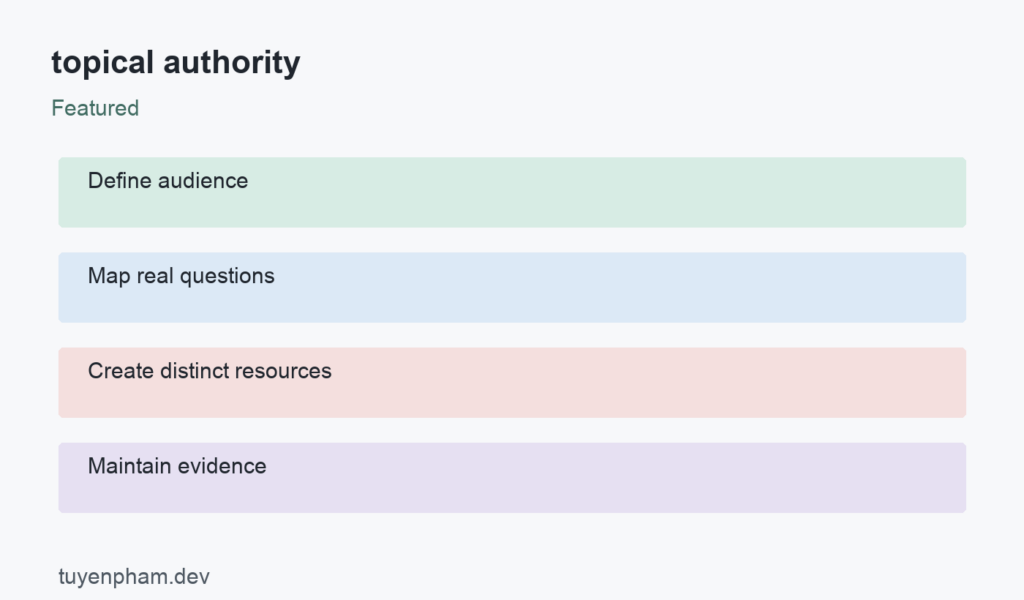
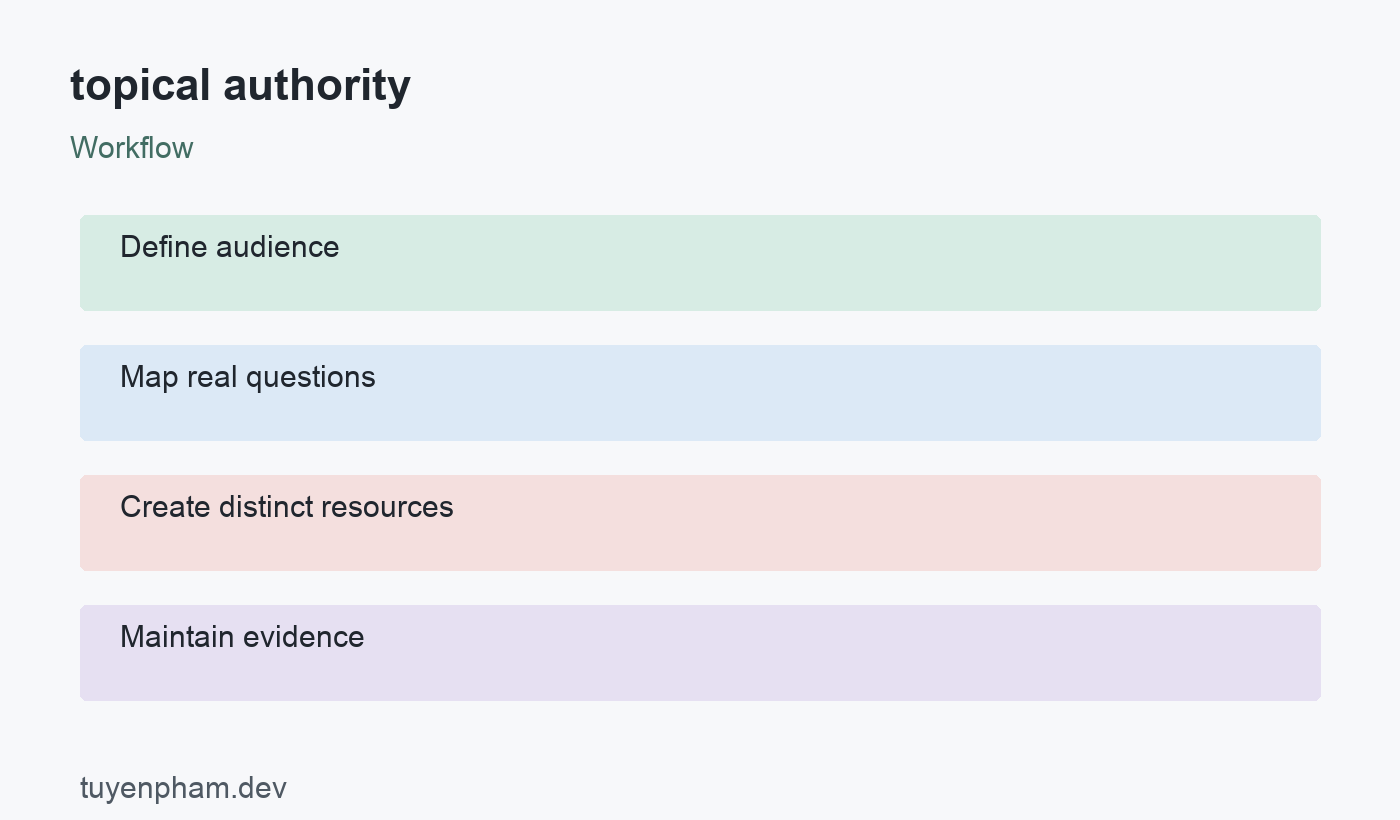
Follow this sequence: Define audience → Map real questions → Create distinct resources → Maintain evidence. Use it to organize the work, then verify the editorial and technical choices described below. The example is hypothetical and illustrates the decision rather than claiming a measured ranking result.
Define a topic narrow enough to serve well
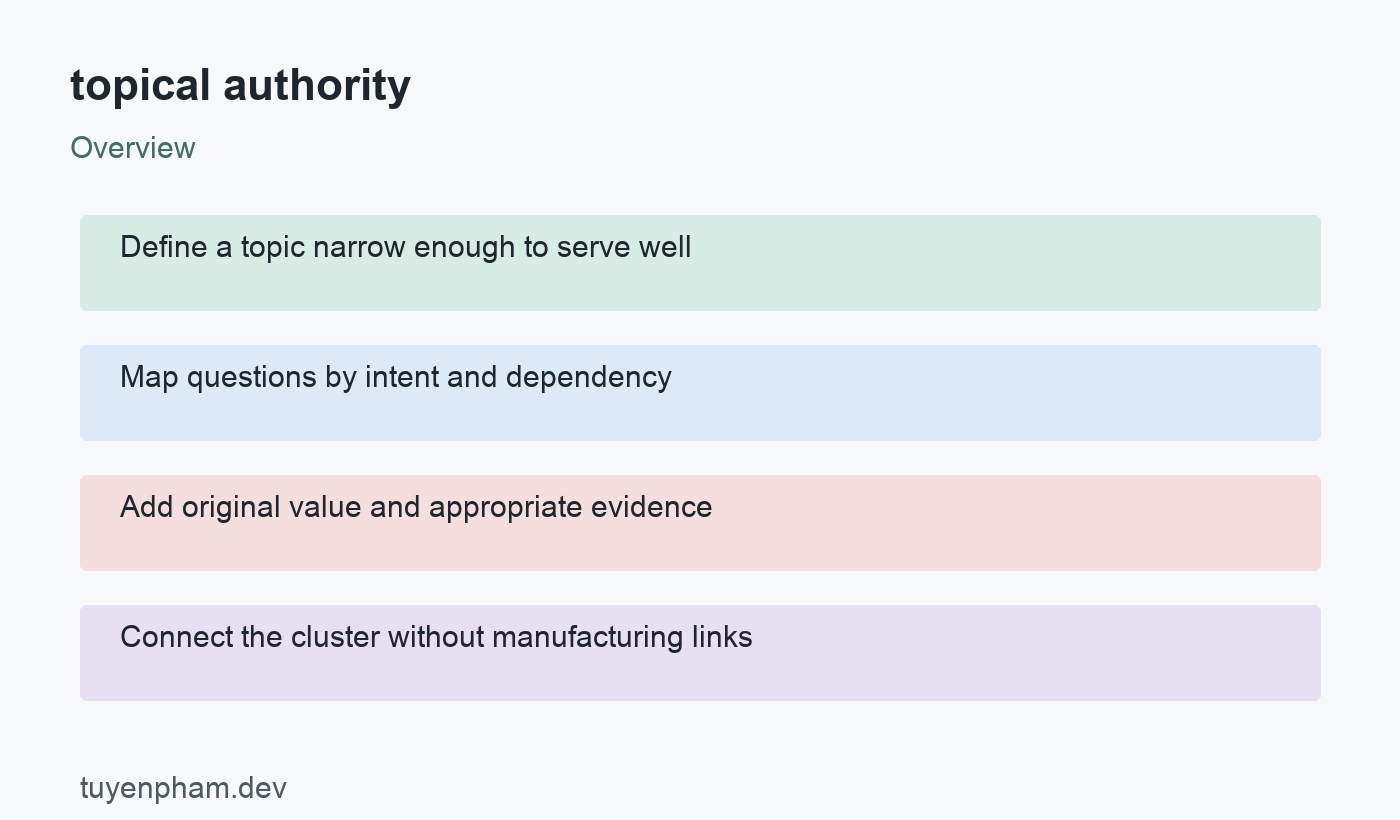
A small team is unlikely to provide equal expertise across every possible technology or industry. Choose a subject where you can supply experience, examples, or access to qualified review. Define the reader, their starting knowledge, and the decisions they need to make. A developer site might focus a cluster on WordPress performance instead of every web platform. This makes the editorial boundary explicit and lets you identify what deserves a full article, a supporting section, or no coverage at all.
Map questions by intent and dependency
Collect questions from customer conversations, support tickets, site search, and keyword research. Group them by the task the reader is trying to complete rather than by shared words alone. A beginner overview can link to setup instructions, troubleshooting, and comparisons. Some questions should share a page because the answer is short or tightly connected. Others need separate resources because their examples or user intent differ. A topical map is a planning aid, not a rule that every branch must become an indexable URL.
Add original value and appropriate evidence
For each planned article, specify what it contributes beyond a paraphrase of existing results. That might be a tested procedure, a transparent comparison, a worked example, or a carefully reviewed explanation. Cite sources for claims readers should verify. Clearly label hypothetical examples and disclose important limitations. If you do not have direct experience, do not invent it. A smaller collection with dependable explanations can be more useful than hundreds of pages that repeat general advice without helping readers complete a task.
Connect the cluster without manufacturing links
Link when a reader needs prerequisite knowledge, a next step, or a deeper explanation. Use descriptive anchor text and maintain paths from broad navigation to important supporting pages. Avoid linking every article to every other article simply to reach a numerical target. Rank Math discusses topical maps and connected coverage; use that framework to organize work while keeping each page valuable on its own. A plugin content score does not measure expertise or certify that a site has earned authority.
Maintain the subject as knowledge changes
Review examples, screenshots, product behavior, and references when underlying systems change. Track unanswered questions and recurring support confusion. Measure relevant query coverage, useful visits, and business outcomes rather than only the number of indexed articles. Some pages may need consolidation if the map grows repetitive. Other pages deserve expansion after real user feedback. There is no universal article count or completion date at which a topic becomes authoritative. Editorial maintenance and clear scope remain ongoing responsibilities.
Worked example
For a WordPress performance cluster, the overview can explain diagnosis and tradeoffs. Supporting pages might cover cache configuration, image delivery, database cleanup, and how to interpret field performance data. An article about cache configuration should include an actual decision process, not repeat the overview with a new title. A maintenance note should show which versions and environments the instructions apply to. The connections help a reader move from diagnosis to a safe improvement without searching through unrelated content.
Implementation checklist
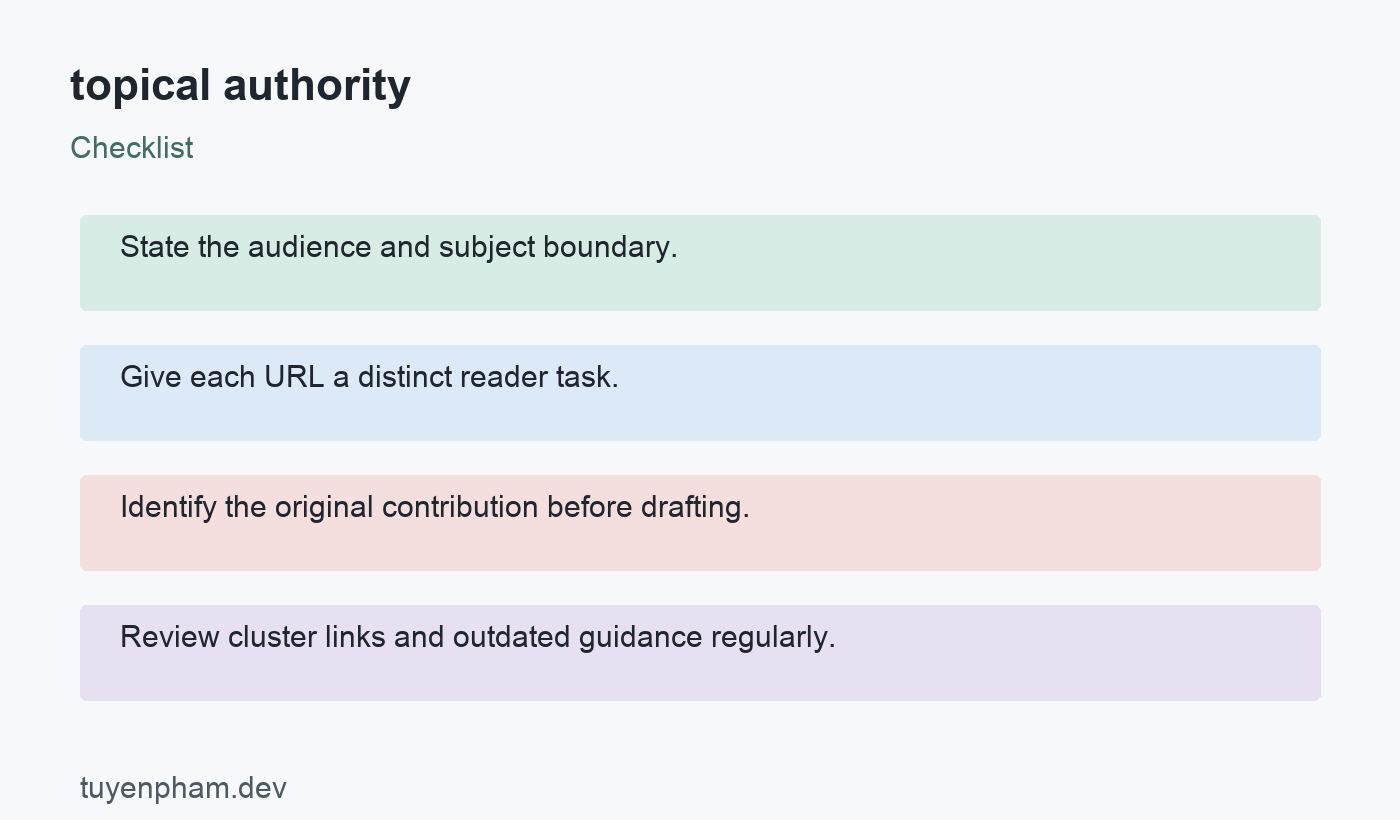
- State the audience and subject boundary.
- Give each URL a distinct reader task.
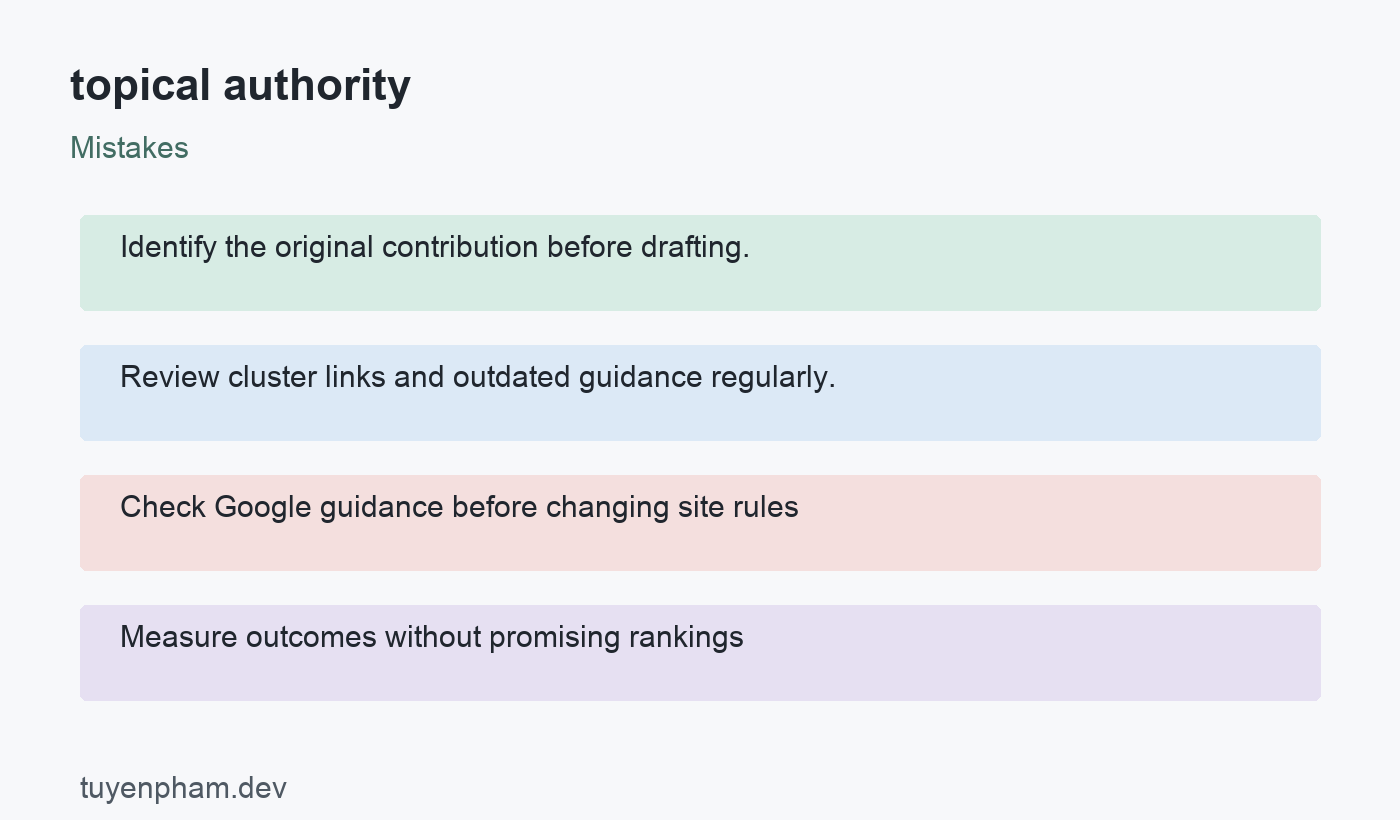
- Identify the original contribution before drafting.
- Review cluster links and outdated guidance regularly.
A focused task for your website
Build a topic map with ten reader questions. Assign each question to an existing page, a new resource, or a short section within another article. For every new resource, record its unique contribution and required evidence. Remove planned pages that only repeat an existing answer. Choose a maintenance owner and review trigger for technical instructions. Assess the map by whether a reader can complete the central workflow, not by how many keywords fit into it.
References and next steps
Consult Google Search Central documentation for the relevant search requirements and Rank Math guidance on this topic for practical workflows. Continue with Internal Linking For Seo and the SEO audit checklist for related implementation checks.
Discussion
Join the conversation