Rank Math vs Yoast SEO: Which Is Better for WordPress SEO?

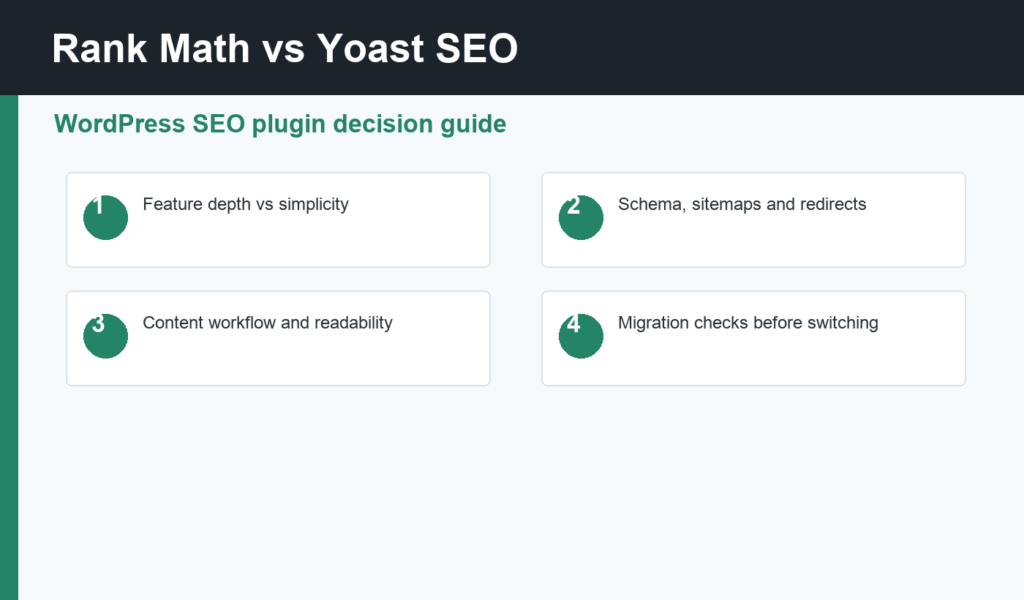
Rank Math vs Yoast SEO is one of the first decisions many WordPress site owners face after launching a site. Both plugins can help you write better titles, control meta descriptions, generate XML sitemaps, add schema markup, and avoid common on-page SEO mistakes. The best choice is not the plugin with the longest feature list. It is the plugin that matches how you publish, maintain, and measure your WordPress content.
This guide compares Rank Math and Yoast SEO from a practical WordPress workflow perspective: setup, content optimization, technical SEO, schema, performance, migration risk, and long-term site management. If you are still building your basic SEO process, start with our WordPress SEO checklist first, then use this comparison to choose the plugin that supports that process best.
Rank Math vs Yoast SEO: quick verdict
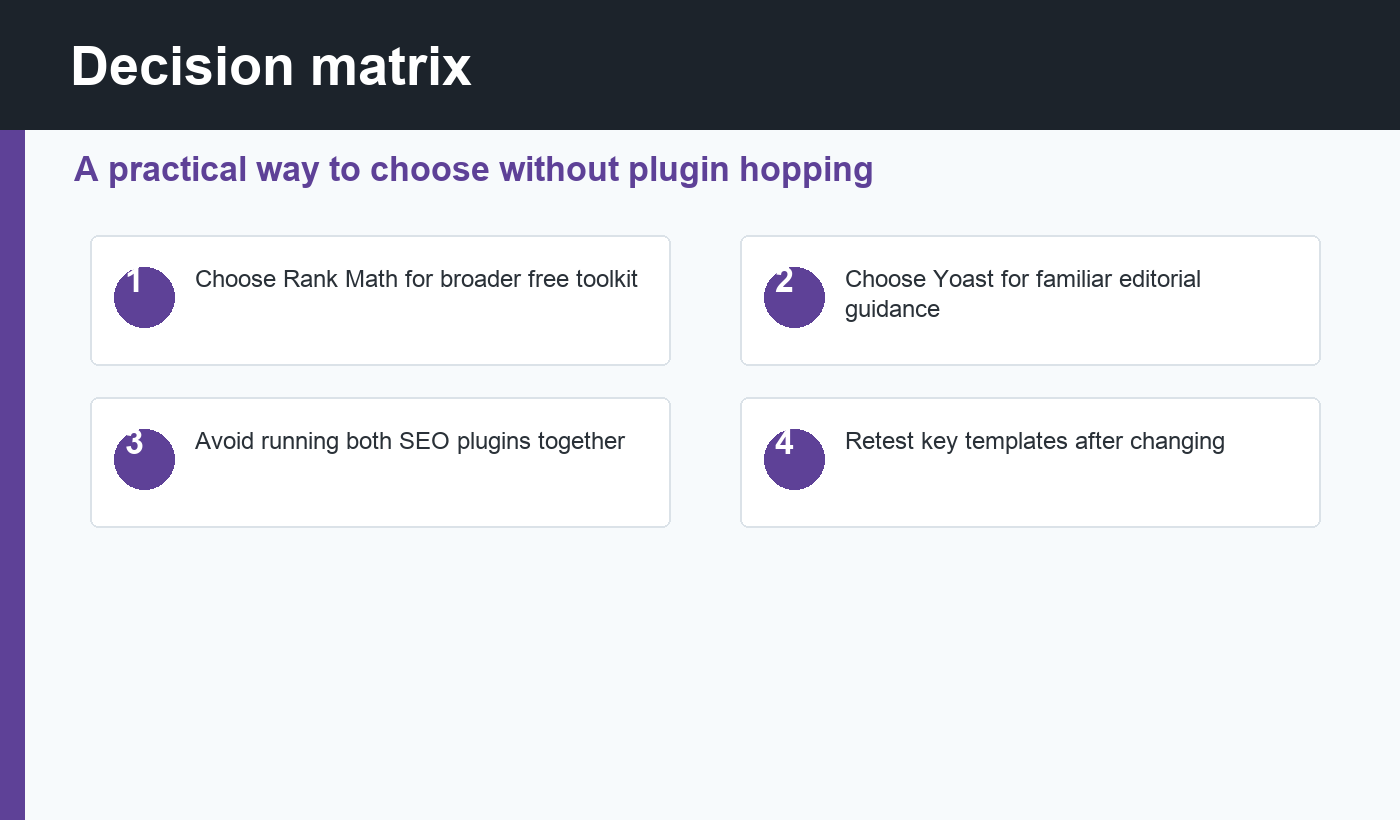
Choose Rank Math if you want a broader SEO toolkit inside one plugin, especially if you value multiple focus keyword checks, built-in schema options, redirect management, 404 monitoring, and tighter reporting inside WordPress. Rank Math is often attractive for site owners who want more technical SEO controls without installing many separate plugins.
Choose Yoast SEO if you prefer a mature, familiar editorial workflow with strong readability guidance, simple defaults, and a plugin many WordPress teams already know. Yoast is a safe choice for writers and editors who mostly need dependable title, meta description, XML sitemap, canonical, and content guidance without spending much time in advanced settings.
Neither plugin replaces a real SEO strategy. Google still relies on crawlable pages, helpful content, clear internal links, good page experience, and search intent match. A plugin helps you implement those basics more consistently; it does not make thin content rank by itself.
Setup and onboarding
Rank Math’s setup wizard is built around modules. You can enable only the features you plan to use, such as sitemaps, schema, analytics, redirects, or local SEO. This modular approach is useful for growing sites because you can start lean and activate more features later. Rank Math also provides import tools for moving SEO data from other plugins, which is important if you are switching from Yoast.
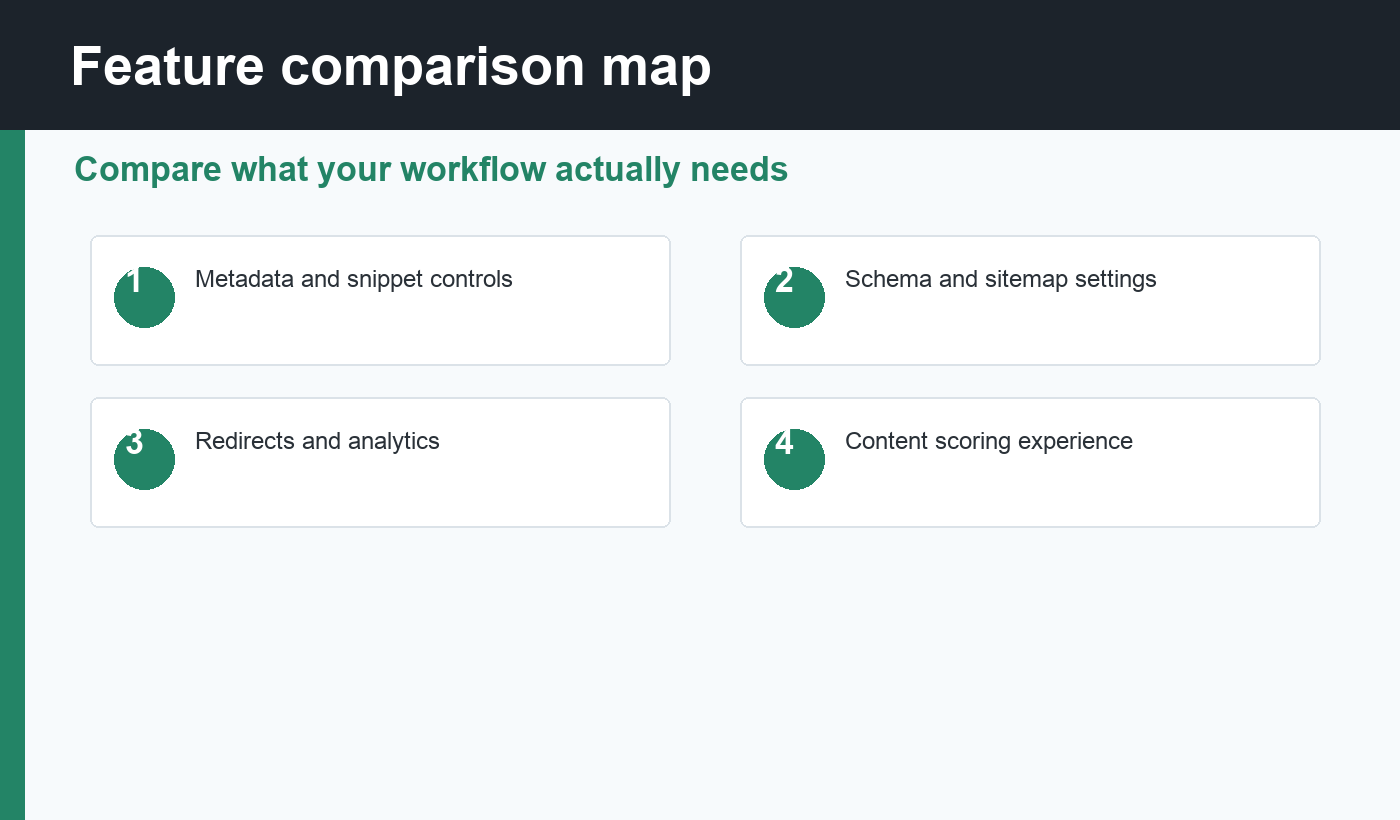
Yoast SEO has a very familiar configuration flow. It is straightforward for beginners and content teams because the core workflow is simple: configure site basics, let Yoast output the important SEO tags, then optimize each post in the editor. For many small business sites, that simplicity is a strength.
The main setup rule is the same for both tools: run only one full SEO plugin at a time. Running Rank Math and Yoast together can create duplicate meta tags, conflicting canonical URLs, sitemap confusion, and schema overlap.
Content optimization workflow
Both plugins give writers a checklist inside the WordPress editor. They help you check whether the focus keyword appears in important places such as the SEO title, description, URL slug, opening content, headings, and image alt text. That is useful, but the score should be treated as a publishing guardrail, not an editorial boss. For implementation details, compare the official Rank Math migration guidance with Yoast’s WordPress SEO plugin documentation.
Rank Math’s scoring system tends to feel more detailed and action-oriented. It can be helpful when you want a clear preflight checklist before publishing. If you already use a repeatable process for writing SEO-friendly WordPress posts, Rank Math gives you a convenient way to check that each article follows the same standard.
Yoast’s content analysis is well known for its readability feedback. It is especially useful for teams that publish many beginner-friendly articles and want reminders about paragraph length, transitions, passive voice, and heading structure. The guidance is not perfect for every niche, but it often helps non-technical writers keep posts clear.
Technical SEO features
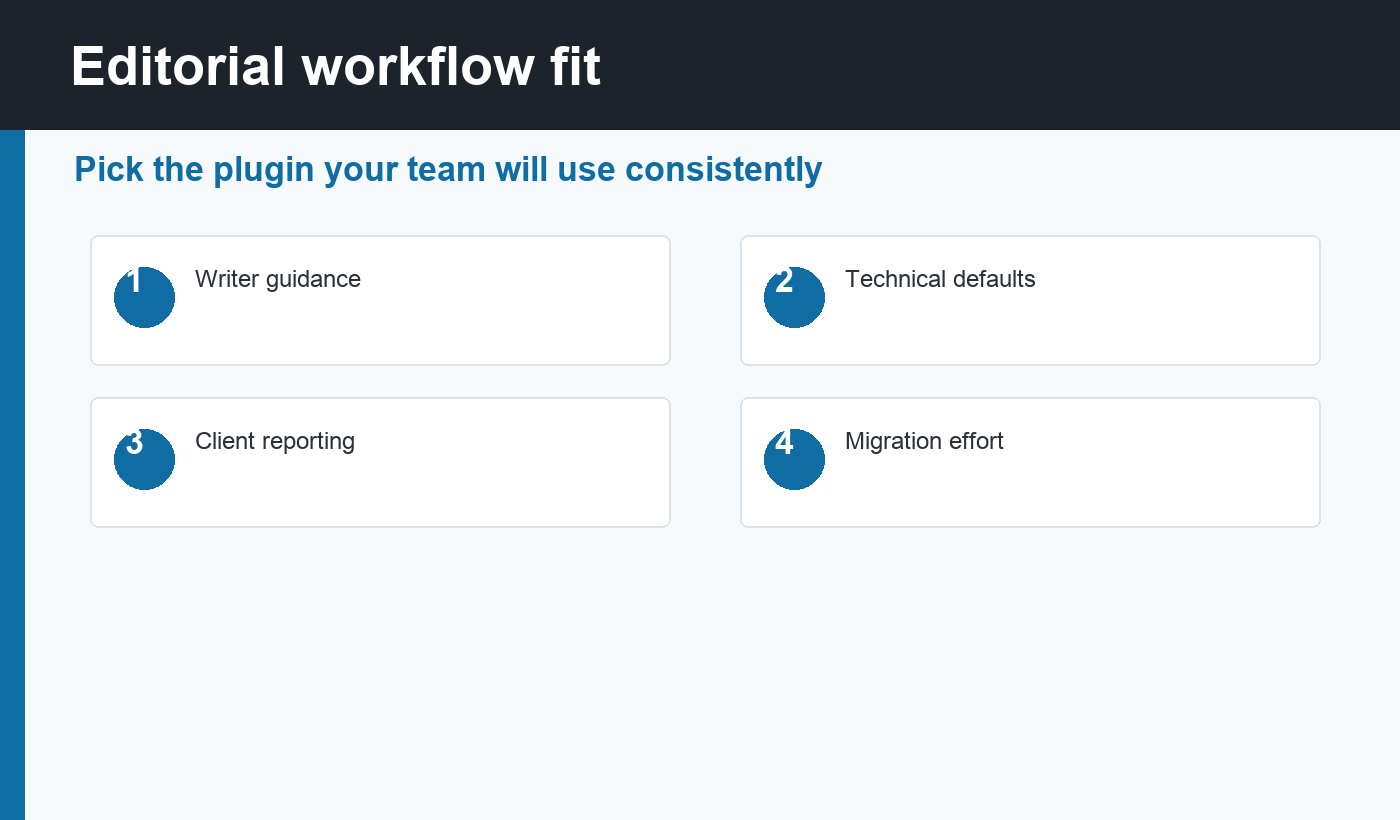
For basic technical SEO, both Rank Math and Yoast can cover the essentials: title tags, meta descriptions, canonical URLs, robots meta controls, breadcrumbs, XML sitemaps, Open Graph data, and schema output. If your site only needs these fundamentals, either plugin can work well.
Rank Math often gives site owners more built-in technical controls in one place. Depending on the version and enabled modules, it can handle redirects, 404 monitoring, role-based access, schema templates, WooCommerce SEO, local SEO, and analytics integrations. That can reduce plugin sprawl, but it also means you should be disciplined about which modules you enable.
Yoast keeps many advanced capabilities either streamlined or available through premium extensions. This can be a positive if you want a cleaner interface and fewer decisions. It can be a limitation if you expect one plugin to cover redirects, richer schema controls, and more detailed SEO reporting without add-ons.
Schema, sitemaps, and indexing
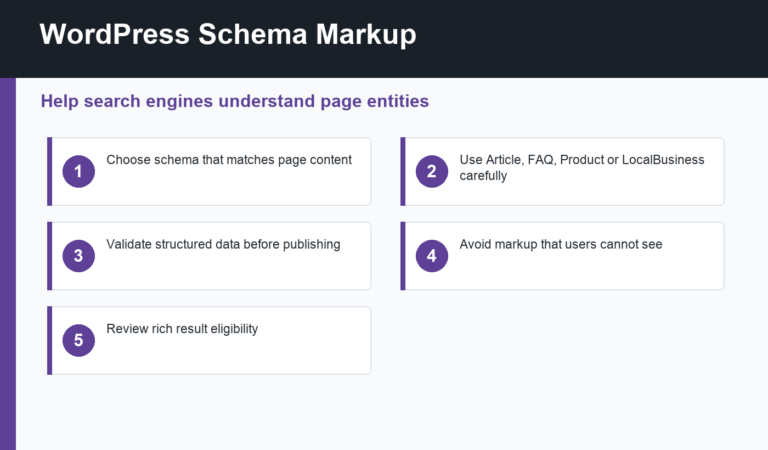
Schema and sitemaps are two areas where SEO plugins quietly do important work. A sitemap helps search engines discover your important URLs. Schema markup helps search engines understand entities, article type, breadcrumbs, products, FAQs, local business details, and other structured data when it is implemented correctly.
Rank Math provides visible schema controls and templates, which makes it appealing for sites that publish reviews, how-to content, local pages, products, or other structured content types. Yoast also outputs schema and has a mature graph-based approach, but the day-to-day controls can feel less expansive in the editor.
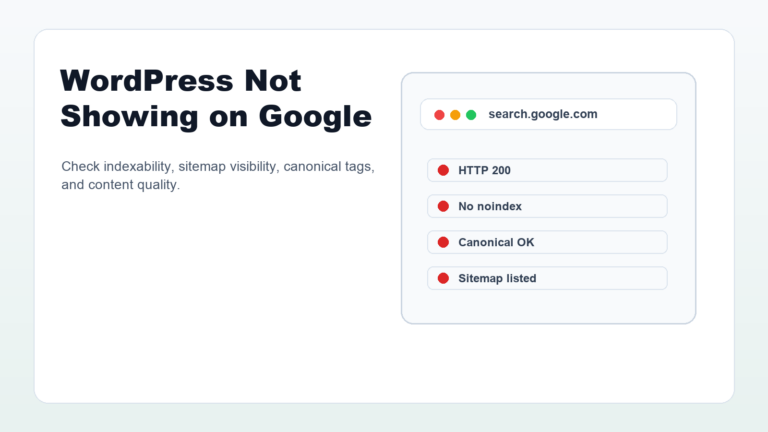
No plugin can guarantee indexing. After publishing, you still need clean crawl paths, indexable pages, self-referencing canonicals, internal links, and a sitemap that Google can fetch. Our guide on how to submit a WordPress sitemap to Google walks through that follow-up step after your SEO plugin generates the sitemap.
Performance and site weight
SEO plugins add code, database options, admin screens, and sometimes frontend output. On a well-built site, either Rank Math or Yoast can run acceptably. Performance problems usually come from enabling unnecessary features, stacking overlapping plugins, loading bloated themes, or adding scripts that do not support the user’s task.
The safer approach is simple: enable the SEO features you actually use, test important templates after major setting changes, and keep only one plugin responsible for each SEO job. If Rank Math handles redirects, do not keep a second redirects plugin active unless there is a clear reason. If Yoast manages your sitemap, do not publish a second plugin sitemap for the same content types.
Migration: switching from Yoast to Rank Math or back
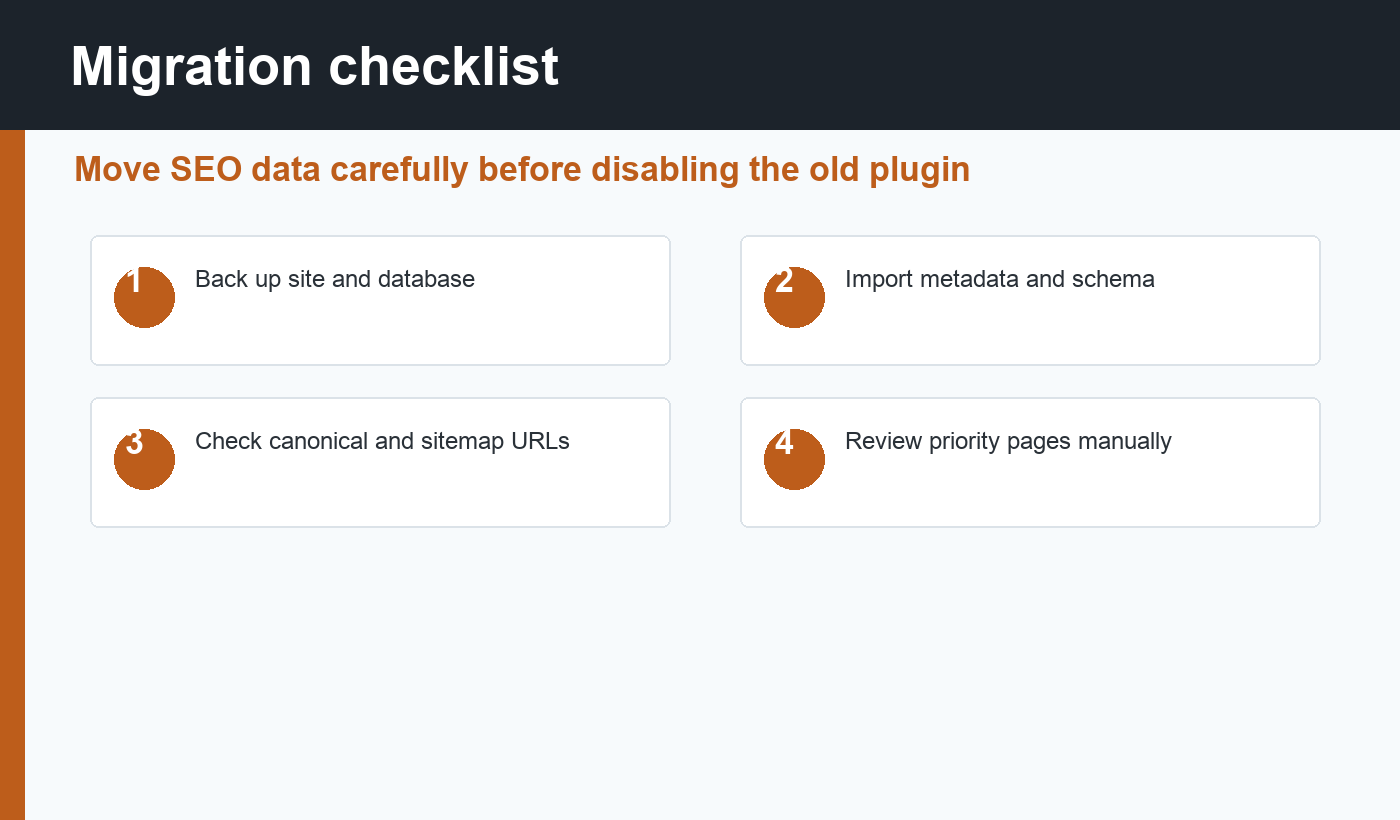
Migration is where careless plugin changes can hurt an otherwise healthy site. Before switching, back up the site and database. Export or document current SEO settings. Then import metadata, focus keywords, titles, descriptions, redirects, and schema data where the destination plugin supports it.
After migration, review high-value pages manually. Check the HTML source for the title tag, meta description, canonical URL, robots meta tag, Open Graph tags, schema markup, and sitemap inclusion. Crawl a sample of posts and pages if the site is large. Do not delete the old plugin until you have confirmed the new plugin is outputting the right SEO data.
If your previous issue was that WordPress was not showing on Google, solve indexing blockers before changing SEO plugins. Switching tools can hide the real problem if the root cause is noindex, poor internal linking, robots.txt restrictions, canonical mistakes, or a thin content strategy.
Rank Math advantages
- More built-in SEO modules for users who want a broad toolkit.
- Detailed content scoring that works well as a pre-publish checklist.
- Strong schema, redirect, 404, and analytics-oriented workflows.
- Good fit for technical site owners, affiliate sites, local sites, and content operators who want many controls in one plugin.
Yoast SEO advantages
- Very familiar interface for WordPress writers and editors.
- Strong readability guidance for content teams.
- Simple defaults that are easy to maintain.
- Good fit for sites that mainly need dependable metadata, sitemap, canonical, and editorial checks.
Which plugin should you choose?
For a new WordPress site where you want more SEO controls without installing many add-ons, Rank Math is usually the stronger choice. It gives you a wide toolkit and a clear optimization workflow. For a content team that already understands Yoast and wants a stable, writer-friendly interface, Yoast SEO remains a solid option.
The most important decision is consistency. Pick one SEO plugin, configure it carefully, document your publishing checklist, and review your most important templates after every major change. A well-configured Yoast setup is better than a messy Rank Math setup, and a focused Rank Math setup is better than a plugin stack full of overlapping SEO tools.
Final recommendation
If you are building a practical WordPress SEO system today, start with Rank Math when you want a more complete control panel and deeper technical options. Choose Yoast SEO when your priority is editorial simplicity and team familiarity. Then measure the outcome that matters: cleaner pages, fewer indexing issues, better internal linking, stronger content, and a workflow your team can repeat every time you publish.
Discussion
Join the conversation