Search Intent SEO: How to Match What Users Really Want

Search intent SEO means matching your page to what the searcher actually wants. Keywords show the words people type. Intent explains the job behind those words. A page that misses intent can be well written and still struggle because it solves the wrong problem.
This concept belongs early in your SEO workflow, before outlines, titles, and optimization. It also improves keyword research for SEO because it helps you decide which keywords belong together.
Search intent SEO categories
Most searches fit one of several broad patterns. Informational searches ask for explanations, tutorials, and definitions. Commercial searches compare options. Transactional searches show buying or signup intent. Navigational searches look for a specific brand or website. Local searches expect nearby results, maps, reviews, or service areas.
Google’s helpful content documentation points toward the same idea: create content for people and their needs, not just for ranking signals.
Read the search results before writing
The current results page is a live clue. If most ranking pages are beginner guides, your advanced product page may not fit. If results show comparison lists, users probably want options. If results show category pages, a single blog post may not be enough. If a local pack appears, location signals matter.
Look at page types, headings, featured snippets, People Also Ask questions, videos, products, reviews, and local results. Do not copy competitors, but learn what job the search engine is trying to satisfy.
Match content format to intent
A how-to keyword usually needs steps, screenshots, examples, and common mistakes. A comparison keyword needs criteria, pros and cons, use cases, and a clear recommendation. A checklist keyword needs concise review items. A product keyword needs specifications, benefits, images, reviews, availability, and structured data where appropriate.
The page title should signal the format clearly. For example, “Technical SEO Checklist” promises a review list, while “What Is Technical SEO?” promises an explanation. Users should know what they are getting before they click.
Avoid mixed-intent confusion
Some keywords have mixed intent. In those cases, decide which audience you can serve best. Do not force a sales page into an informational result if users need education first. Instead, publish the helpful guide and add internal links to relevant products, services, or deeper resources.
Internal links help users continue naturally. A beginner article can link to an on-page SEO checklist when the reader is ready to apply the concept.
Search intent checklist
- Identify the likely user problem.
- Classify intent before outlining.
- Review current ranking formats.
- Choose a page type that fits.
- Answer the core question early.
- Add examples that match the user’s stage.
- Use internal links for next steps.
- Refresh pages when SERP intent shifts.
When intent changes over time
Search intent is not frozen. A query that once showed tutorials may later show product pages, videos, tools, or local results. Review important keywords periodically, especially after traffic drops or when a page stops earning clicks despite stable rankings.
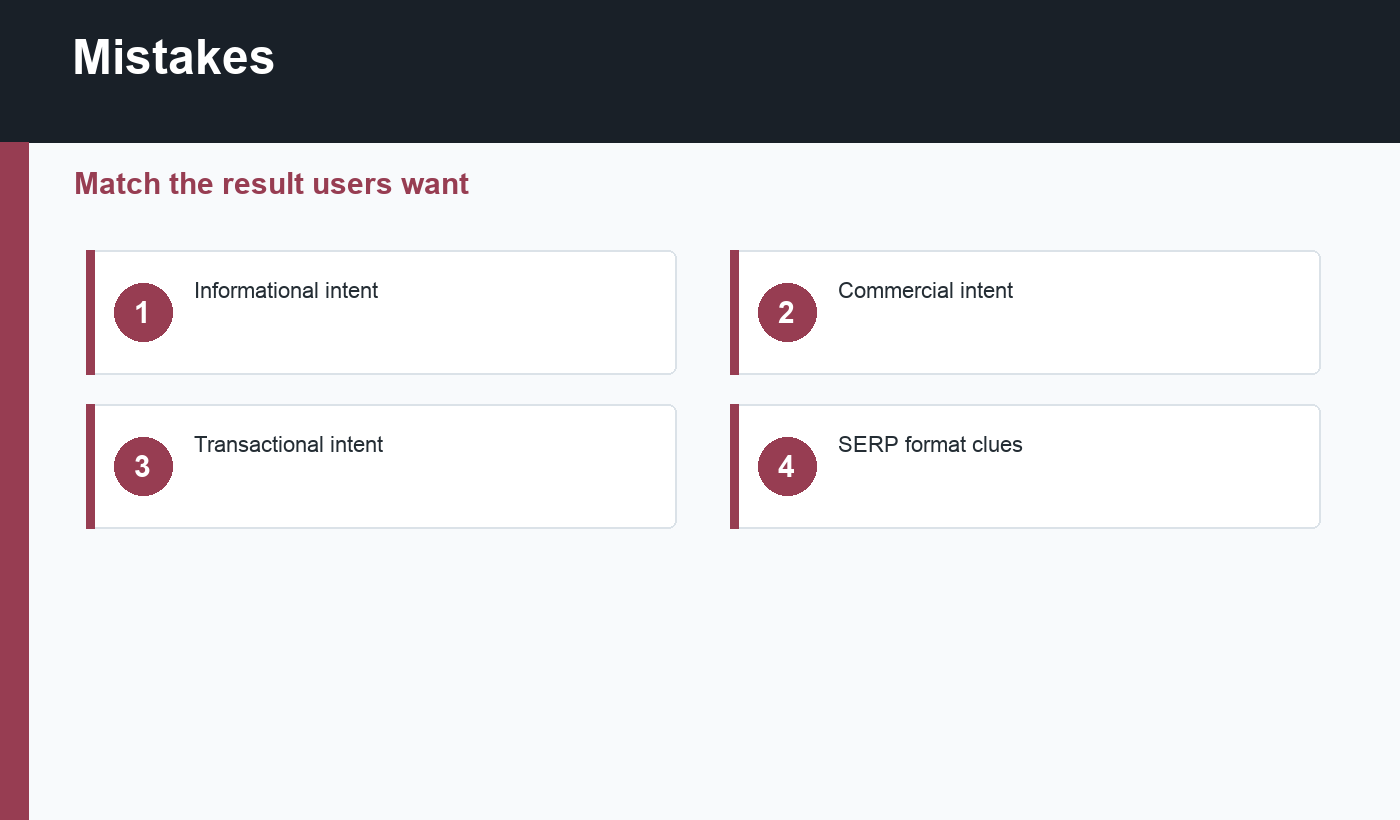
If intent shifts, update the page format instead of only editing keyword placement. Add comparison sections, clearer steps, FAQs, examples, or conversion paths depending on what users now expect from the result.
Intent reviews are especially useful before major rewrites. They stop you from expanding a page in the wrong direction. Sometimes the best SEO update is not more content; it is a better format for the same query.
Save screenshots or notes from the results page when you make decisions. If performance changes later, you can compare whether the intent landscape changed or whether your page simply needs a better answer.
Final recommendation
Search intent SEO keeps content honest. Before asking how to rank, ask what the searcher wants and whether your page is the right kind of answer.
Discussion
Join the conversation