AI Search SEO: Apply Google Fundamentals and Measure Real Outcomes

AI search SEO covers how a site approaches visibility in search experiences that include generated answers. For Google AI Overviews and AI Mode, Google says established SEO best practices remain relevant and there are no additional technical requirements or special optimizations required. A page must be indexed and eligible to appear in Search with a snippet to be a supporting link. That eligibility does not guarantee inclusion. Advice for other AI services may differ, so identify the platform before treating a tactic as a universal rule.
AI search SEO: a practical decision process
Follow this sequence: Check eligibility → Answer real questions → Verify facts → Track useful visits. Use it to organize the work, then verify the editorial and technical choices described below. The example is hypothetical and illustrates the decision rather than claiming a measured ranking result.
Start with discoverability and snippet eligibility
Check that important pages are crawlable, accessible, and connected through useful internal links. Inspect indexability and applicable snippet controls before searching for an AI-specific technical fix. A robots restriction, authentication wall, or infrastructure block can prevent discovery. Google documents preview controls such as nosnippet, data-nosnippet, and snippet limits with effects that should be reviewed before changes. Do not assume a sitemap submission guarantees a supporting citation. The page still needs to be processed and selected by the search system.
Create answers that remain useful beyond a summary
Explain the question directly, then provide evidence, examples, comparisons, or practical steps that help the reader complete a task. Original measurements, firsthand observations, and clear constraints can add value when they are real. Avoid a page that merely repeats general statements in question-and-answer headings. A concise answer is helpful, but there is no official paragraph length that guarantees citation. Make the full resource worth visiting rather than optimizing only for a fragment that might be extracted.
Keep claims, entities, and structured data consistent
Use accurate names and describe real people, organizations, and products consistently across the visible content and applicable structured data. Cite primary sources for material claims and update information that changes. Google states that no special schema.org markup or new AI text file is required for its AI features. A third-party recommendation for an llms.txt file should not be represented as a Google eligibility requirement. Standard markup should describe the page honestly and follow the feature rules it actually supports.
Use Rank Math guidance with platform-specific limits
Rank Math discusses AI-oriented content planning, clear answers, and visibility tracking. These can provide useful editorial ideas, but plugin scores and AI-generated suggestions do not certify future inclusion in generated answers. Check concrete claims against the relevant platform documentation. Review generated content for accuracy and originality before publication. Distinguish improving a page for readers from asserting that a particular format is a ranking factor. Keep experimentation grounded in outcomes the site can observe rather than a promise of AI citations.
Measure visits and business value carefully
Google includes traffic from its AI features in overall Web search performance reporting in Search Console, rather than giving a simple complete citation report for every generated answer. Other services may appear in referral analytics when a visit occurs. Monitoring tools can sample prompts or results, but their samples are not the whole audience experience. Track qualified visits, leads, conversions, and relevant query changes. A screenshot of one answer can show a moment of visibility; it cannot establish stable coverage or explain every traffic change.
Worked example
A tutorial site adds tested steps and a comparison table to an existing troubleshooting article. It checks that the page is indexed, snippet eligible, and internally linked. The team does not add a fictional AI schema type or claim that an AI text file is required by Google. Over the next review period, it tracks relevant search visits and completed support tasks. If a monitoring tool finds a citation, the team records the platform, prompt, and date instead of treating it as universal visibility.
Implementation checklist
- Name the platform when giving AI visibility advice.
- Verify crawlability, indexing, and snippet eligibility.
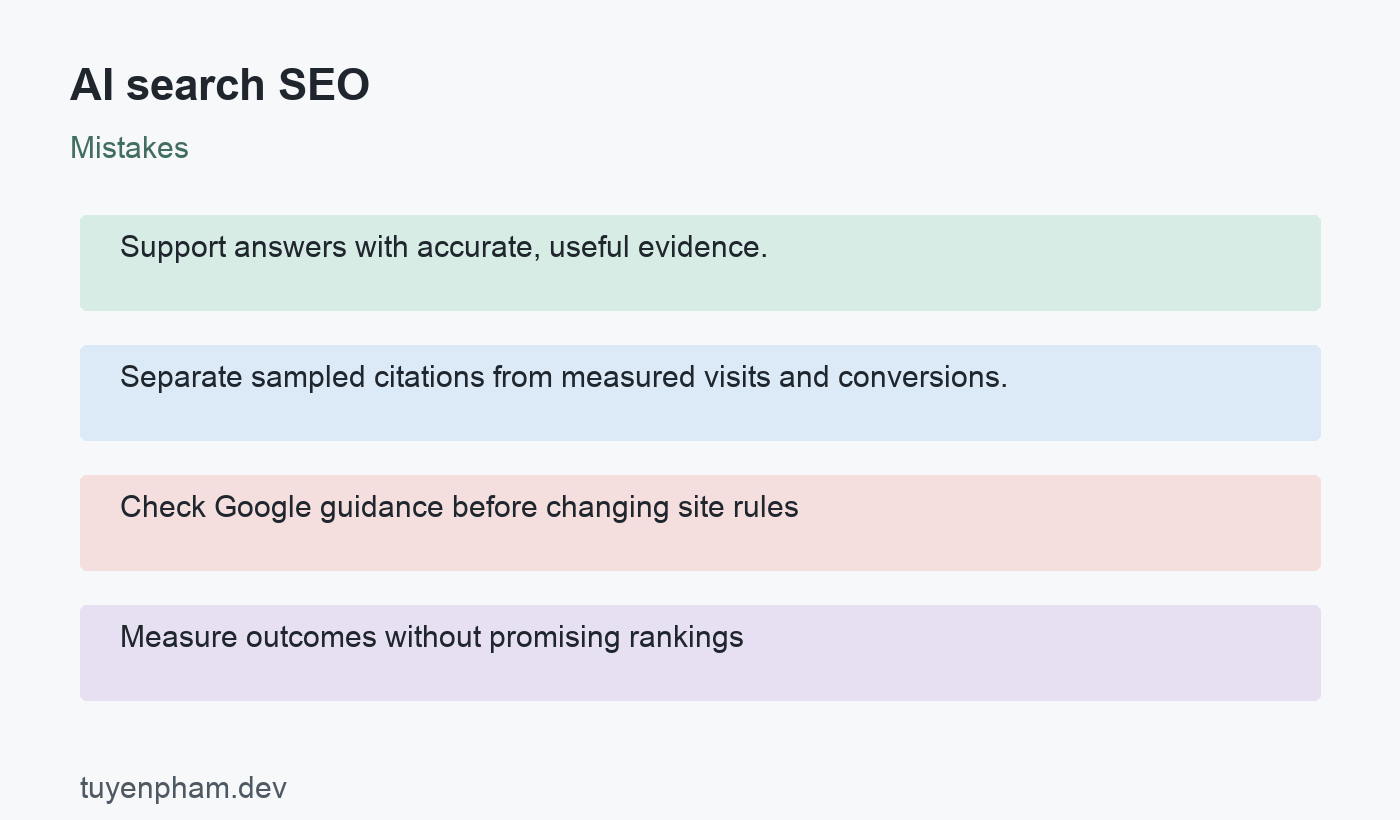
- Support answers with accurate, useful evidence.
- Separate sampled citations from measured visits and conversions.
A focused task for your website
Review one article that answers a complex audience question. Check its technical eligibility and the sources behind important claims. Improve the explanation with a genuine example, clear limitations, and a useful next step. Record the change and track relevant visits and business outcomes. If you sample generated answers, save the platform and prompt context. Report what was observed without claiming a guaranteed citation effect or inventing a ranking requirement.
References and next steps
Consult Google Search Central documentation for the relevant search requirements and Rank Math guidance on this topic for practical workflows. Continue with On Page Seo Checklist and the SEO audit checklist for related implementation checks.
Discussion
Join the conversation