Entity SEO: Make People, Organizations, and Products Easy to Identify

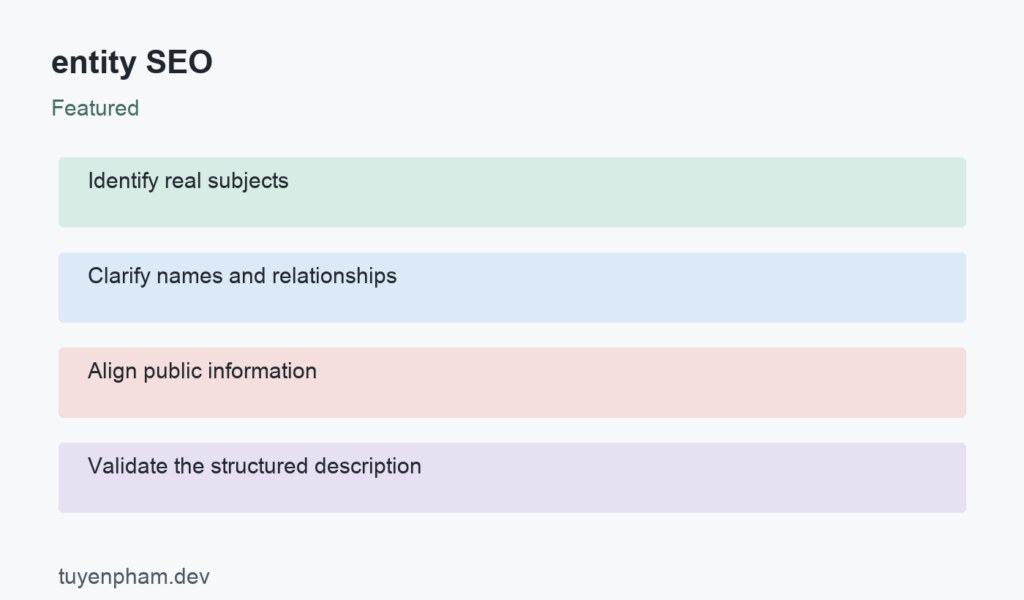
Entity SEO is a planning concept for making the real subjects of content clear: people, organizations, places, products, and identifiable concepts. Similar words can refer to different subjects, so names and relationships need context. This does not replace useful writing or established SEO basics. The practical goal is a truthful, consistent description that a reader can understand and verify. Structured data can express some relationships, but adding an object or identifier does not automatically create authority or a knowledge-panel appearance.
entity SEO: a practical workflow
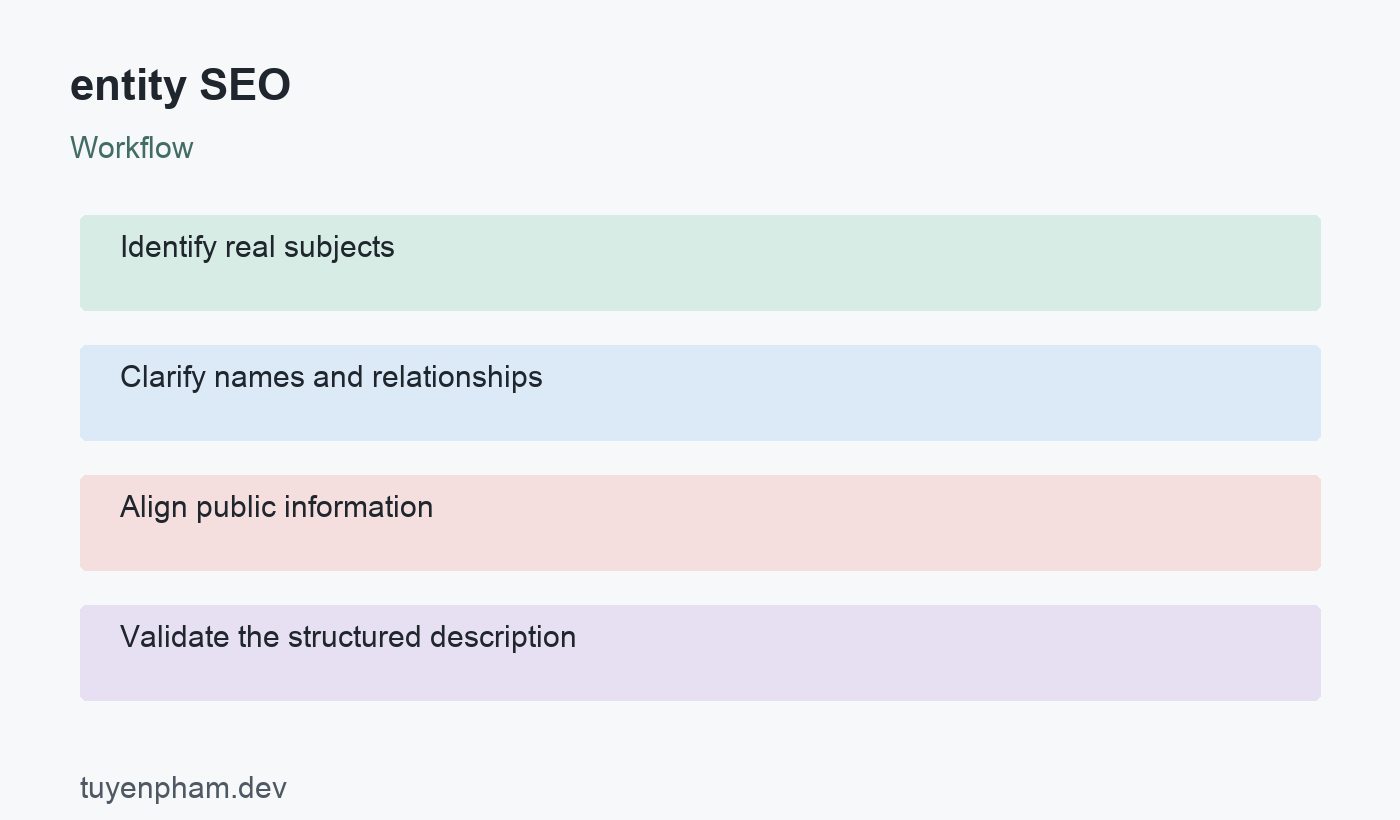
Use the following sequence to organize the review: Identify real subjects → Clarify names and relationships → Align public information → Validate the structured description. The sections below explain the decisions and evidence needed at each stage. The worked example is hypothetical and illustrates the process rather than claiming a measured result from this website.
Resolve ambiguity in the visible content
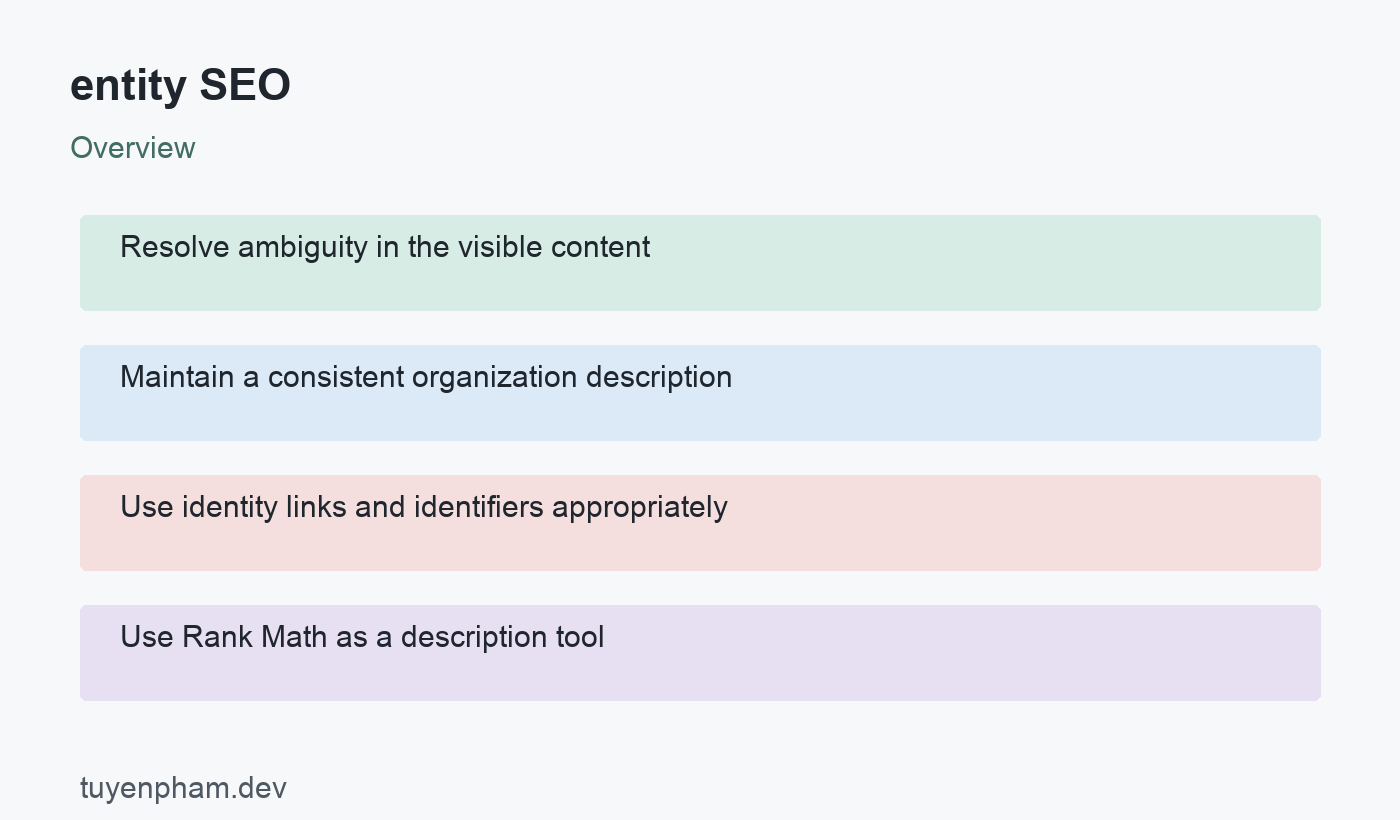
Name the actual subject and explain the context that matters. A company name may also refer to a product, a location, or another organization. Use the full relevant identity where the ambiguity could mislead readers. State who owns a product, who authored a resource, and how the subjects are related when those facts are pertinent and verifiable. Avoid stuffing a list of supposedly related entities into the article. A relationship is useful when it contributes to the reader’s understanding of the topic.
Maintain a consistent organization description
Review the public name, website, contact information, branding, and genuine profiles used to describe a business. Google documents Organization structured data as a way to help understand and disambiguate organization information. Match those fields to the visible and current business details. If a brand has changed, explain the relationship accurately rather than leaving contradictory names across the site. A consistency review should preserve real distinctions between a parent organization, a subsidiary, a product, and a public-facing brand.
Use identity links and identifiers appropriately
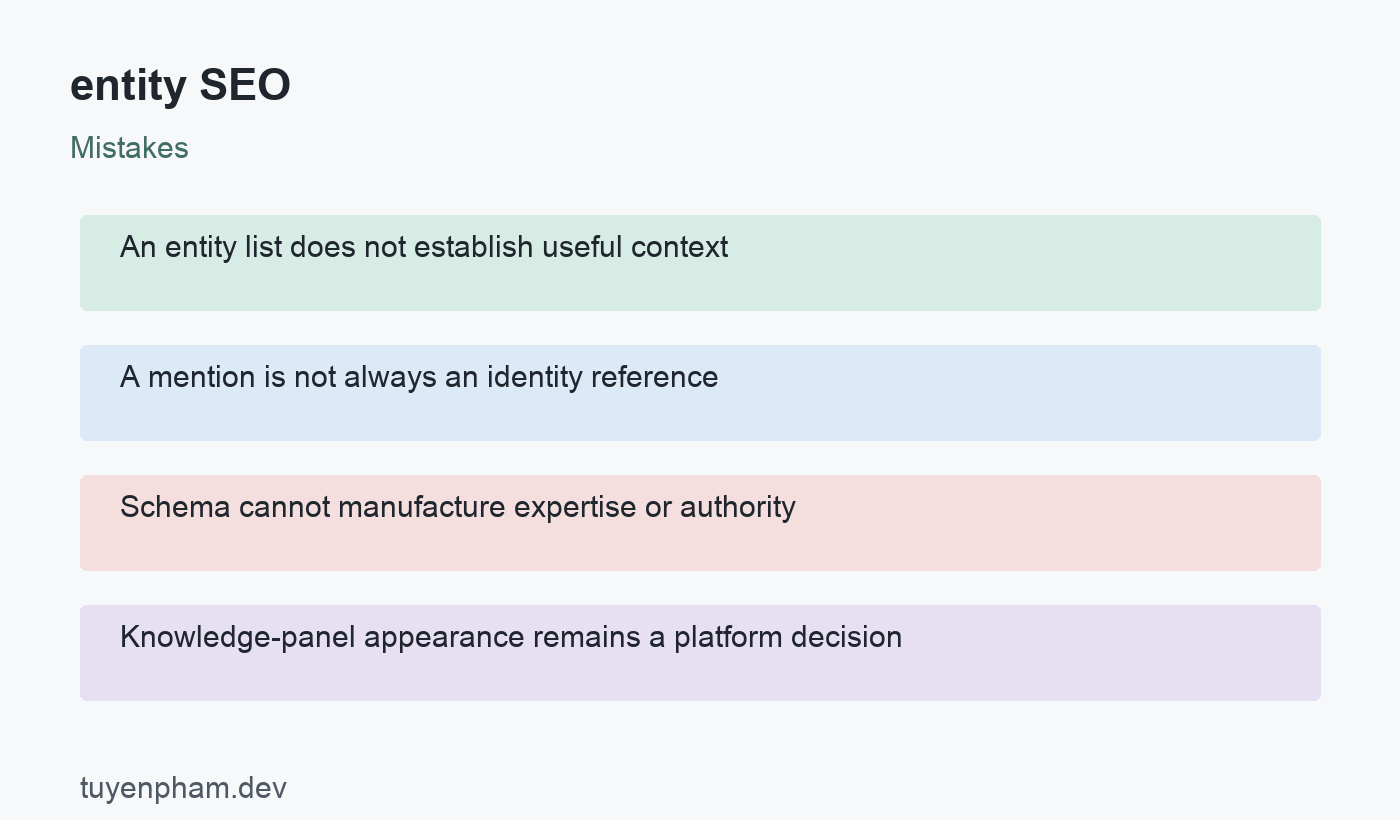
When using sameAs or a stable structured-data identifier, choose references that actually identify the same subject. An article mentioning a business is not necessarily an identity page for that business. Keep different people and organizations separate, even when their names resemble one another. Review every external reference and avoid inventing profiles or registrations. These fields describe identities and relationships; they are not an instruction that Google must combine unrelated subjects or display a specific result feature.
Use Rank Math as a description tool
Rank Math discusses entity-oriented content and can support organization or author-related structured data in a WordPress setup. Supply accurate values based on the site’s real publisher and content. Check which component owns the final schema output so templates and plugins do not describe contradictory organizations. A plugin score cannot certify that a subject is authoritative. Keep the visible explanation, authorship, and cited evidence useful on their own. Structured markup should reflect the content instead of making claims the page cannot support.
Separate clarity from promised search features
A correct description can help reduce ambiguity, but search systems still decide whether and how to use it. Do not promise a knowledge panel, a particular ranking, or AI citations merely because an entity has a schema object. Review branded search patterns and useful visitor outcomes with appropriate context. Maintain the description when addresses, ownership, product names, or author roles change. The most reliable test is whether the page communicates the right identity and relationships without requiring a reader to guess.
Worked example
A consultancy shares its name with an unrelated software product. Its about page clearly identifies the legal organization, the consulting services it provides, and genuine contact and profile details. Product references in its articles are labeled as products rather than described as the publisher itself. Organization markup matches the consultancy’s public information. The team avoids linking sameAs to a news story that merely mentions the brand. This creates a clearer description without claiming a guaranteed knowledge panel.
Verification checklist
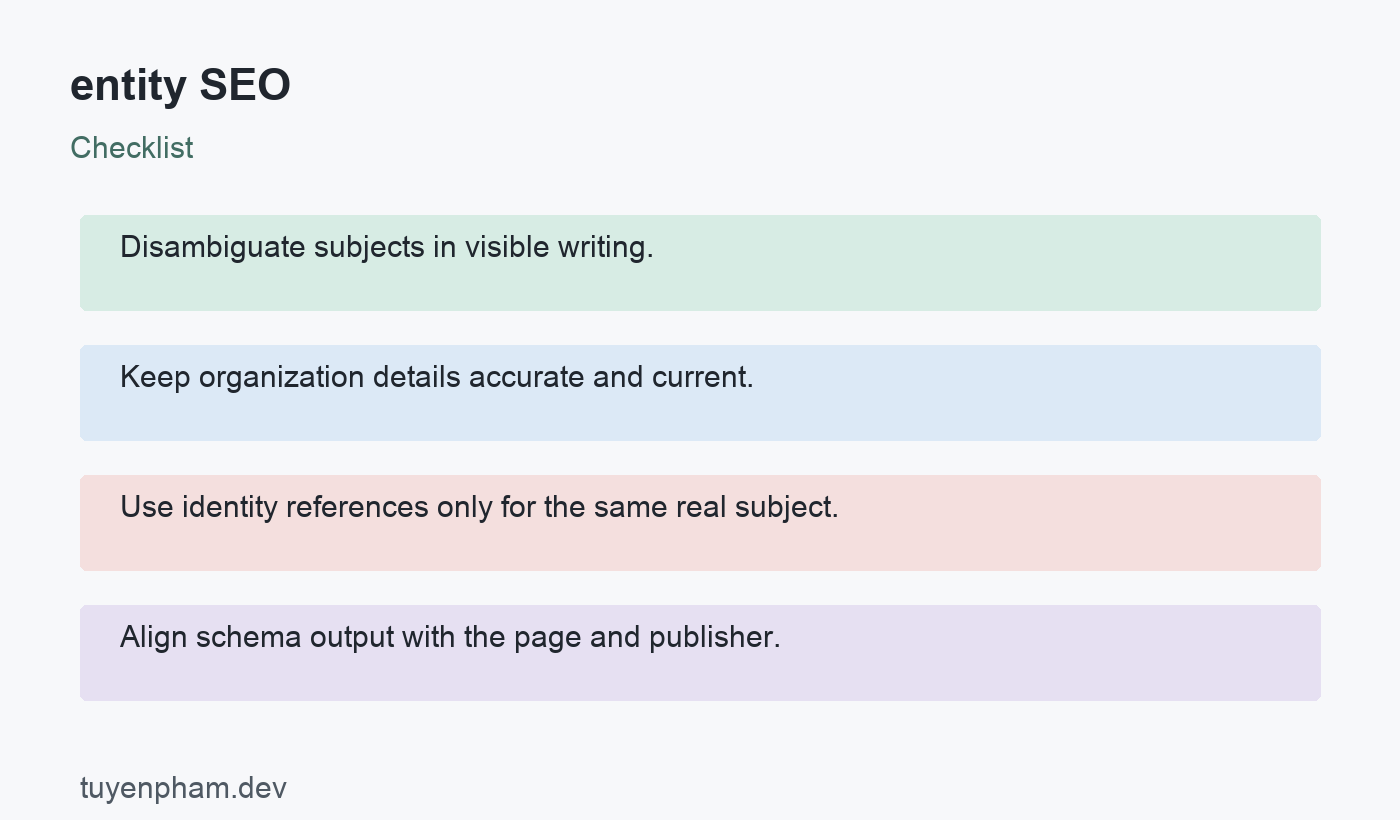
- Disambiguate subjects in visible writing.
- Keep organization details accurate and current.
- Use identity references only for the same real subject.
- Align schema output with the page and publisher.
A focused task for your website
Audit the homepage, about page, and two articles. List the people, organizations, and products they describe, then compare visible names and relationships with structured data. Correct contradictory identities and verify external profile references. Ask a reader unfamiliar with the business to explain who provides the service and who authored the articles. Record gaps in that explanation before pursuing any particular search presentation.
References and related reading
Review Google’s official guidance and Rank Math’s related explanation or workflow for the relevant requirements and tool details. Continue with Eeat Seo and the SEO audit checklist to connect this review with the rest of your website.
Discussion
Join the conversation